

- CTI Aeroespacial signed a contract with ICEYE for two additional SAR satellites, bringing Portugal's total to four.
- Portugal's first sovereign SAR satellite launched in March 2026, and the Portuguese Air Force inspected the new units at ICEYE's Finland facility ahead of delivery.
Portugal is doubling down on a bet it made just a year ago: that the best way to watch its own coastline and territory is to own the satellites doing the watching, rather than renting someone else’s. ICEYE, the Finnish company that operates the world’s largest synthetic aperture radar satellite constellation, announced that CTI Aeroespacial, a joint venture between the Portuguese Air Force and the engineering center CEiiA, has signed a contract to procure two additional SAR satellite systems for the Portuguese Air Force. Once delivered, the order will bring the total number of ICEYE-built satellites operated by Portugal to four, a notable jump for a country that launched its first sovereign SAR satellite into orbit only this past March.
Synthetic aperture radar is the technology that makes this kind of satellite useful even when ordinary cameras in orbit are useless. Rather than capturing light like a conventional optical satellite, a SAR satellite bounces radar pulses off the ground and reconstructs an image from the returning signal, which means it can see through clouds, smoke, and total darkness with equal clarity. That capability matters enormously for a country like Portugal, much of whose coastline and Atlantic territory sits under cloud cover for a meaningful chunk of the year, and it explains why Portugal’s military planners settled on SAR rather than the optical imaging satellites that dominate most commercial Earth observation fleets. ICEYE’s satellites specifically operate in the X-band radar frequency, a setup the company has used to build out a constellation that has launched more than 60 satellites since 2018, scaling toward over 20 new launches annually moving forward, according to the company.
The new Portuguese satellites have already cleared a real-world checkpoint before ever leaving the ground. Portuguese Air Force personnel traveled to ICEYE’s production facility in Finland to inspect the systems in person, confirming their readiness ahead of delivery, a step that suggests the satellites are well into the manufacturing pipeline rather than existing only on paper. That kind of hands-on inspection isn’t standard practice everywhere in the commercial satellite industry, where customers more often take a manufacturer’s testing data on faith, and Portugal’s choice to send its own people to check the hardware reflects how seriously the Air Force is treating a program it describes as central to its sovereignty.
What four satellites buy that one or two can’t is speed, and speed is the entire point of a reconnaissance satellite. A single satellite, no matter how capable, can only pass over a given patch of ocean or coastline a handful of times a day as it orbits the planet, leaving long gaps during which anything happening on the water goes unobserved by that system. Adding satellites to the constellation shortens what the industry calls the revisit rate, the time between one look at a location and the next, and lets operators task multiple satellites against the same area of interest or split coverage across a wider zone simultaneously. For the Portuguese Air Force, which now describes its growing fleet as a high-speed constellation watching the Atlantic maritime domain and Portugal’s Exclusive Economic Zone, the 200-nautical-mile band of ocean a coastal nation has the legal right to monitor and control resources within, that translates into catching a vessel of interest, a search-and-rescue situation, or an environmental incident closer to when it actually happens rather than hours or days later.
Jordi Laguarda, ICEYE’s VP of Missions for Spain and Portugal, framed the expanded constellation as part of a broader argument the company has been making across Europe. “Those who see clearly act faster and Portugal is building the sovereign capability to do exactly that,” Laguarda said. “This expanded constellation gives FAP the revisit rates and response times that modern defence and civil protection missions demand. Space-based intelligence, operational at the speed of real-world events.” General Sérgio da Costa Pereira, Chief of Staff of the Portuguese Air Force, tied the acquisition to a wider set of national goals beyond pure military readiness. “This latest acquisition strengthens Portugal’s freedom of action,” Pereira said. “The expanded SAR capability improves readiness for defense and security missions while supporting wider national ambitions, including environmental monitoring and the safeguarding of natural resources.”
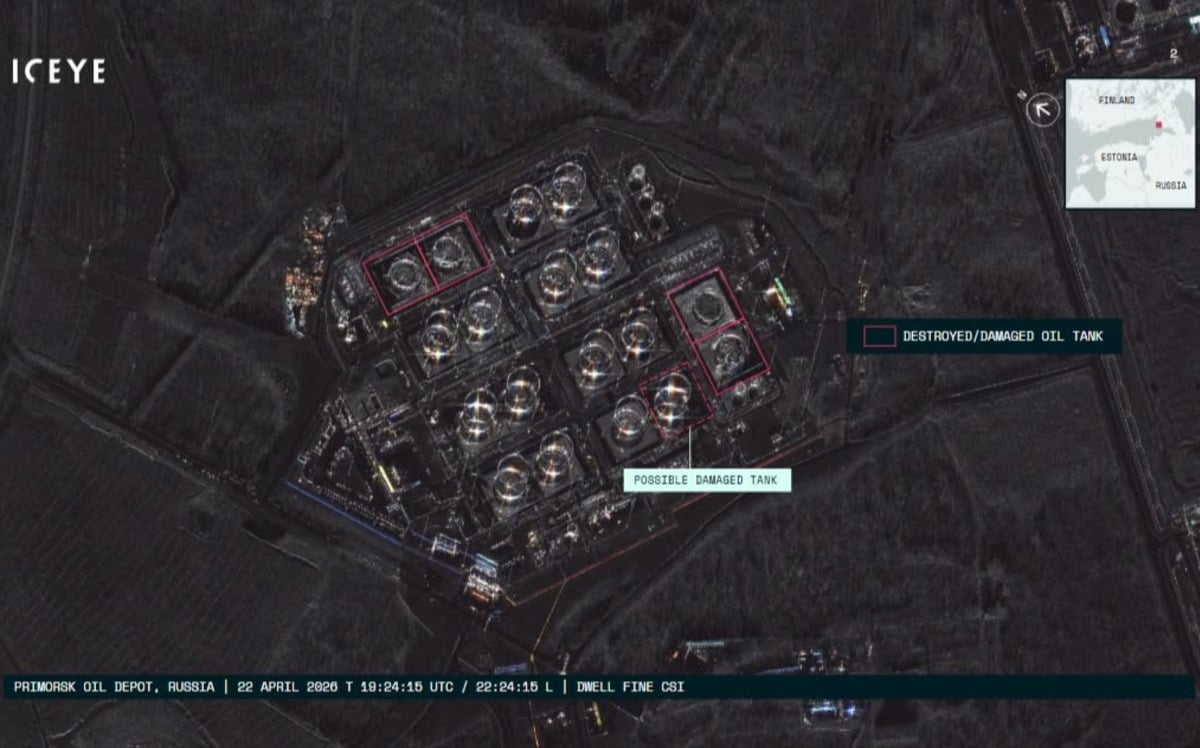
That dual framing, military readiness paired with civilian utility, runs through how several European governments have approached SAR satellite ownership recently, and Portugal’s program sits inside a larger pattern rather than standing apart from it. Poland’s military took delivery of its own four-satellite ICEYE-built reconnaissance constellation earlier this year, and ICEYE has described delivering complete sovereign intelligence systems to seven European nations including Portugal, with more in progress. The company closed a Series F funding round valued above a billion euros in early June 2026, capital it says will fund a near doubling of its annual satellite production, a scale-up driven largely by European governments deciding they want to own this kind of reconnaissance hardware outright rather than subscribe to imagery from an outside provider. Synthetic aperture radar’s role in tracking battlefield movement during the Russia-Ukraine war has sharpened that appetite considerably, giving defense ministries a concrete demonstration of what persistent, all-weather satellite surveillance can reveal in a live conflict.
For Portugal specifically, the expansion fits into a longer strategic arc the Air Force has been pursuing under its Força Aérea 5.3 modernization plan, which set out an ambition to build genuine space-based surveillance capability rather than depend entirely on allied or commercial imagery providers.