

- Mobilization drills for officials from over a dozen Russian regions including occupied territories were held in Volzhsky and subsequently deleted from official social media, per BAZA and Voeniy Osvedomitel.
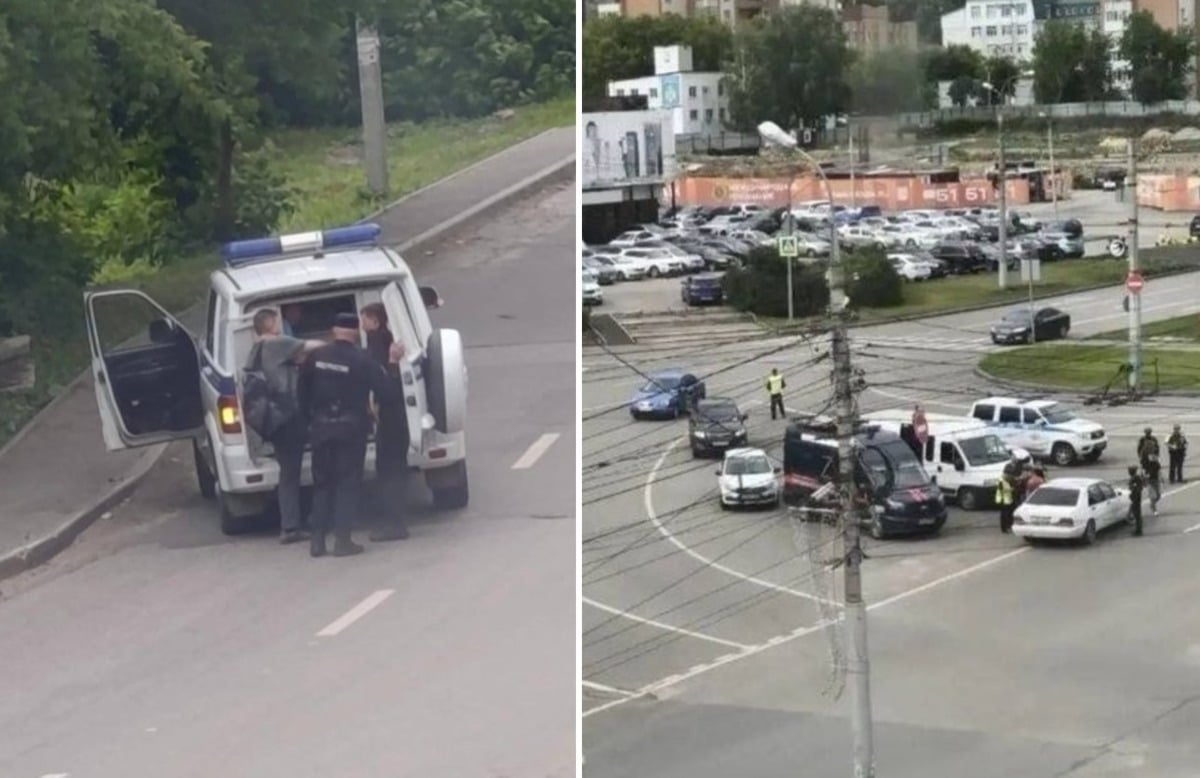
- Russian police and military commissariat staff conducted street roundups of men in Penza Oblast, pressuring them to sign military contracts, Radio Svoboda and Mediazona reported June 19, 2026.
Russia is preparing a new mobilization wave, and the evidence is no longer confined to analyst assessments — it is showing up in deleted government reports, police roundups on city streets, and a sitting member of Russia’s own parliament warning publicly that the Kremlin has run out of other options.
Mobilization drills for civil administrators drawn from more than a dozen Russian regions, including officials from occupied Ukrainian territories, took place in Volzhsky, a city in Volgograd Oblast on the Volga River roughly 20 kilometers (12 miles) from Volgograd, gathering mobilization bureaucrats from Astrakhan Oblast, Rostov Oblast, Kalmykia, Crimea, Sevastopol, and the Russian-occupied Donetsk and Luhansk regions simultaneously.
The geographic breadth of the exercise pulled together officials from Russia’s entire southern arc, from the Caspian steppe to the Black Sea coast and deep into occupied Ukraine, suggesting a coordinated rehearsal of the administrative machinery needed to process a large-scale call-up rather than a routine local procedure.
The drills were first reported by the Voeniy Osvedomitel military monitoring channel and confirmed by BAZA, one of Russia’s most closely watched investigative news outlets with deep sourcing inside Russian security and government structures.
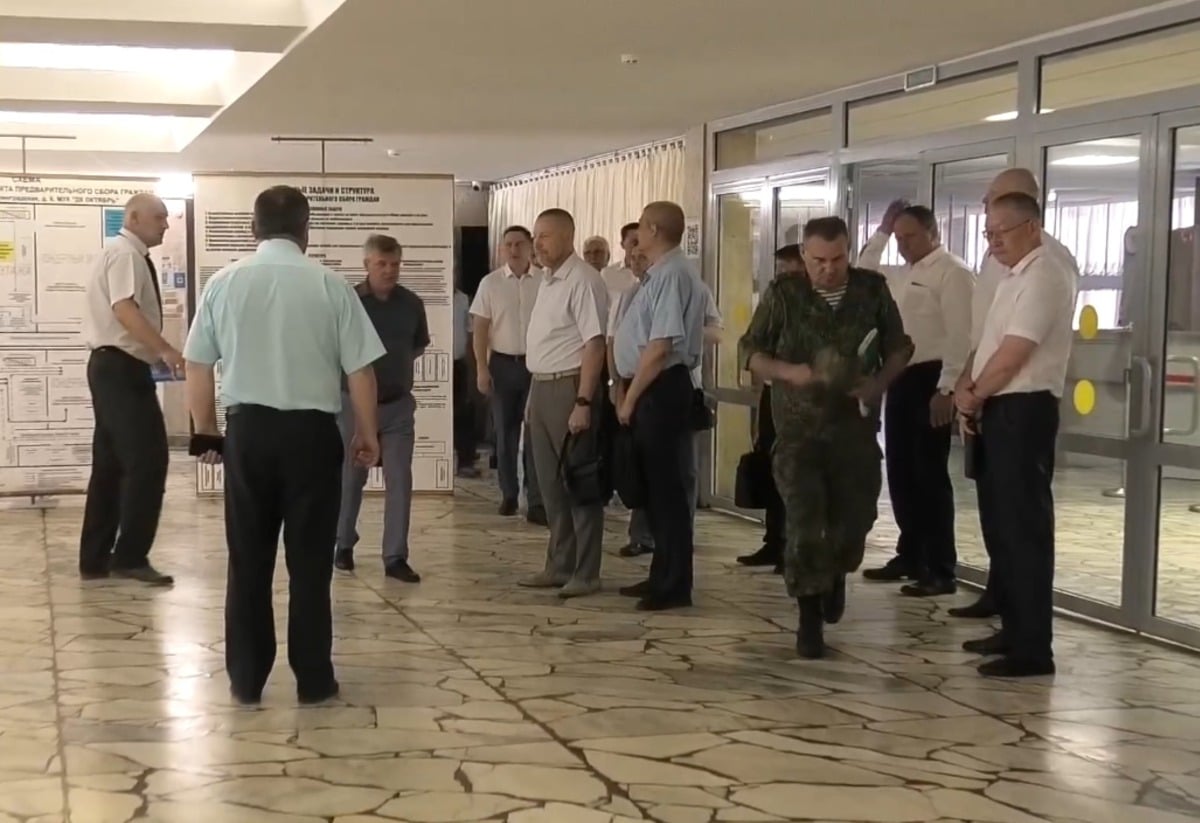
Oleg Filimonov, the head of the mobilization preparation and classified work department of the Volzhsky city administration, offered the official characterization after the drills were initially published.
“Preparation for mobilization is a peacetime process. Such training is conducted regularly. Documentation procedures are practiced, and personnel are trained.”
The Volzhsky administration then deleted the social media report about the drills from its official accounts without explanation, a move that drew immediate attention from researchers monitoring Russian government communications. Officials do not quietly erase records of genuinely routine exercises. The deletion is itself a data point, and it fits a pattern that has become familiar over more than four years of full-scale war: the Kremlin rehearses what it does not yet want to announce.
The street-level evidence that something is accelerating comes from Penza and Penza Oblast, a region roughly 630 kilometers (390 miles) southeast of Moscow, where Russian police officers working alongside military commissariat staff, the officials who run Russia’s conscription and mobilization system, conducted mass roundups of men on city streets, Radio Svoboda and the Russian investigative outlet Mediazona both reported on June 19, 2026. The accounts describe men being stopped, detained, and pressured to sign military contracts with Russia’s Ministry of Defense for subsequent deployment to the war in Ukraine. One local resident told those outlets that the roundups began as early as January 2026 and have intensified significantly in recent months, pointing to an escalating campaign rather than an isolated local incident.
Russia has avoided a formal declared mobilization since the partial mobilization announced by President Vladimir Putin in September 2022, which called up approximately 300,000 reservists and triggered a visible mass exodus of military-age men from the country. Since then, Russian authorities have relied on financial incentives to recruit contract soldiers, coercive pressure on prisoners offered early release in exchange for front-line service, and what analysts have consistently described as a shadow mobilization targeting men with limited legal resources to resist pressure from local officials. The Penza roundups represent a more overt version of that pressure, one that stops short of formal mobilization orders but achieves similar results through direct police action on public streets.
The political signal from inside Russia’s own institutions is the hardest to dismiss. Andrei Gurulev, a member of the Russian State Duma and a former military commander who has consistently supported the war publicly, posted to his Telegram channel on June 1, 2026, stating that the Kremlin is preparing a new mobilization wave for autumn, citing what he described as a battlefield stalemate and mounting Russian losses. A sitting Duma deputy affiliated with the war’s prosecution publicly acknowledging front-line failure and the need for fresh manpower is not a routine political statement. It is the kind of signal that surfaces when internal consensus around a difficult decision has already formed and select officials begin preparing the public information environment ahead of an announcement.
The human cost driving that decision has been documented extensively. NATO Secretary General Mark Rutte addressed it directly during a visit to Kyiv earlier in June 2026, directing his remarks explicitly at Russian youth being fed into the conflict.
“Such young men as you go to war without proper military training. The equipment you will be given will be of poor quality. There is a very high probability that you will be killed or wounded in Ukraine.”
Rutte made those comments in the context of publicly acknowledged Russian casualties running into the hundreds of thousands across more than four years of full-scale war, losses that have systematically exhausted the volunteer and contract recruiting pool that the Kremlin has relied upon to avoid a second formal mobilization. The combination of battlefield attrition, a recruiting pipeline under visible strain, coordinated administrative drills across southern Russia and the occupied territories, accelerating street-level pressure in at least one major Russian city, and a parliamentarian’s explicit autumn timeline points in one direction.