

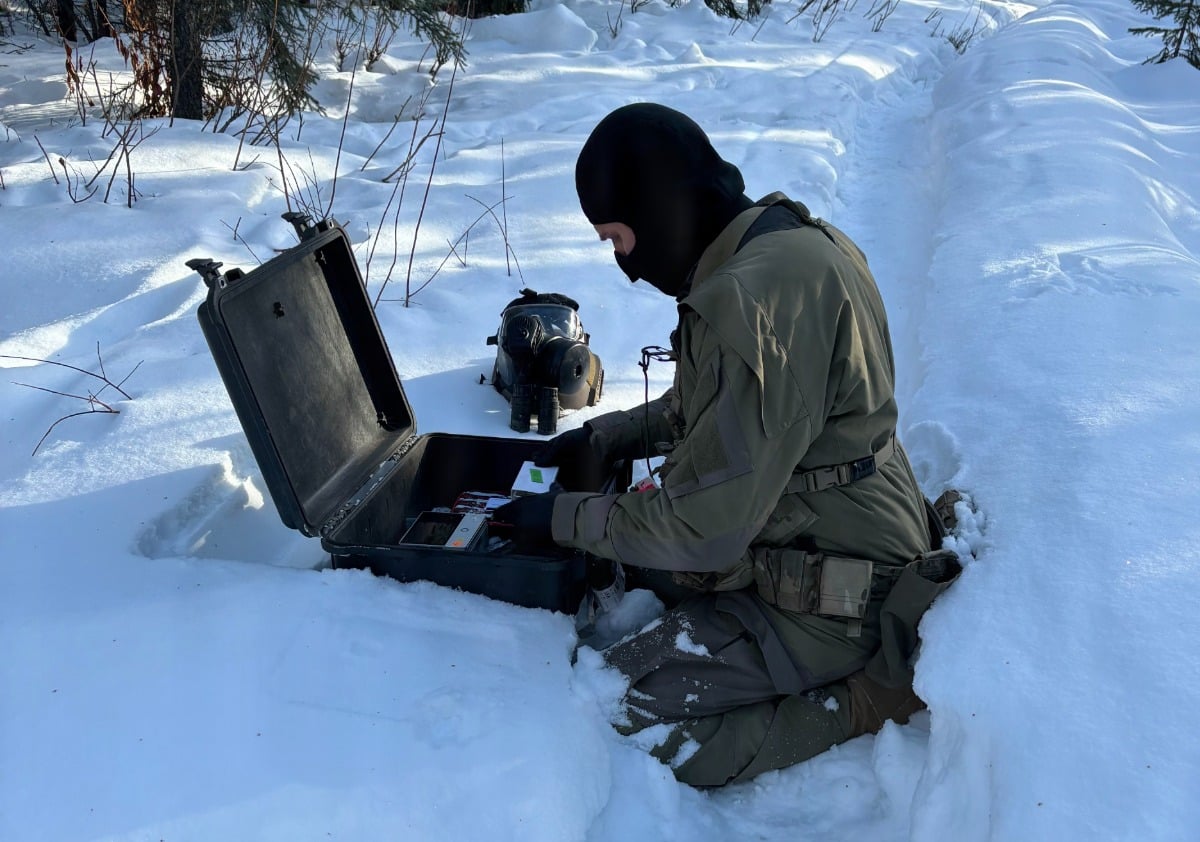
- The U.S. Naval Research Laboratory developed the FFBS portable DNA/RNA sequencing system capable of identifying biological threats in under 30 minutes at forward military locations.
- The F-FAST program has transitioned to the Capability Program Executive for CBRN Defense as the FFBS Program of Record for incremental fielding to U.S. Navy, Army, and National Guard end users.
Somewhere in a desert exercise or an Arctic field camp, a U.S. Navy microbiologist or hospital corpsman can now pull out a portable DNA sequencer, run a sample, and identify harmful pathogens in less than 30 minutes and provide data that can help detect unknown or potentially genetically modified biological threats.
The U.S. Naval Research Laboratory, in partnership with the Defense Threat Reduction Agency and Army and Navy research commands, has successfully developed and fielded a portable biological detection system capable of doing something that previously required a fully equipped laboratory: sequencing genetic material from potential biological threats on the spot, at the forward edge of operations, with results fast enough to inform a commander’s immediate decisions.
The system is called FFBS, short for Far-Forward Biological Sequencing, and it grew out of a decade-long research program called F-FAST, or Far-Forward Advanced Sequencing Technology. DNA and RNA sequencing, the process of reading the genetic code of a microorganism to identify exactly what it is, has been a standard laboratory procedure in medicine and research for decades, but the equipment required has historically been large, expensive, sensitive to environmental conditions, and operated by trained laboratory scientists. The F-FAST program’s central challenge was compressing all of that into something a Navy hospital corpsman with no molecular biology background could operate in a desert, on a ship, or in an Arctic field exercise and trust the results enough to act on them.
Dr. Peter Matic, Associate Director of Research at the Naval Research Laboratory, described what makes sequencing fundamentally different from the rapid diagnostic tests that military medics currently carry. “By characterizing genetic material directly,” Matic said, “Far-Forward Advanced Sequencing Technology, or F-FAST, and Far-Forward Biological Sequencing, or FFBS, can confirm results from targeted tests, detect previously unknown threats, and provide critical data for medical and operational decision-making at the point of need.”
The distinction between a targeted rapid test and a genetic sequencer is the difference between asking “is this the pathogen I’m looking for?” and asking “what is this, exactly?” Rapid diagnostic tests work the way a home COVID test works: they check for the presence of a specific known target and return a yes or no. If the threat is on the test’s list, the test works. If it is not on the list, a new biological agent, a genetically modified variant, or something entirely unexpected, the test returns negative and provides no useful information. A sequencer reads the actual genetic material in the sample and compares it to known databases, which means it can identify organisms the test wasn’t designed for, confirm that a positive test result reflects the specific strain or variant it claims to detect, and flag genetic modifications that might indicate an engineered threat.
Lt. Cmdr. Chaselynn Watters, formerly of the Naval Medical Research Command’s Biological Defense Research Directorate mobile laboratory team, described the capability in terms that place it in direct operational context. “The ability to conduct sequencing in the field and even identify synthetically modified genes is a huge step in deterring biothreats,” Watters said. “I am not aware of anyone else in the U.S. operating at this technical level in the field.”
The F-FAST development process was built around field testing from the start, running the equipment through actual military exercises across radically different environments to understand what broke, what confused operators, and what needed to change before the system could be trusted in the hands of people whose primary job is not laboratory science. NRL scientists participated in exercises including Desert Ice, Bronze Ram, Arctic Edge, the Rim of the Pacific naval exercise known as RIMPAC, and several others across environments ranging from desert heat to Arctic cold. Gary Vora, an NRL principal investigator for F-FAST, described what that field testing revealed. “We worked side-by-side with Navy and Army partners in environments ranging from desert exercises to Arctic operations,” Vora said. “That allowed us to see firsthand how sequencing could be integrated into real-world missions and to refine the system based on operator feedback.”
The collaborative structure that produced the system involved the Naval Medical Research Command’s Biological Defense Research Directorate, the U.S. Army Combat Capabilities Development Command Chemical Biological Center, and the U.S. Army Medical Research Institute of Infectious Diseases, among others. That Army-Navy partnership ensured the final system addressed biological threat detection scenarios across the full range of ground and maritime operations rather than being optimized for one service’s specific environment.
With F-FAST now formally transitioned to the Capability Program Executive for Chemical, Biological, Radiological and Nuclear Defense as the FFBS Program of Record, the technology has moved from research project to incremental fielding across Department of War end users. The National Guard Bureau’s Weapons of Mass Destruction Civil Support Teams, specialized units deployed during domestic biological emergencies, recently received a successful Milestone B decision for their own sequencing capability under a related program called the Non-targeted Sequencing Identification System, or NSIS, clearing the way for broader fielding to National Guard forces. Training for Navy microbiologists and forward deployable preventive medicine units is already underway, with NRL maintaining a parallel program to prepare Navy microbiology officers and hospital corpsmen to operate the technology they are receiving.
Brandy White, Director of the NRL Center for Biomolecular Science and Engineering, described what the transition from laboratory science to operational tool represents.
“By transforming complex laboratory science into a deployable capability,” White said, “our scientists are helping Sailors, Marines, and joint force across the Department of War respond to biological threats with speed and confidence.”