

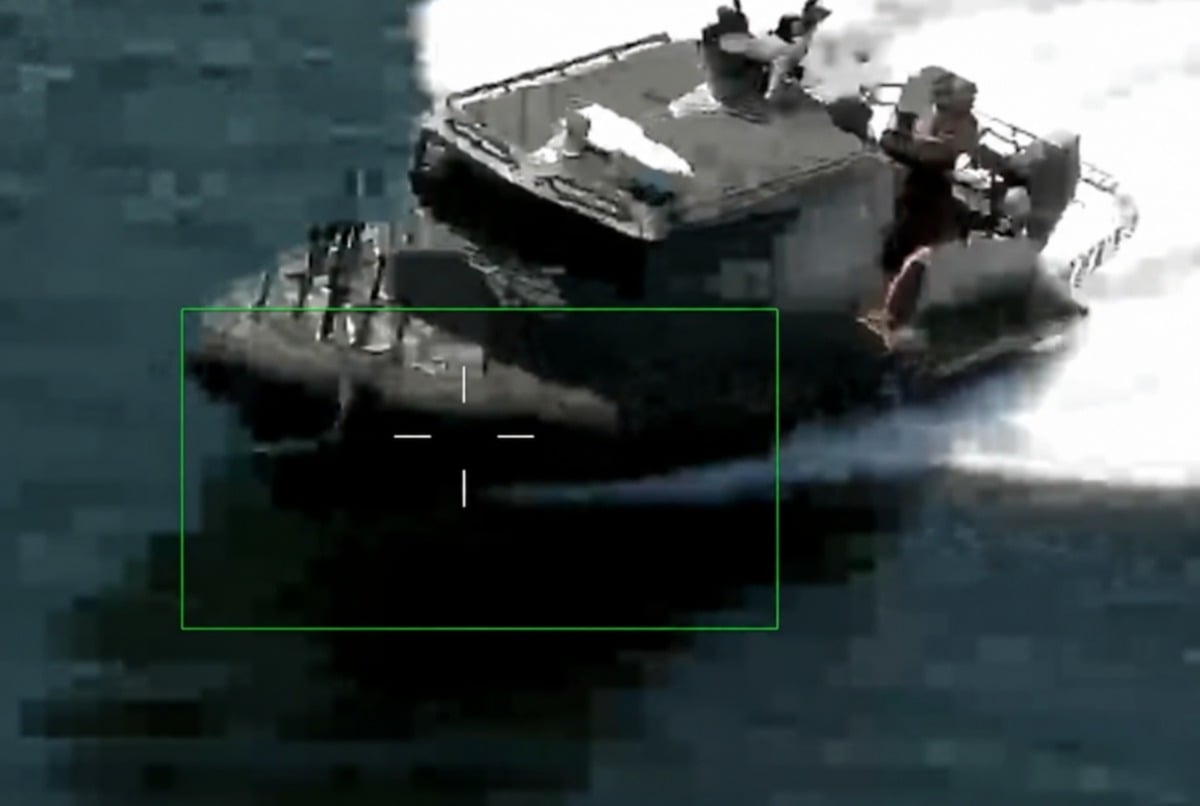
- Russian military Telegram channels published footage claiming to show Shahed-type drones striking two Ukrainian Navy patrol boats in the Black Sea, with crew fates unconfirmed.
- On May 25, 2026, a confirmed Geran-2 strike killed all four crew members of a Ukrainian Navy boat conducting a combat mission near Yuzhne, outside Odesa.
Video circulating on Russian military Telegram channels shows what appears to be remotely controlled drone variants of a Shahed-type long-range attack drone, pursuing and striking Ukrainian Navy patrol boats in the Black Sea.
Russian sources claim two patrol vessels were destroyed in the attacks, though the exact date of the engagement and the fate of the crews remain unconfirmed from independent sources. The footage, published on channels with documented ties to Russian military units, shows aerial platforms tracking small surface vessels at close range and impacting them in what appear to be direct hits.
The Shahed-136, known in Russian service as the Geran-2, is an Iranian-designed one-way attack drone that Russia has used extensively against Ukrainian land targets, most famously in mass overnight strikes against power infrastructure. Adapted for maritime strike, the drone presents a different tactical profile than its standard loitering munition employment. Against small, fast-moving patrol boats on open water, the platform faces different tracking challenges than a stationary building, which makes footage of what appears to be successful maritime intercepts operationally significant if the attacks are confirmed. Russia has previously claimed to have trained Black Sea Fleet FPV drone operators specifically against Ukrainian unmanned surface vessels, with the Russian Defense Ministry circulating footage in late 2024 of training exercises using a captured Ukrainian Magura V5 as a target, but the use of Shahed-type systems against crewed patrol craft represents a distinct evolution in the maritime application of the weapon.
The attack documented in the newly circulating footage has not been independently verified or acknowledged by Ukraine’s Navy or general staff as of the time of reporting. Russian claims of naval kills in the Black Sea have a documented history of inaccuracy, and the footage, while showing impacts on what appear to be small vessels, does not establish vessel type, national identity, or crew status with certainty from the available images. What the footage does confirm is that Russian operators directed Shahed-type drones against surface targets in the Black Sea in a maritime strike role, a capability that Russia has been developing since Ukrainian unmanned surface vessels began posing a serious threat to Black Sea Fleet assets.
The May 25, 2026 attack near Yuzhne, a port city approximately 25 km (16 miles) east of Odesa, established with grim precision what Russian Shahed-type drones can do against Ukrainian naval small craft. A Geran-2 struck a Ukrainian Navy boat while its crew was conducting a combat mission, killing all four sailors aboard, according to reporting by Ukrainian media and confirmed separately by a local territorial community. That attack, confirmed by Ukrainian sources, established that Russian Shahed-type drones had achieved a direct hit against a Ukrainian naval vessel at close range.
The use of Shahed-type drones in a maritime hunt-and-strike role rather than the standard one-way loitering mission against stationary infrastructure targets requires different operational procedures. Attacking a moving boat demands real-time course correction, longer tracking windows, and tolerance for target maneuver in a way that a strike against a stationary power substation does not. The video footage appearing on Russian channels suggests operators are navigating those challenges with some degree of success, though the unverified nature of the claimed kill count makes any broader assessment of the tactic’s effectiveness premature.
The attack was subsequently confirmed by Ukrainian officials, though with a detail that significantly changes its legal character. Ukrainian Minister of Community and Territorial Development Oleksii Kuleba confirmed on Saturday evening that Russia had struck two vessels belonging to Ukraine’s Maritime Search and Rescue Service, a civilian state agency, that were conducting a humanitarian mission inside Ukraine’s maritime corridor at the time of the attack. Kuleba confirmed casualties among the crew and stated that Ukrainian Navy boats had begun an evacuation operation.
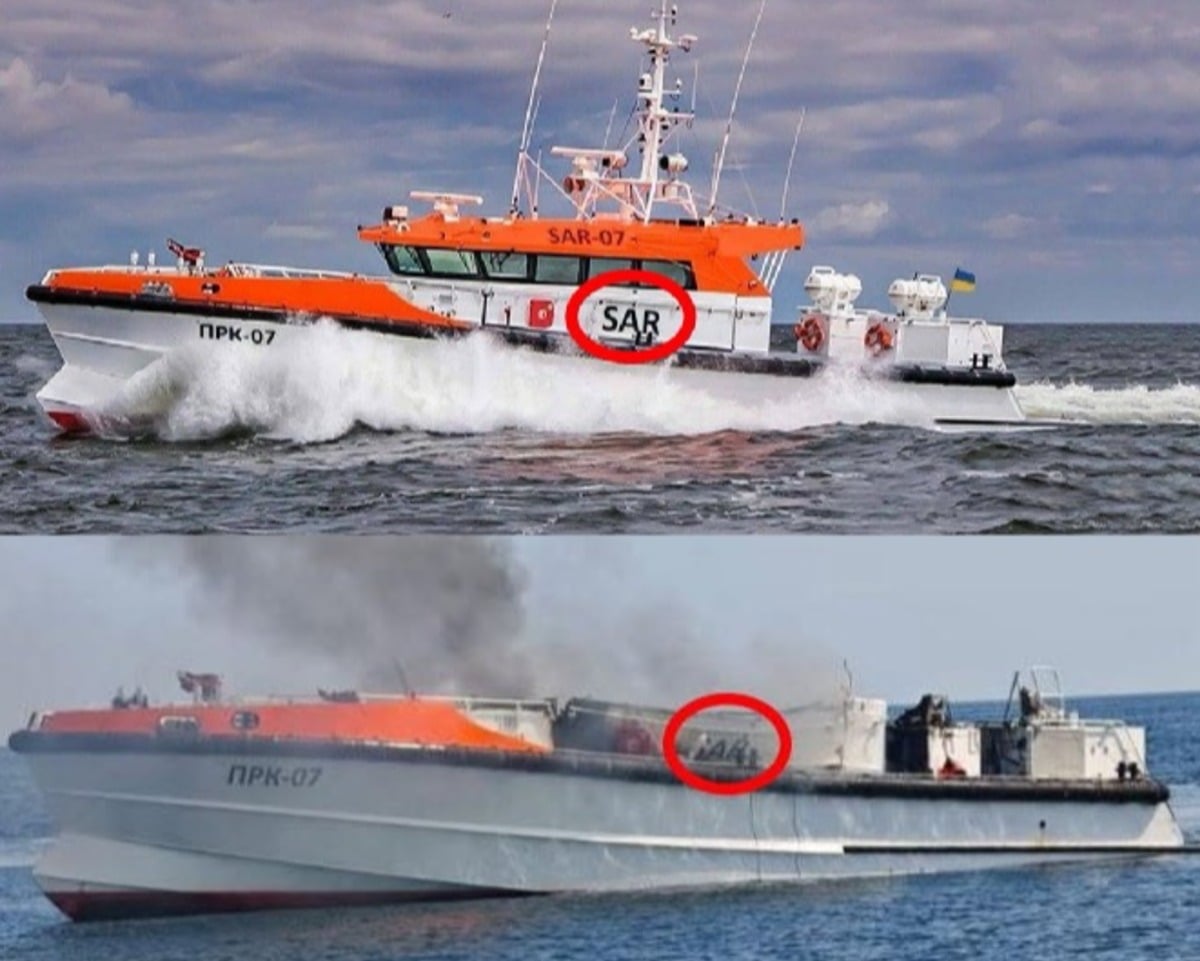
The vessels, he specified, carried explicit protection under Article 27 of the Second Geneva Convention of 1949, which shields small coastal search and rescue craft operating under state authority from attack. “This attack is further evidence of Russia’s deliberate disregard for the norms of international law and creates a direct threat to the safe functioning of humanitarian maritime corridors in the Black Sea,” Kuleba said. What Russian channels presented as a strike on Ukrainian Navy patrol boats was, by Ukraine’s official account, an attack on unarmed civilian rescue vessels on a humanitarian mission, a distinction that transforms the incident from a contested military engagement into a documented violation of international humanitarian law.