

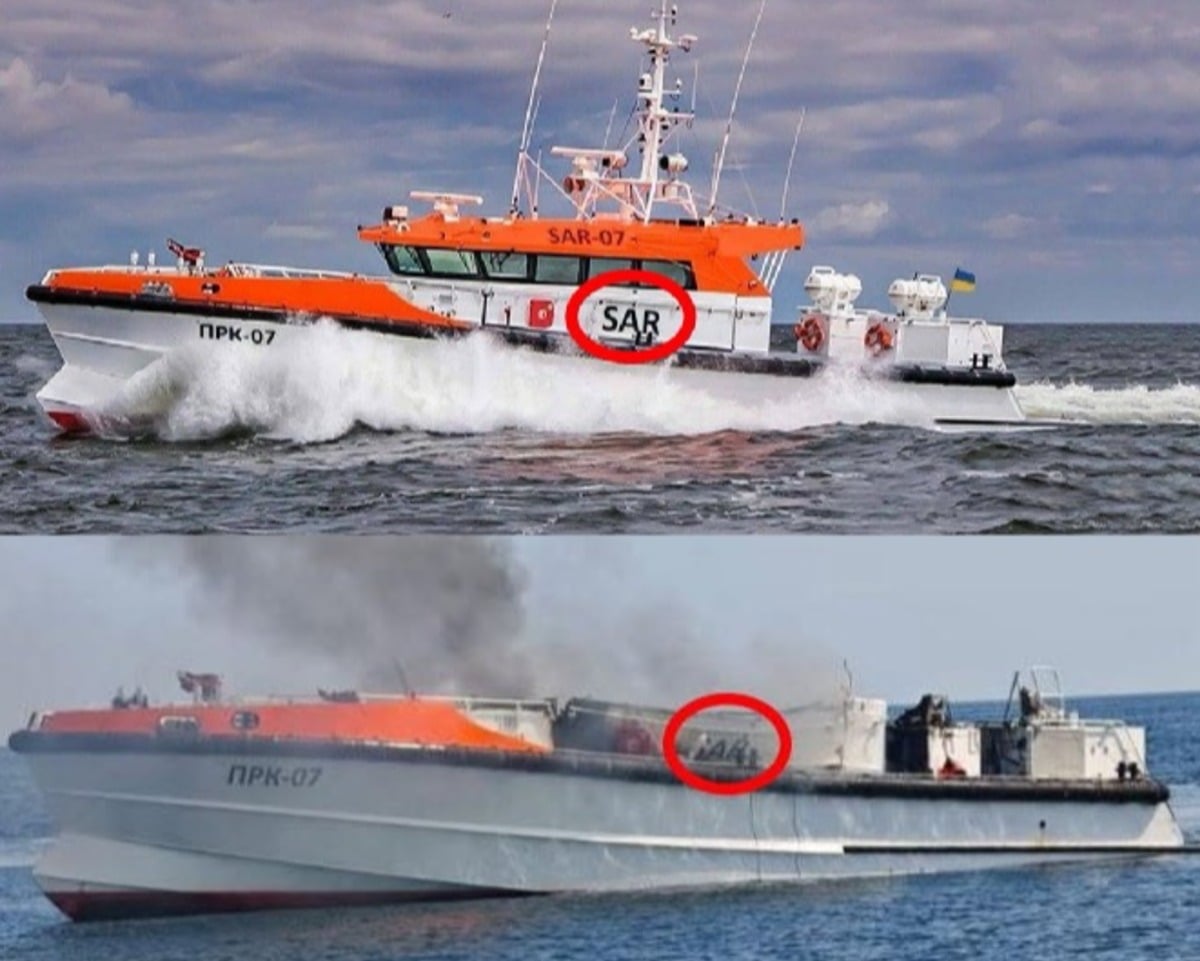
- Ukrainian Minister Kuleba confirmed Russia struck two Maritime Search and Rescue Service boats on a humanitarian mission inside Ukraine's Black Sea maritime corridor on Saturday.
- The attack caused casualties and triggered an ongoing evacuation by Ukrainian Navy vessels, with Kuleba citing a violation of Article 27 of the Second Geneva Convention.
Two civilian search and rescue vessels conducting a humanitarian mission inside Ukraine’s maritime corridor came under Russian attack on Saturday, leaving crew members wounded and triggering an emergency evacuation by Ukrainian Navy boats, in what Ukrainian officials described as a deliberate strike on protected vessels that carry explicit immunity under international law.
Ukraine’s Minister of Community and Territorial Development Oleksii Kuleba confirmed the attack on Saturday evening, publishing photographs of one of the stricken vessels and issuing a direct legal indictment of the Russian action alongside the confirmation of casualties. The targeted boats belonged to Ukraine’s Maritime Search and Rescue Service, the state agency responsible for emergency response at sea, and were operating within the humanitarian maritime corridor that Ukraine established in the Black Sea to allow civilian shipping to move through waters that have been contested since Russia’s full-scale invasion began in February 2022.
“Russia attacked two civilian search and rescue vessels, once again grossly violating the norms of international humanitarian law,” Kuleba said in his statement. “The enemy struck two boats of the Maritime Search and Rescue Service that were performing a humanitarian mission within the Ukrainian maritime corridor. Unfortunately, there are casualties. Evacuation by Ukrainian Navy boats is ongoing.”
The legal framework Kuleba invoked is specific and unambiguous. Article 27 of the Second Geneva Convention of 1949, the international treaty that governs the protection of wounded, sick, and shipwrecked military personnel at sea and is widely understood to extend protections to civilian rescue vessels operating under state or officially recognized authority, explicitly protects vessels used exclusively for search and rescue operations and for rendering assistance to people at sea. Small coastal search and rescue craft carrying no weapons, operating under a recognized rescue mandate, and conducting a humanitarian mission inside an established civilian corridor occupy precisely the category of protected vessel that the Geneva Convention was designed to shelter from attack. Russia’s strike, if confirmed as deliberate targeting rather than misidentification, would constitute a war crime under established international humanitarian law.
Kuleba framed it in exactly those terms: “Small coastal search and rescue vessels have special protection under international humanitarian law. In particular, Article 27 of the Second Geneva Convention of 1949 directly provides for the protection of vessels used by a state or officially recognized rescue organizations exclusively for search and rescue operations and for providing assistance to people at sea. This attack is further evidence of Russia’s deliberate disregard for the norms of international law and creates a direct threat to the safe functioning of humanitarian maritime corridors in the Black Sea.”
The Ukrainian maritime humanitarian corridor, established after Russia withdrew from the Black Sea Grain Initiative in July 2023 and Ukraine subsequently began routing commercial shipping through a coastal corridor under its own protection, has been a recurring source of tension in the Black Sea. Russia has repeatedly targeted vessels operating in and near the corridor, striking commercial ships, tankers, and civilian port infrastructure in Odesa and the surrounding region across multiple incidents documented by international maritime organizations and Ukrainian authorities. The attack on the rescue boats represents an escalation of that pattern from commercial targets to vessels carrying the specific legal protections of the Geneva Convention.
Ukraine’s Maritime Search and Rescue Service operates small coastal patrol and rescue craft designed for exactly the kind of operations that were underway at the time of the attack: responding to emergencies at sea, recovering personnel from damaged or distressed vessels, and providing medical assistance to sailors in Ukrainian waters. These vessels are typically lightly built, fast, and equipped with medical gear rather than weapons, making them visually and functionally distinct from military craft and clearly identifiable as non-combatant rescue platforms under the markers and markings that international law requires rescue organizations to display.
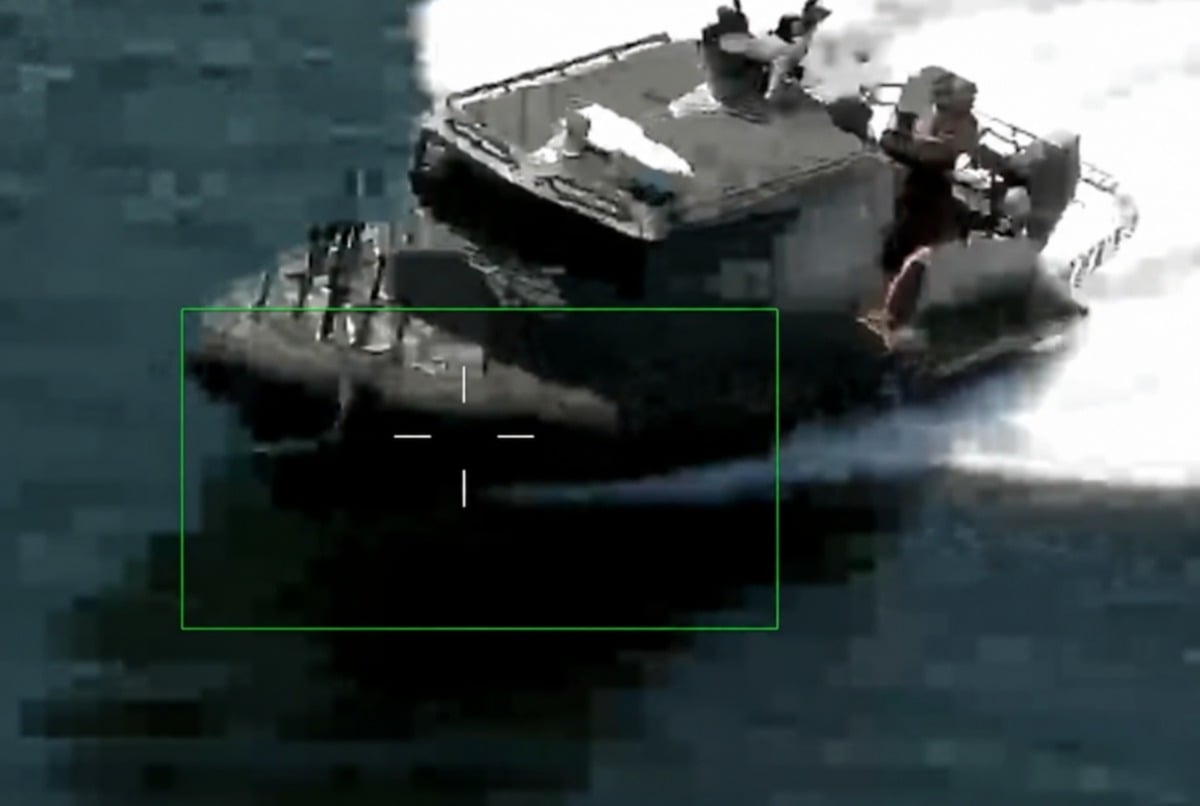
Russia has not commented on the incident. The absence of any Russian acknowledgment is consistent with its pattern of denying or ignoring strikes on protected civilian infrastructure, including hospitals, civilian vessels, grain facilities, and port infrastructure, across the full scope of its war in Ukraine. Russia consistently characterizes such strikes as either defensive responses to Ukrainian military activity or as the result of Ukrainian provocations, without addressing the specific legal protections that the targeted facilities or vessels carry.
The photographs published showed visible damage to one of the rescue boats, providing visual confirmation that a physical attack occurred and that at least one vessel sustained damage consistent with a weapons strike. The photographs did not confirm the weapon type used in the attack, and as of the time of the statement no information about the number of casualties or the severity of injuries had been made public beyond the confirmation that there were wounded aboard the vessels. The Ukrainian Navy’s ongoing evacuation operation indicated that at least one vessel was no longer capable of independent movement following the strike.