


- Rheinmetall UK introduced the Shadow Wolf tactical vehicle for the British Army's Land Mobility Programme, built on the same architecture as the Caracal entering NATO service.
- Shadow Wolf is designed for cross-country mobility, water fording, and off-road performance in contested environments aligned with the British Army's Future Soldier programme.
Rheinmetall UK has introduced Shadow Wolf, a new tactical vehicle competing for the British Army’s Land Mobility Programme, positioning it as a next-generation replacement for the aging light vehicle fleet that British ground forces currently operate across demanding operational environments.
The announcement describes a platform built on the same proven architecture as the Caracal tactical vehicle, which is already entering service with NATO partners, and engineered specifically for the cross-country mobility, water fording, obstacle negotiation, and off-road performance that modern British Army operations require.
The British Army’s Land Mobility Programme represents one of the most significant light vehicle procurements the service has pursued in years, seeking to replace a fleet that includes variants of the aging Defender and other legacy platforms that have served for decades but increasingly struggle to meet the demands of contemporary high-intensity operations. Modern land warfare, as demonstrated comprehensively in Ukraine, places extraordinary demands on tactical vehicle fleets: the need for high cross-country mobility to avoid roads that adversaries target with artillery and drone strikes, the ability to operate across varied terrain from European farmland to Arctic conditions, and the durability to sustain operational tempo without constant maintenance intervention. A vehicle that cannot keep pace with the tactical situation, or that breaks down at the wrong moment, becomes a liability rather than an asset, and the British Army’s procurement priorities reflect a hard-headed assessment of what the next generation of conflict will demand from its ground mobility fleet.
Rheinmetall’s decision to build Shadow Wolf on the same architecture as the Caracal is a deliberate commercial and technical choice that carries genuine weight in a competitive procurement. The Caracal, Rheinmetall’s light tactical vehicle platform, has secured orders from multiple NATO member nations and is progressing toward fielding in those fleets, which means Shadow Wolf’s architecture enters the British competition with operational credibility that a clean-sheet design cannot claim. Defense procurement officials evaluating a new tactical vehicle have to weigh not just the specifications on paper but the engineering maturity behind them, and a platform architecture that has been validated in allied service provides a level of assurance that prototype-only designs cannot match. Rheinmetall is offering the British Army a vehicle whose bones have been tested against real requirements, with adaptations specific to UK needs layered on top.
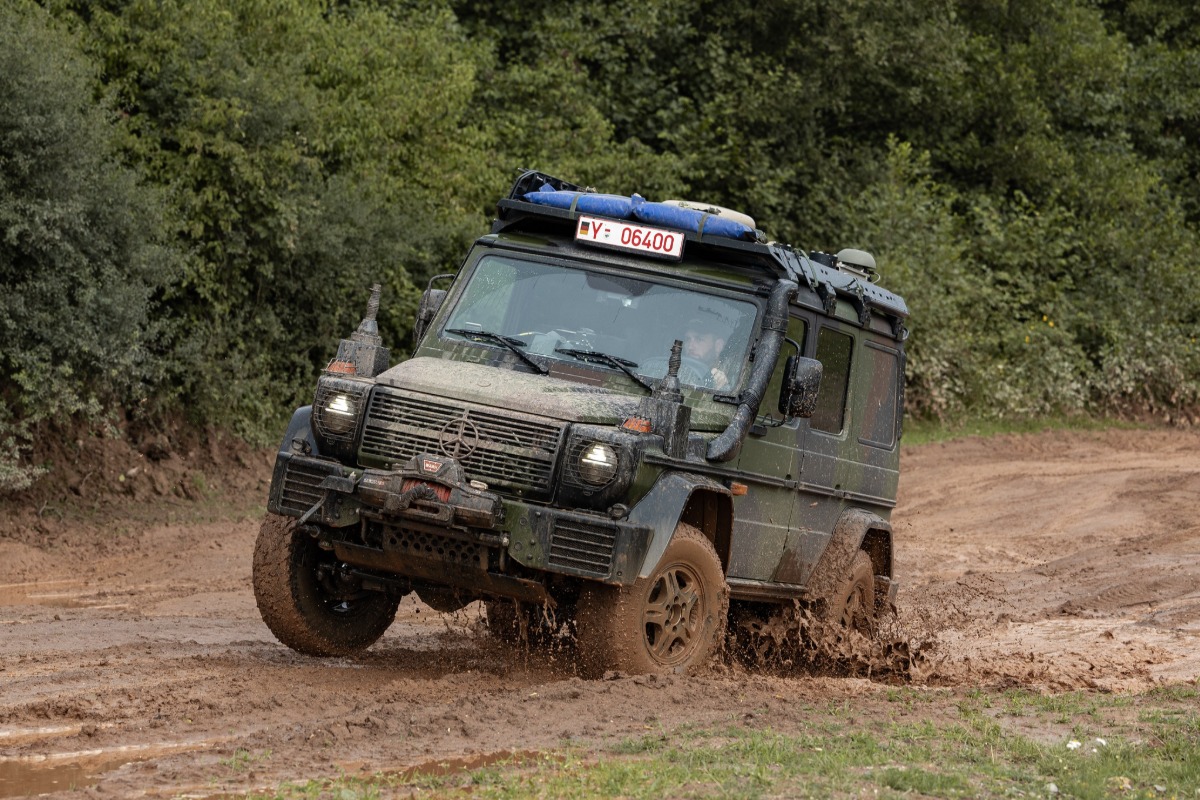
The capabilities Rheinmetall highlights for Shadow Wolf reflect the operational requirements that define light vehicle performance in contested environments. High-speed cross-country movement allows units to maneuver off predictable routes and reduces their vulnerability to the kind of persistent overhead drone surveillance that has made road movement along known axes increasingly dangerous in modern conflicts. Water fording capability allows vehicles to cross rivers and flooded terrain that would stop wheeled vehicles lacking the necessary sealing and intake extensions, maintaining operational freedom in the kind of European geography where water obstacles are a routine planning consideration. Obstacle negotiation and demanding off-road performance address the terrain complexity that real operations impose, from the muddy fields of northern Europe to the rocky terrain of potential deployment areas further afield.
The British Army’s transformation toward a more agile, deployable, and resilient force, the direction Rheinmetall explicitly references in describing Shadow Wolf’s design intent, is embodied in the Army’s Future Soldier programme, which restructures the service around greater strategic agility and reduced reliance on the heavy armored formations that defined Cold War-era British military structure. That restructuring places a premium on vehicles that can support rapid deployment by air and sea, operate effectively without the extensive logistical tail that heavier equipment demands, and perform across a wider range of environments than a single-purpose platform can cover. Shadow Wolf’s modular architecture, described by Rheinmetall as adaptable and designed to evolve, suggests the vehicle can be reconfigured for different mission roles without wholesale redesign, which aligns directly with the operational flexibility that the Future Soldier concept prioritizes.
The Land Mobility Programme competition puts Shadow Wolf against other established tactical vehicle platforms in a market that has become considerably more competitive as European defense budgets have expanded since 2022. Companies including Oshkosh, ARQUUS, Tata Advanced Systems, and others have developed or adapted platforms targeting the same requirement space that Rheinmetall is pursuing with Shadow Wolf.