


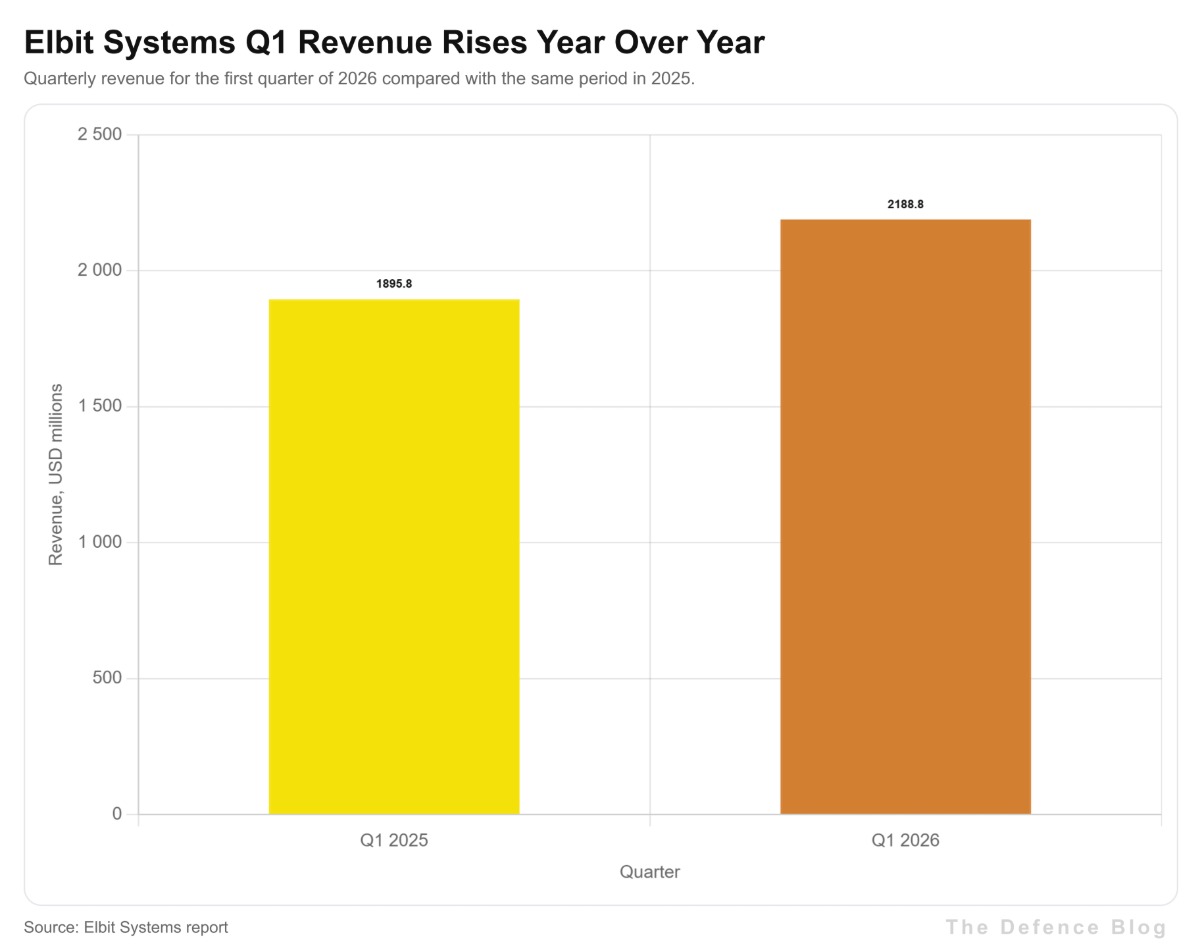
- Elbit Systems reported Q1 2026 revenues of $2.19 billion and a record order backlog of $30.2 billion, the first time it has exceeded $30 billion.
- GAAP net income reached $160.8 million and non-GAAP net income $186.4 million, with double-digit growth in both revenue and profitability year-on-year.
Elbit Systems crossed a milestone it has never reached before, reporting a record order backlog exceeding $30 billion for the first time in the Israeli defense company’s history, as first-quarter 2026 revenues hit $2.19 billion and the company announced a separate $1.4 billion European modernization contract on the same day.
The results, published May 26 from the company’s Haifa headquarters, show double-digit growth in both revenue and profitability against the same period a year earlier, with non-GAAP operating margins surpassing 10 percent for the quarter.
The $30.2 billion backlog figure is the number that tells the real story of where Elbit sits in the current defense market. A backlog represents confirmed orders that have not yet been delivered or invoiced, meaning it is essentially a pipeline of guaranteed future revenue. At $2.19 billion per quarter in revenues, a $30 billion backlog represents roughly three and a half years of work already contracted and waiting to be executed. For a company that has historically operated at a fraction of that scale, the number reflects how dramatically European and global defense spending has accelerated since Russia’s full-scale invasion of Ukraine in 2022 forced governments to confront the gap between their military rhetoric and their actual procurement budgets.
Elbit’s financial results for the quarter include GAAP net income of $160.8 million and non-GAAP net income of $186.4 million, with earnings per share of $3.34 on a GAAP basis and $3.87 on a non-GAAP basis. The difference between the two figures reflects accounting adjustments that the company applies to strip out items it considers non-representative of underlying operational performance, a standard practice among publicly traded defense companies that allows investors to compare operational trends without the noise of one-time charges or amortization of acquired assets. Free cash flow generation remained strong during the quarter, though the company did not disclose a specific figure in the summary results.
Bezhalel Machlis, Elbit’s president and CEO, framed the quarter’s performance against the company’s strategic trajectory rather than treating it as a standalone result.
“We began 2026 with a strong quarter across all key metrics, including double-digit growth in revenue and profitability, with Non-GAAP operating margins surpassing the 10% mark. Free Cash Flow generation remained very strong during the quarter, with backlog reaching a record level, exceeding $30 billion for the first time.”
Machlis added a direct reference to the European contract announced the same morning, treating it as confirmation of the company’s positioning rather than a separate piece of news.
“Earlier today, we announced a significant European contract win, further strengthening our position as a trusted strategic partner to customers worldwide and reinforcing our ability to support their evolving defense needs and challenges.”
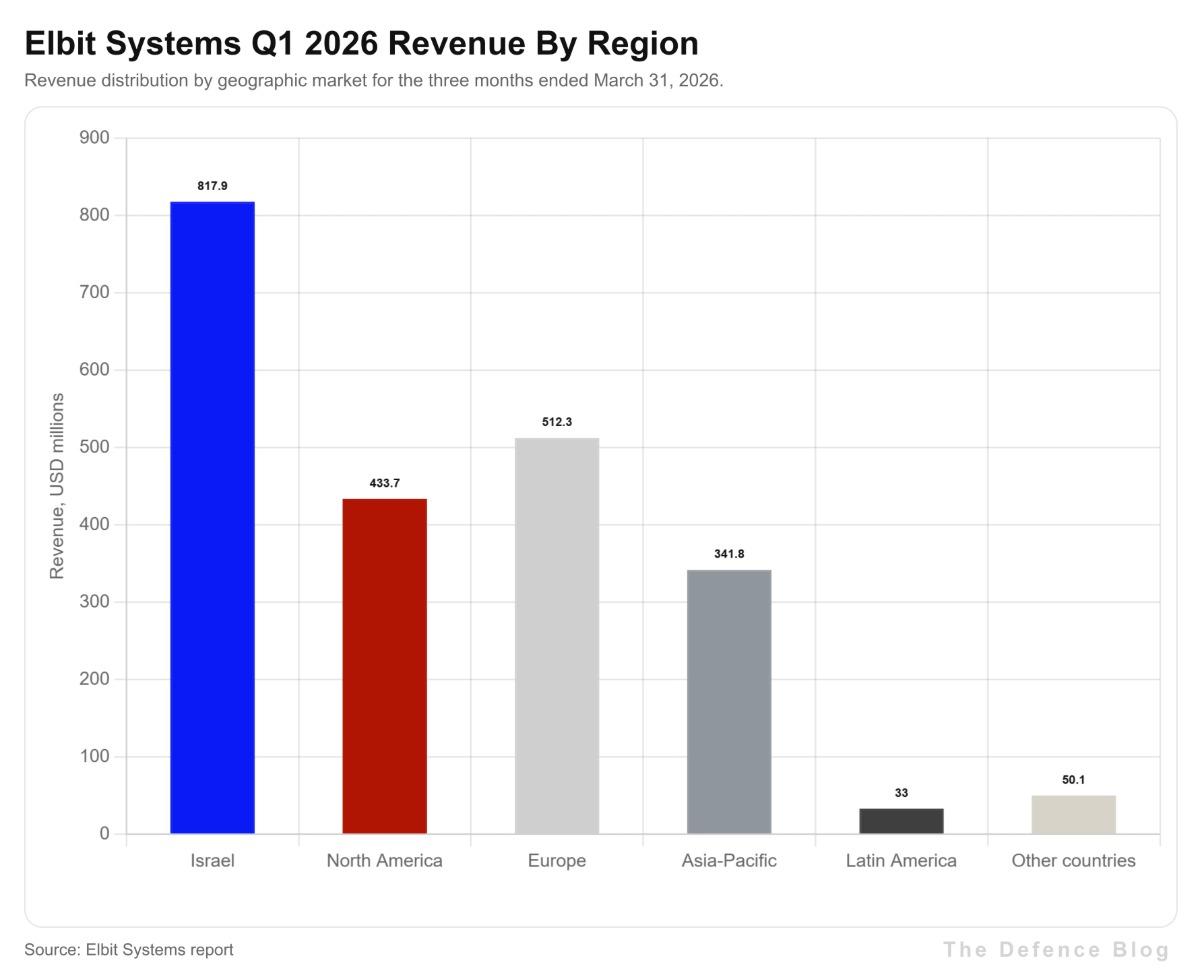
That $1.4 billion European contract, awarded by an undisclosed customer for a comprehensive five-year military modernization program covering autonomous systems, electronic warfare, precision munitions, electro-optical sensors, and software-defined radio networks, was announced hours before the quarterly results and together with the backlog figure paints a picture of a company that is not simply benefiting from increased defense spending but actively capturing a disproportionate share of it. Elbit does not break down its backlog by geography in summary reporting, but the company’s customer mix has historically leaned heavily on European and NATO-aligned buyers, a positioning that has become strategically advantageous as those same customers have accelerated procurement on a scale not seen since the Cold War.
The operational challenge Machlis described is one that strong demand creates rather than relieves. Converting a $30 billion backlog into delivered systems requires production capacity, supply chain reliability, and workforce depth that cannot be conjured quickly. Machlis addressed that challenge directly, describing a strategy built around scaling production through automation, robotics, and AI rather than simply hiring more workers, while maintaining what he called strict capital discipline to ensure growth does not outrun the company’s financial foundations.
“Our strategic positioning reflects our evolution into a fully integrated end-to-end defense provider across land, sea and air. With demand rising well above historical levels, we continue to focus on order execution. To meet this demand and support sustainable long-term growth, we are scaling production capacity, increasing the use of automation, robotics and AI, while maintaining strict capital discipline and expanding operational margins. At the same time, we are increasing our investment in R&D and innovation to shape the Company’s next-generation offering and strengthen our long-term growth platform.”
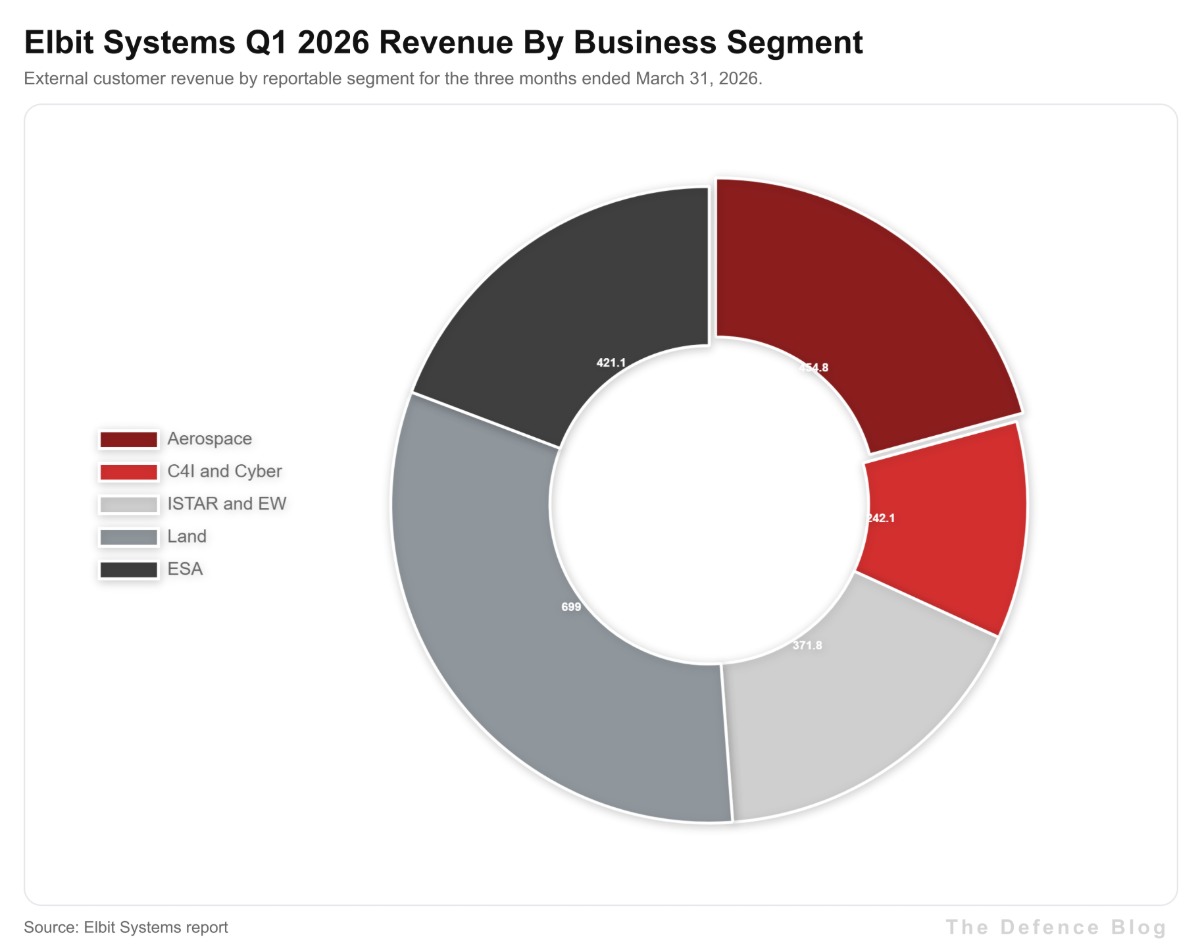
The phrase “end-to-end defense provider” in Machlis’s statement describes an intentional evolution in how Elbit positions itself commercially. Historically, defense electronics companies supplied components or subsystems that prime contractors integrated into larger platforms. Elbit has spent years building the portfolio depth to offer complete integrated solutions, combining sensors, communications, weapons guidance, electronic warfare, and command systems into coherent packages that a customer can procure from a single supplier. The $1.4 billion European contract is a concrete expression of that model, and the record backlog suggests the market is responding to it.
Research and development investment is also increasing, a signal that Elbit is not treating the current demand surge as a windfall to be harvested but as a foundation to build on. Defense technology cycles move faster than they did a generation ago, driven partly by commercial innovation in areas like autonomous systems, AI, and communications that feeds directly into military applications. A company that does not invest aggressively in next-generation capabilities during a period of strong revenue risks finding its current product portfolio obsolete precisely when its existing backlog has been delivered and it needs to win the next round of contracts.
Elbit Systems enters the second quarter of 2026 with more confirmed future business than it has ever held, a quarterly revenue run rate that would put it on track for roughly $8.8 billion annually if sustained, and a strategic positioning in the European defense market that its competitors will find difficult to displace quickly.