


- Russian military-linked sources published footage claiming a kamikaze drone strike on a Ukrainian An-26 transport aircraft parked at an airfield in Mykolaiv, about 80 kilometers from the front line.
- Russian Telegram channels said the strike was carried out by the Rubikon Center unit and cited the use of satellite-linked drones to conduct long-range attacks on aircraft and radar targets.
The Russian Defense Ministry on Sunday published footage claiming a successful drone strike on a Ukrainian An-26 transport aircraft parked at an airfield in Mykolaiv, far from the active front line.
According to the released video, the aircraft was hit directly on the apron at an airfield approximately 80 kilometers from the line of contact. The footage was attributed to Russia’s elite Rubikon Center unit, which claimed responsibility for a series of long-range kamikaze drone strikes targeting both radar systems and a parked An-26 transport aircraft.
Russian Telegram channels reported that the An-26 was struck while stationary at the airport, with no indication that it was preparing for flight at the time of the attack. The video shows a direct impact on the aircraft.
In addition to the An-26 attack, Russian sources also released footage of a separate long-range strike carried out at a reported distance of 236 kilometers. That attack targeted a mock-up or airframe of a Mi-24 helicopter, according to the same channels.
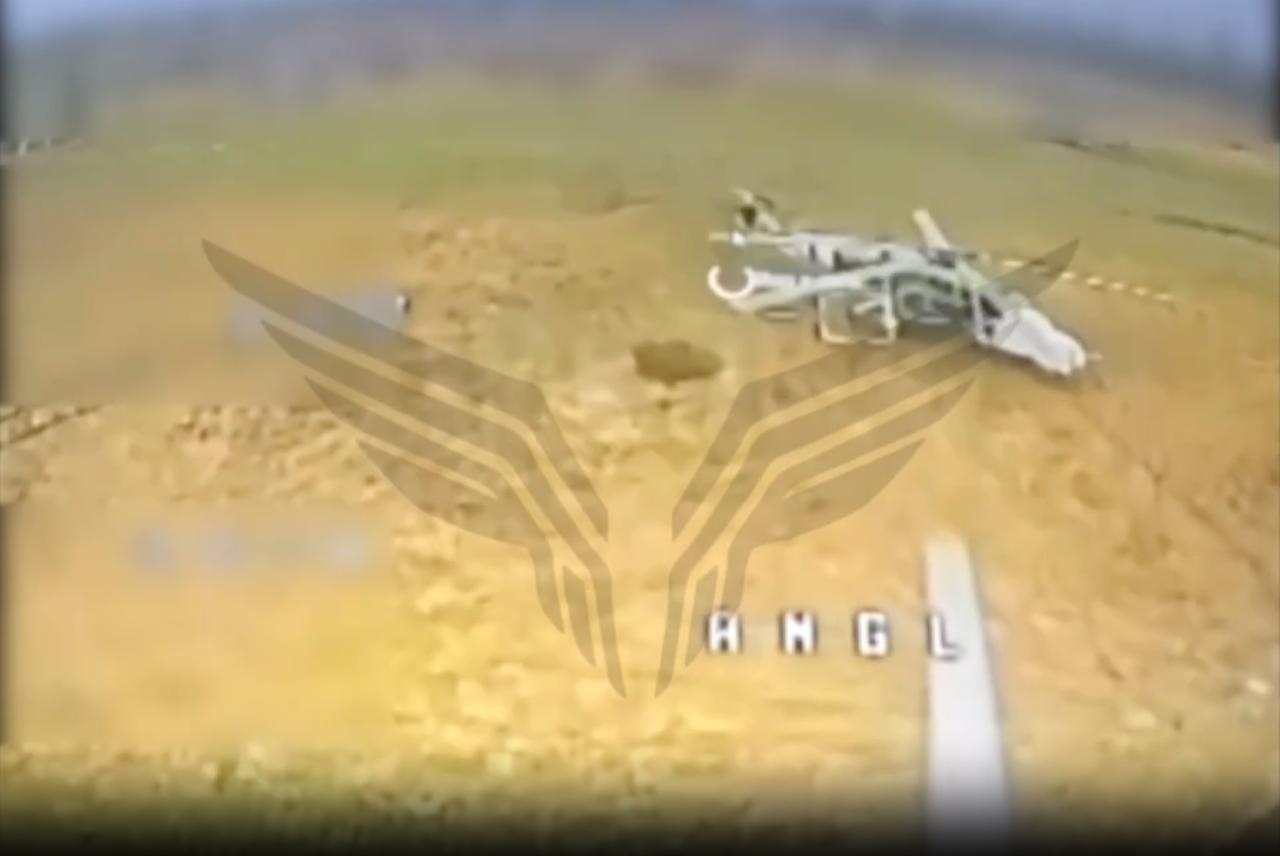
The Telegram channel Voyennyy Osvedomitel cited the expanded range of recent Russian drone operations and attributed it to changes in onboard communications equipment. The channel stated: “This includes, among other things, thanks to the beginning of the use on domestic drones ‘Molniya-2’ and other unmanned aerial vehicles of Starlink terminals.”
The same source framed the strikes as retaliation for Ukrainian long-range drone operations. “In fact, these strikes are a direct response to similar Ukrainian practices of launching their kamikaze drones using ‘Starlinks’ against aviation and air defense systems in Crimea,” the channel said.
Russian sources described the operation as evidence of expanded reach for loitering munitions, allowing strikes against aviation assets located deep in rear areas rather than near forward positions. The footage released by Rubikon Center was presented as proof that such attacks are now being conducted at distances previously considered relatively safe from drone threats.
The Rubikon Center is described by Russian sources as a specialized unit focused on unmanned systems and precision strike missions.