


- PteroDynamics and AeroVironment demonstrated an electronic warfare–equipped Transwing VTOL unmanned aircraft during the U.S. Navy’s Silent Swarm 25 event in Michigan.
- The autonomous aircraft completed multiple surveillance and threat-detection scenarios relevant to future Navy littoral operations.
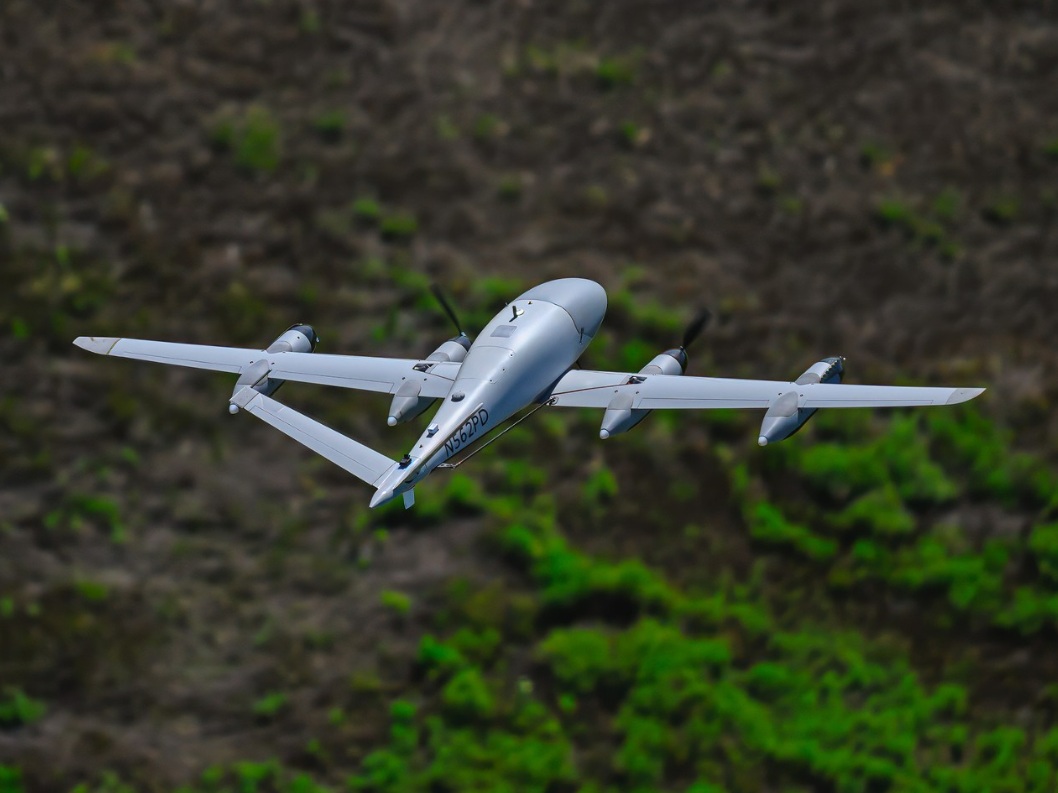
PteroDynamics and AeroVironment said they have completed a joint technology demonstration integrating electronic warfare sensors on an autonomous vertical takeoff and landing unmanned aircraft, marking a step in exploring new options for U.S. Navy littoral surveillance missions.
According to a press release distributed by EINPresswire on December 16, the companies collaborated during Silent Swarm 25, an event hosted by the Naval Surface Warfare Center (NSWC) Crane Division at the Alpena Combat Readiness Training Center in Alpena, Michigan. The demonstration paired multiple AeroVironment electronic warfare sensors with the PteroDynamics P4 Transwing autonomous VTOL unmanned aircraft system.
Company says the integrated system was evaluated across three operationally relevant scenarios in multi-domain environments. During the event, the Transwing observed, detected, and affected representative threats to inform potential future U.S. Navy concepts for littoral surveillance.
“PteroDynamics’ Transwing VTOL UAS with AV’s EW payloads demonstrated important new capabilities in a realistic and challenging operational environment,” said Tim Whitehand, PteroDynamics vice president of engineering. “We are excited to have worked closely with AV to equip the Transwing with these innovative EW capabilities. The Transwing’s compact footprint, rapid and disturbance-resilient transition, and highly efficient wing-borne flight enable operations from confined or remote locations without runways, making it an ideal platform for maritime littoral operations.”
AeroVironment said its electronic warfare systems are designed with open and interoperable architectures to shorten payload integration timelines across airborne, maritime, and ground intelligence, surveillance, and reconnaissance platforms. The company framed the Silent Swarm 25 event as a venue to test rapid integration and operational use.
“Our open, interoperable EW systems are strategically engineered to reduce payload integration timelines for airborne, maritime, and ground ISR platforms, helping us meet unique mission needs with speed and scale,” said Conrad Smith, general manager of Electronic Warfare Systems at AeroVironment. “By participating in events, like Silent Swarm 25, and innovating alongside other industry leaders, like PteroDynamics, we are expanding mission-critical capabilities for the U.S. Navy.”
PteroDynamics describes the Group 3 Transwing platform as combining fixed-wing speed, range, and endurance with VTOL performance in an autonomous design. The aircraft transitions between vertical and horizontal flight by unfolding its wings, a configuration intended to provide stability during takeoff and landing while maintaining efficient wing-borne flight.
During Silent Swarm 25, the Transwing launched and recovered from confined zones along the tree line on the shore of Lake Huron. According to the company, the aircraft operated without reliance on runways and without constraints tied to wind direction, demonstrating expeditionary use from austere locations. PteroDynamics also said the system’s modular architecture allowed the AeroVironment electronic warfare payload to be integrated and flight tested in a single day.
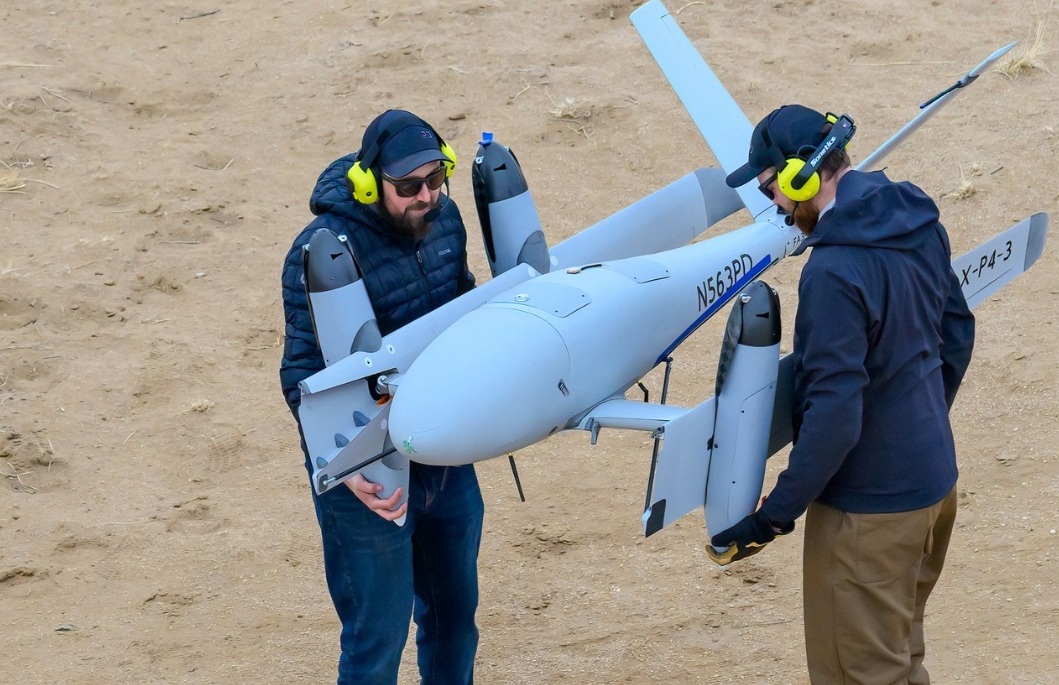
Beyond the joint demonstration, PteroDynamics said the Transwing achieved a regulatory milestone during the event. The company received a Special Airworthiness Certificate–Experimental Category from the Federal Aviation Administration for the P4 Transwing unmanned aircraft system.
According to the company, the certificate allowed PteroDynamics, for the first time, to fly the 89-pound aircraft with an airworthiness certificate in U.S. national airspace near Alpena during Silent Swarm 25. Previous U.S. Navy demonstrations of the Transwing were conducted at sea, including at RIMPAC 2024 and the 2023 Hybrid Fleet Campaign Event.
PteroDynamics said the FAA certification review and approval process took more than seven months and reflected regulator confidence in the aircraft’s maturity, safety, and supporting processes. The certification enabled research and development flights in U.S. airspace in support of Navy experimentation.