


- New video confirms Russian Shahed-136 drones are being used to deploy PTM-3 anti-tank mines mid-flight.
- Each drone carries two KPТМ canisters, each ejecting a mine using a small charge before impact.
Newly surfaced footage has confirmed for the first time that Russia is operating modified Shahed‑136 one‑way attack drones—produced domestically as Geran‑2—with under‑wing payloads containing PTM‑3 anti‑tank mines.
The video, recorded by a Ukrainian interceptor drone during an engagement, captures the moment a Russian drone ejects its KPТМ canisters, each containing a PTM‑3 mine, before the Geran‑2 continues its flight.
According to the Ukrainian description, “two KPТМ canisters are mounted under the wings, and each canister holds one PTM‑3 anti‑tank mine. The canister has an ejection charge and is needed to throw the mine a certain distance before it falls to the ground and becomes armed.”
The footage, circulated on Ukrainian defense channels, documents the mine release sequence clearly as the Shahed variant attempts to deploy its payload before impact.
Ukrainian sources also noted that the drone was intercepted shortly afterward, but not before the release action was captured on video. This marks the first visual confirmation that Russia has begun using Shahed/Geran drones as improvised airborne minelayers—a role not previously attributed to these Iranian‑designed systems.
The PTM‑3 mine is particularly dangerous because of the way it activates. As described in the report, “PTM‑3 reacts to changes in the electromagnetic field around it (it reacts to large metal objects such as a tank or an armored vehicle). The mine cannot be disarmed; it must not be moved or lifted under any circumstances. It can be rendered safe only by physically destroying it on site.”

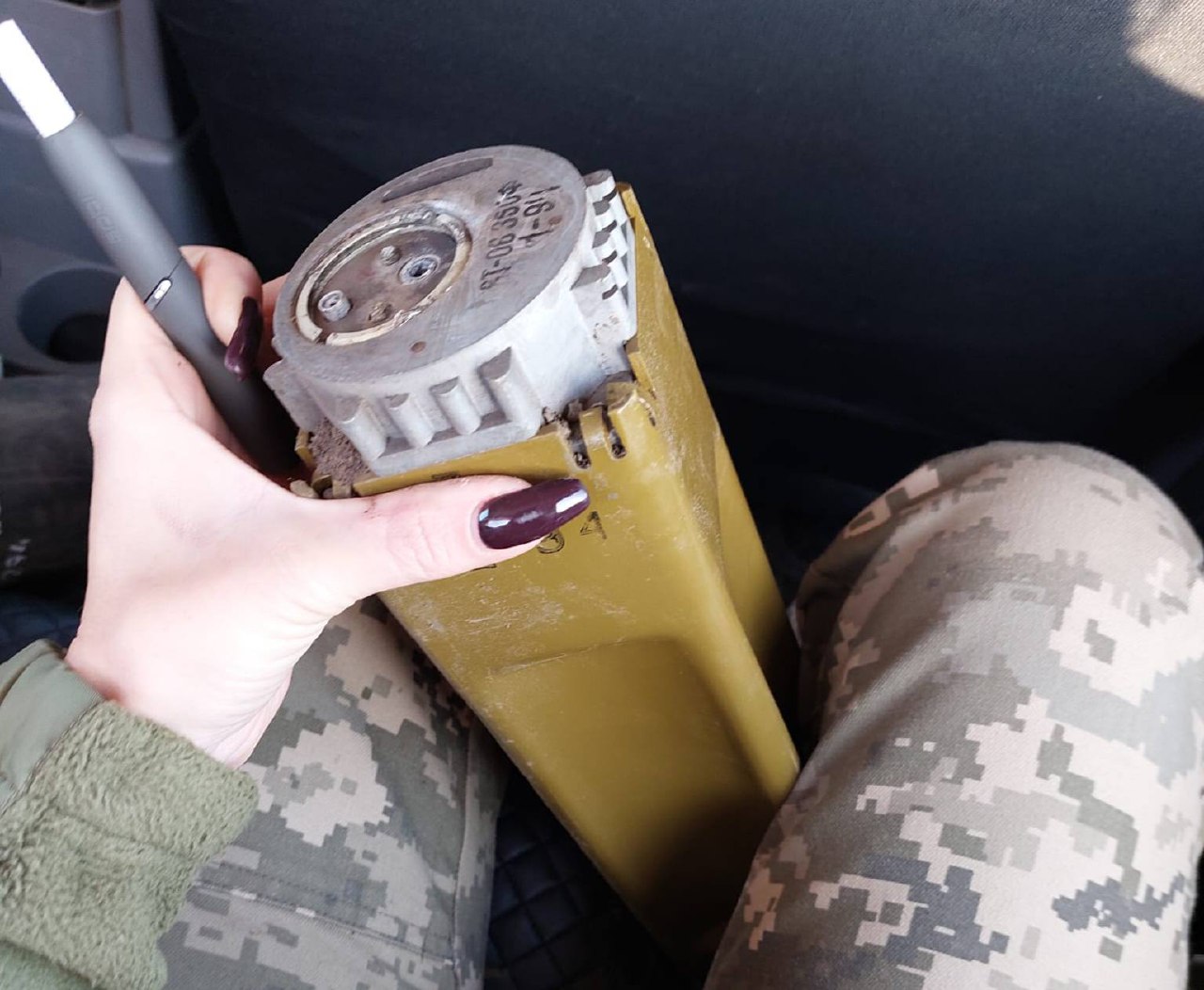
The PTM‑3 is a Soviet‑designed scatterable anti‑tank mine, normally delivered by artillery rockets or engineering systems. Its adaptation for deployment from a one‑way attack drone indicates ongoing Russian efforts to expand the tactical role of the Shahed platform. Ukrainian analysts have previously documented Russia experimenting with new warheads, fragmentation loads, and navigation upgrades for the Geran‑2 fleet.
The improvised KPТМ canisters appear to function similarly to classical scatter‑mine dispensers, using a small charge to eject the mine laterally as the drone flies over a target zone. While each Shahed can carry only two mines in this configuration, the ability to drop them far behind the frontline or on retreat routes may create new challenges for Ukrainian forces, particularly armored vehicles operating near likely drone ingress corridors.
For years, Russia has relied on Shahed‑136/Geran‑2 drones for long‑range strikes against infrastructure, air defenses, logistics hubs, and civilian targets. Their conversion into airborne minelayers adds a new dimension—one that merges psychological pressure with area‑denial effects even when the drone fails to reach its main objective.