


- Skyeton said its Raybird reconnaissance drone was struck by two SA-8 Gecko surface-to-air missiles during a mission over Russia’s Kursk region but remained airborne.
- The drone’s airframe and autonomous navigation system enabled it to return to base despite severe damage to its camera gimbal.
A Ukrainian-built reconnaissance drone continued its mission and returned safely to base after being struck by two SA-8 Gecko surface-to-air missiles during operations over Russia’s Kursk region, according to the drone’s manufacturer, Skyeton.
The company said the Raybird unmanned aircraft sustained heavy damage during an active combat mission but remained airborne due to its airframe design and autonomous navigation systems.
In a statement, Skyeton described the incident as follows: “Somewhere over Kursk, in the middle of an active combat mission, Raybird was hit. Twice. Two 9K33 ‘Osa’ [NATO name: SA-8 Gecko] SAMs found their mark. The airframe took damage. The camera gimbal was practically destroyed.”
Despite the damage, the company said the drone was not lost.
“But the aircraft didn’t go down. The team didn’t lose the bird. And no one died — there was no one onboard. Despite severe damage, Raybird managed to return to base. It was safely landed by the crew thanks to the aircraft’s resilient airframe and a fully autonomous navigation system,” said the company.
Skyeton added that the incident underscores the core value of unmanned aviation in combat environments.
The Raybird unmanned aerial system is a small tactical reconnaissance platform used for long-endurance intelligence, surveillance, and search-and-rescue missions. The system consists of the air vehicle, a portable ground control station, antenna terminal, and launch catapult.
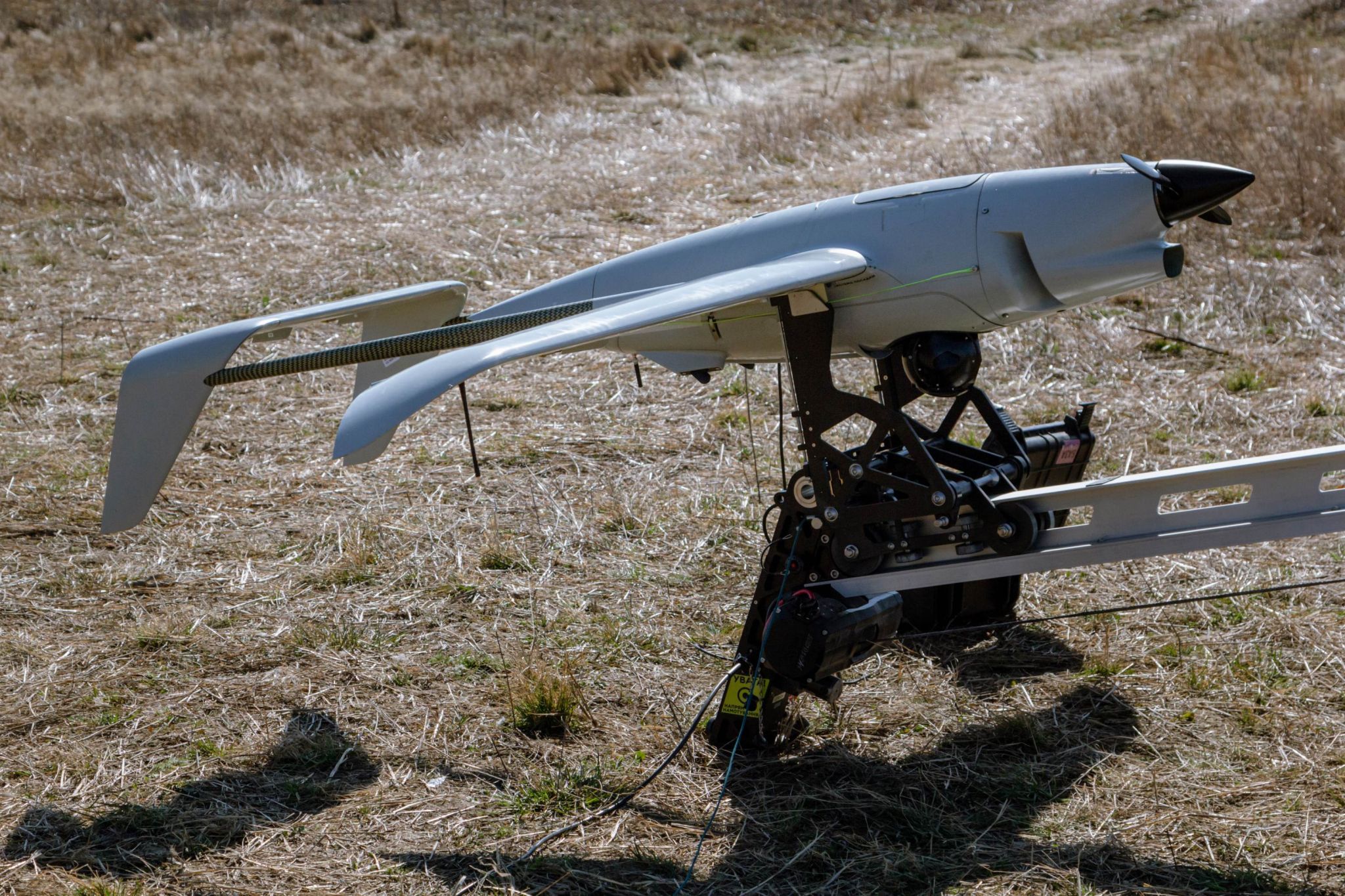
The aircraft does not require manual input of flight coordinates and can fly autonomously along preprogrammed routes while maintaining a direct control link with an operator at distances up to 240 kilometers.
Raybird has been employed extensively by Ukrainian forces for real-time surveillance, artillery adjustment, and reconnaissance of Russian troop positions. It performs missions both day and night, using optical and infrared payloads to track targets on land and water surfaces.