


At the People’s Liberation Army Air Force’s “Anti-Uncontested Front-2025” maker competition in Xi’an, Chinese developers publicly displayed a new family of interceptor drones intended to counter hostile reconnaissance and strike unmanned aerial systems, event coverage shows.
The unmanned interceptors were presented as a lower-cost, more flexible alternative to traditional air-defence systems and appear aimed at meeting a growing operational demand to defeat swarms and stand-off loitering munitions.
The lineup on display did not include formal model names or technical specifications.
Organizers and exhibitors withheld detailed performance figures, and the Chinese defence sector has not released additional data on ranges, sensor suites or engagement modes. What was shown, however, emphasized rapid detection and local interception as a fielded concept: compact airframes, forward-facing sensors and guidance modules designed to intercept small, low-signature targets.
China’s public demonstration follows a pattern of rapid adaptation observed across multiple militaries. In recent years, Chinese forces have studied battlefield developments abroad and accelerated acquisition of small unmanned platforms. The Xi’an display built on earlier moves by the People’s Liberation Army to develop and field FPV and loitering attack drones as a complement to more conventional systems. During the competition, manufacturers and teams highlighted the interceptors’ potential as a cheaper and more adaptable layer inside broader layered-defense concepts.
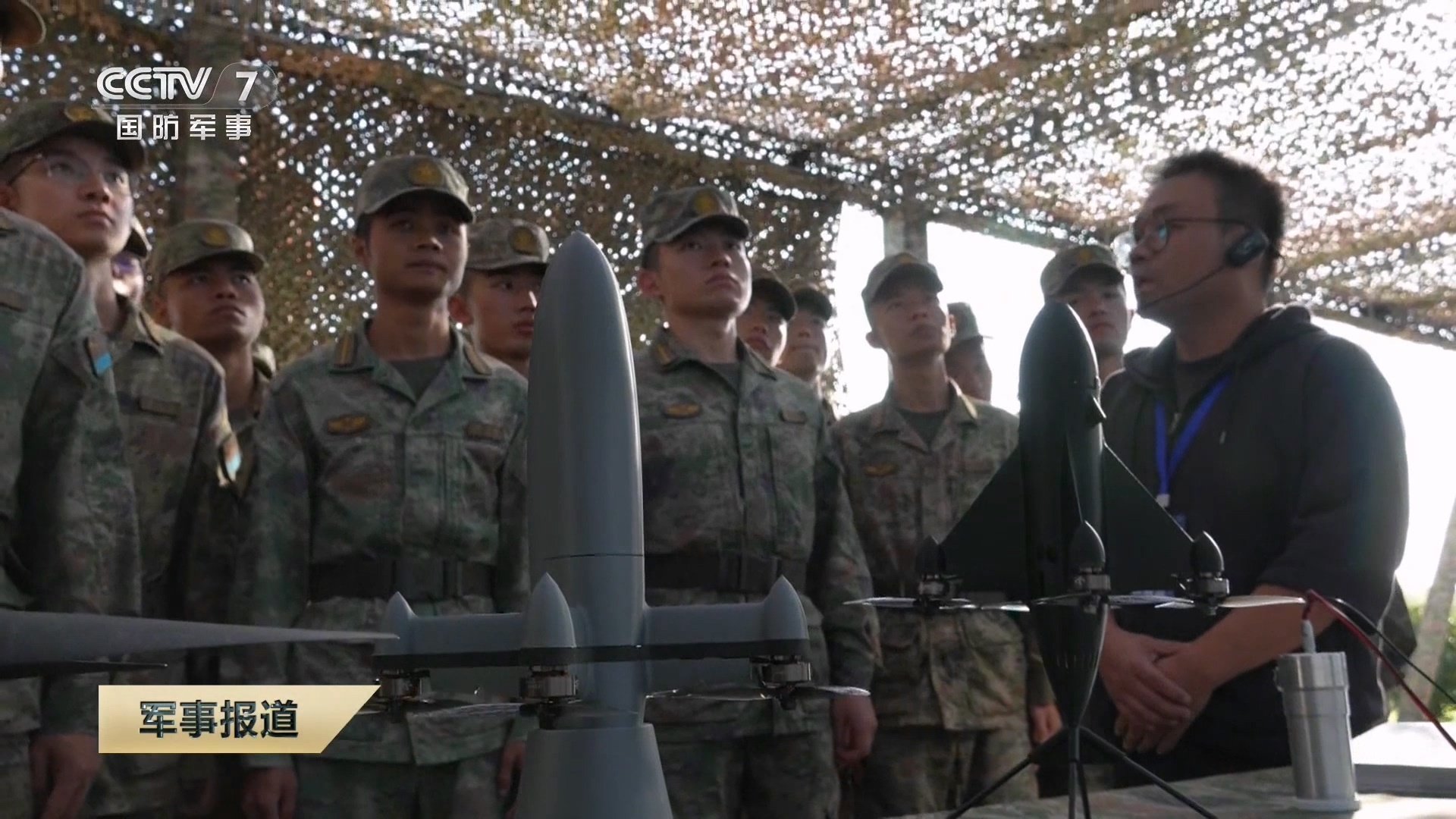
Analysts and observers note that the development effort appears to draw on lessons from the Ukraine war, where massed loitering munitions and reconnaissance UAVs have prompted novel countermeasures. China has already incorporated some Russian partner experience into training and procurement, and the new interceptor family reflects a continuing effort to translate emerging tactics into deployable hardware.
The interception concept on display leans toward multiple short-range, low-cost nodes working in concert to deny airspace to small aerial threats. That approach favors platforms that can be produced in quantity, relocated quickly and integrated with local sensing and command systems. It also reflects a broader shift in air-defence thinking where distributed effects and electronic-kinetic mixes are used to defend against low-signature, high-volume attacks.