


Russian assault units fighting in Ukraine are increasingly resorting to improvised methods to survive on the battlefield, modifying civilian vehicles with makeshift armor to protect against Ukrainian FPV drone strikes.
Images and battlefield footage show small cars crudely reinforced with welded steel rods, wire mesh, and scrap metal — a style of improvised protection that Russian troops have nicknamed “lapsha,” or “noodles,” due to its tangled, cage-like appearance. The ad-hoc conversions have drawn comparisons to the post-apocalyptic vehicles seen in the Mad Max film franchise.
These field-engineered vehicles are being used by Russian storm units to compensate for the shortage of modern armored personnel carriers and infantry fighting vehicles. Lacking sufficient armored platforms, troops are repurposing stolen or requisitioned civilian vehicles, equipping them with basic protective structures in an attempt to improve survivability on the front lines.
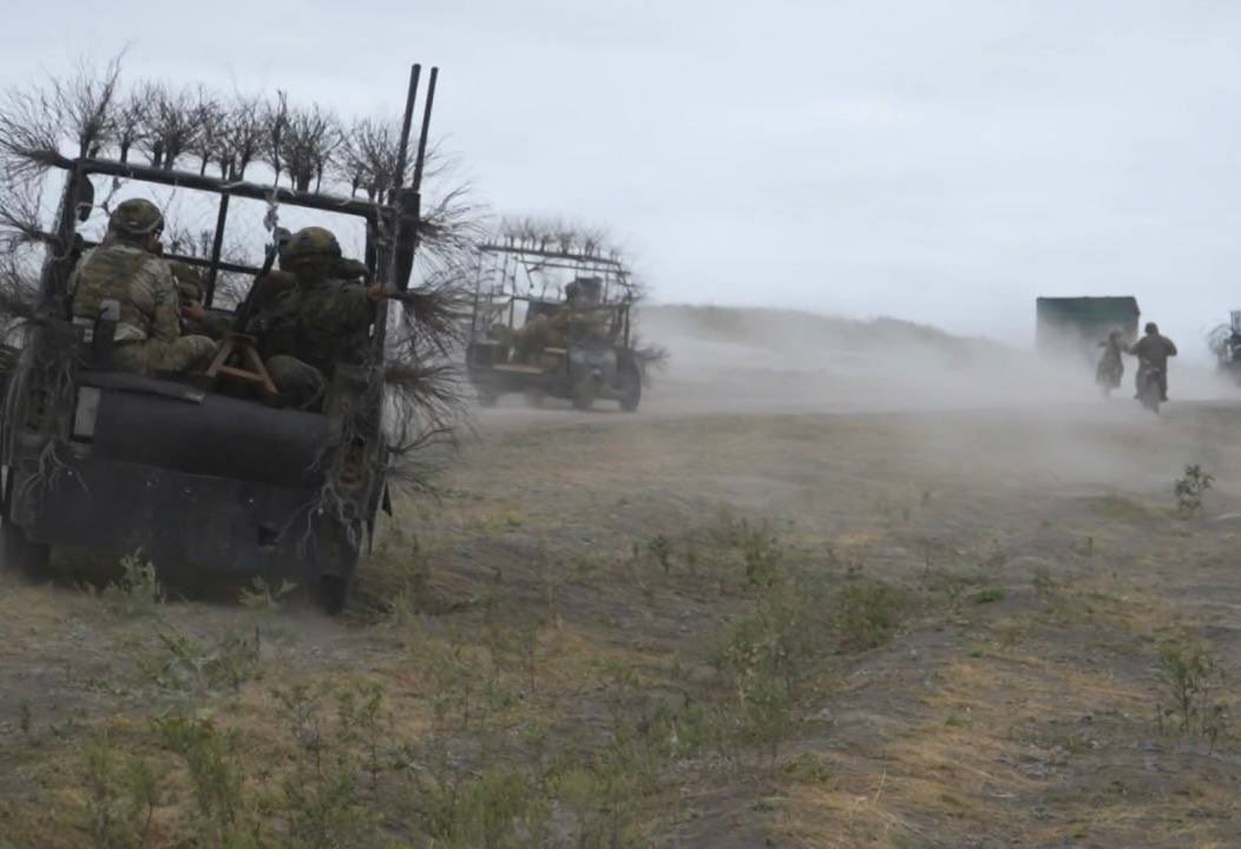
The so-called “lapsha” upgrades represent the next stage in Russia’s evolving counter-drone tactics. Earlier in the conflict, Russian forces began attaching metal cages, mesh panels, and improvised screens to tanks and armored vehicles to mitigate the threat posed by Ukrainian loitering munitions and kamikaze drones. The latest adaptations apply similar principles to lighter platforms, enabling even basic vehicles to attempt drone defense.
The concept is simple but crude: by surrounding the vehicle with a cage of welded bars, wire, and branches, Russian troops hope to disrupt the fusing or trajectory of incoming FPV drones before they strike the vehicle’s vulnerable surfaces. However, the effectiveness of such improvised armor remains questionable. Ukrainian drone operators say the added structures often provide little real protection against precision-guided drones that can maneuver to exploit weak points or detonate within the vehicle’s exposed interior.

Despite its limitations, the widespread appearance of “Mad Max-style” vehicles underscores the pressure facing Russian units as the war enters its fourth year. The Russian defense industry has struggled to replenish battlefield losses, leaving many units under-equipped and reliant on improvisation. According to open-source assessments, Russian forces have lost or had damaged hundreds of armored vehicles since the start of the full-scale invasion, forcing commanders to deploy non-standard solutions to maintain mobility and reduce casualties.