


China has released the first official footage of flight operations from its newest aircraft carrier Fujian, now in the final stages of sea trials before entering service with the People’s Liberation Army Navy (PLAN).
The images, published by the PLAN, show not only takeoffs and landings of the older carrier-based fighter J-15T but also the new fifth-generation J-35 stealth fighter and the KJ-600 airborne early warning and control (AEW&C) aircraft. According to official materials, both advanced platforms are conducting carrier trials from Fujian for the first time.
The J-35, China’s long-anticipated stealth carrier fighter, represents the PLAN’s most advanced attempt to field a low-observable, multirole combat jet designed to rival U.S. Navy F-35C operations at sea. Meanwhile, the twin-engine KJ-600 fills a gap in China’s carrier aviation by providing airborne early warning coverage similar in role to the U.S. Navy’s E-2D Hawkeye. Together, the two aircraft mark a leap in Beijing’s ability to project and sustain carrier-based airpower.
Of particular note, the carrier footage confirmed that the launches were conducted using an electromagnetic aircraft launch system (EMALS). Until now, the U.S. Navy’s USS Gerald R. Ford was the only operational carrier in the world using such technology. EMALS provides smoother acceleration for heavy aircraft compared to ski-jump or steam catapult systems, enabling the operation of larger, heavier, and more technologically demanding aircraft.
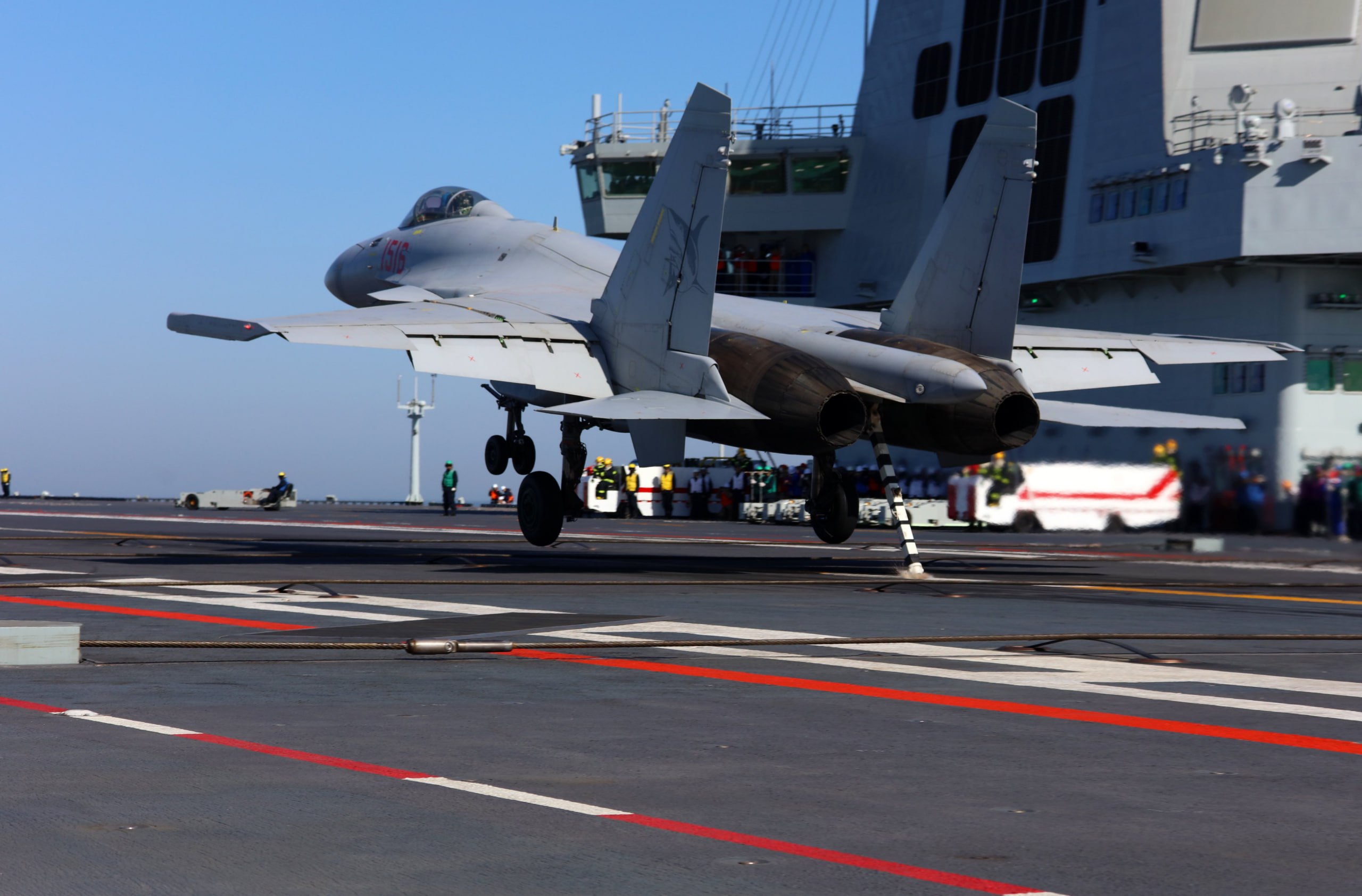
Fujian—China’s third aircraft carrier and the first fully domestically designed flat-deck supercarrier—would be the platform to introduce these technologies. The confirmation of EMALS operations, alongside stealth fighter and AEW&C integration, suggests that the PLAN is moving closer to achieving capabilities once considered exclusive to the U.S. Navy.
The Fujian has been under construction since 2015 and was launched in 2022. At more than 80,000 tons displacement, it dwarfs China’s first two carriers, Liaoning and Shandong, both of which rely on ski-jump configurations that limit aircraft payload and range. By contrast, Fujian’s EMALS and larger deck design bring Chinese naval aviation into a new era of capability.
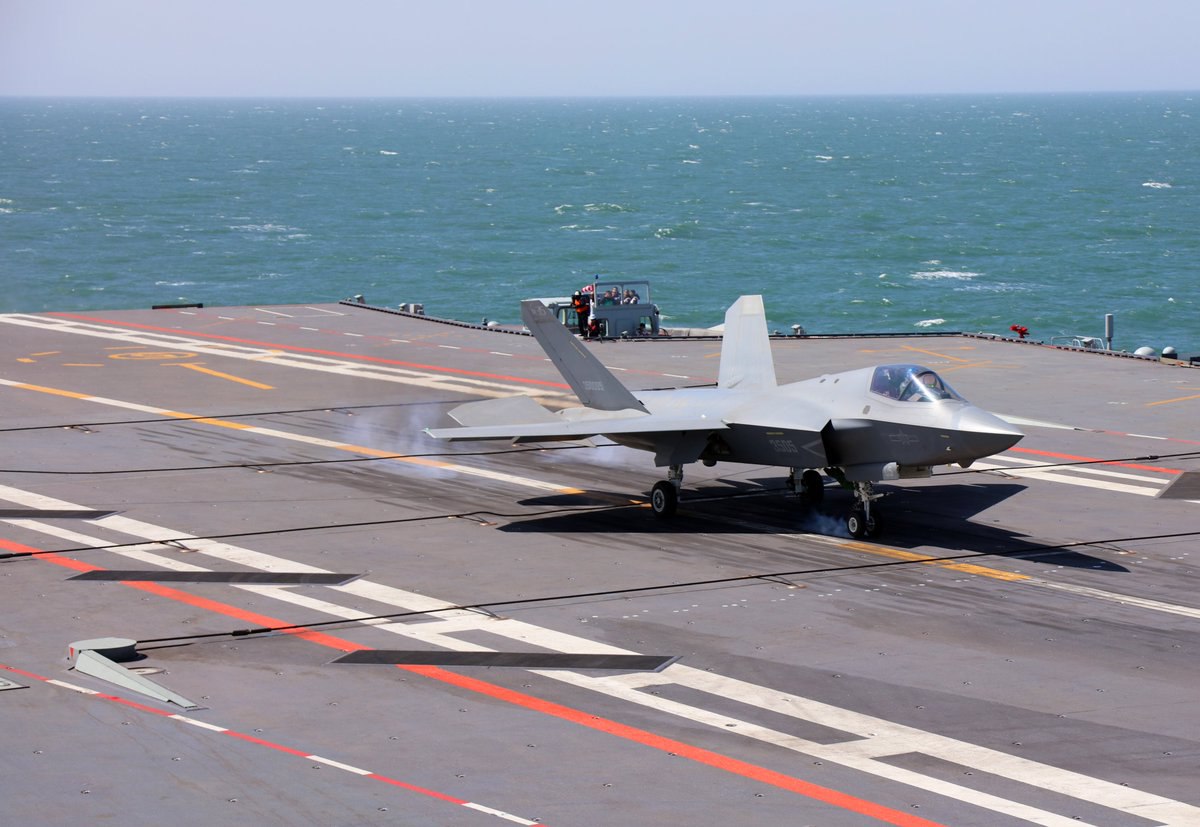
In recent years, Beijing has prioritized expanding its carrier fleet to support operations in the Western Pacific and beyond. The integration of the J-35 and KJ-600 demonstrates a broader effort to establish a balanced air wing capable of offensive, defensive, and surveillance missions, with stealth fighters providing strike and fleet defense while the KJ-600 coordinates operations across long distances.