


Russia has begun equipping its 152 mm 2S19M2 Msta-S self-propelled howitzers with improvised protective cages and electronic warfare antennas in an effort to extend the battlefield survivability of its artillery.
The modifications were observed on howitzers deployed by the “Center” grouping of forces in the Pokrovsk direction.
Images circulating from the front show the howitzers covered by heavy mesh cages, which Russian troops have ironically dubbed “mangals” due to their resemblance to outdoor grills. The cages are designed to provide passive protection against attacks by explosive-laden drones, a growing threat to Russian artillery systems operating within range of Ukrainian forces.
In addition to these makeshift physical defenses, Russian units have mounted antennas linked to electronic warfare systems atop the cages. These antennas are intended to disrupt the guidance and communication links of Ukrainian drones. Together, the two layers of protection — passive and active — illustrate Moscow’s adaptation to the drone threat that has become one of the defining features of the war in Ukraine.
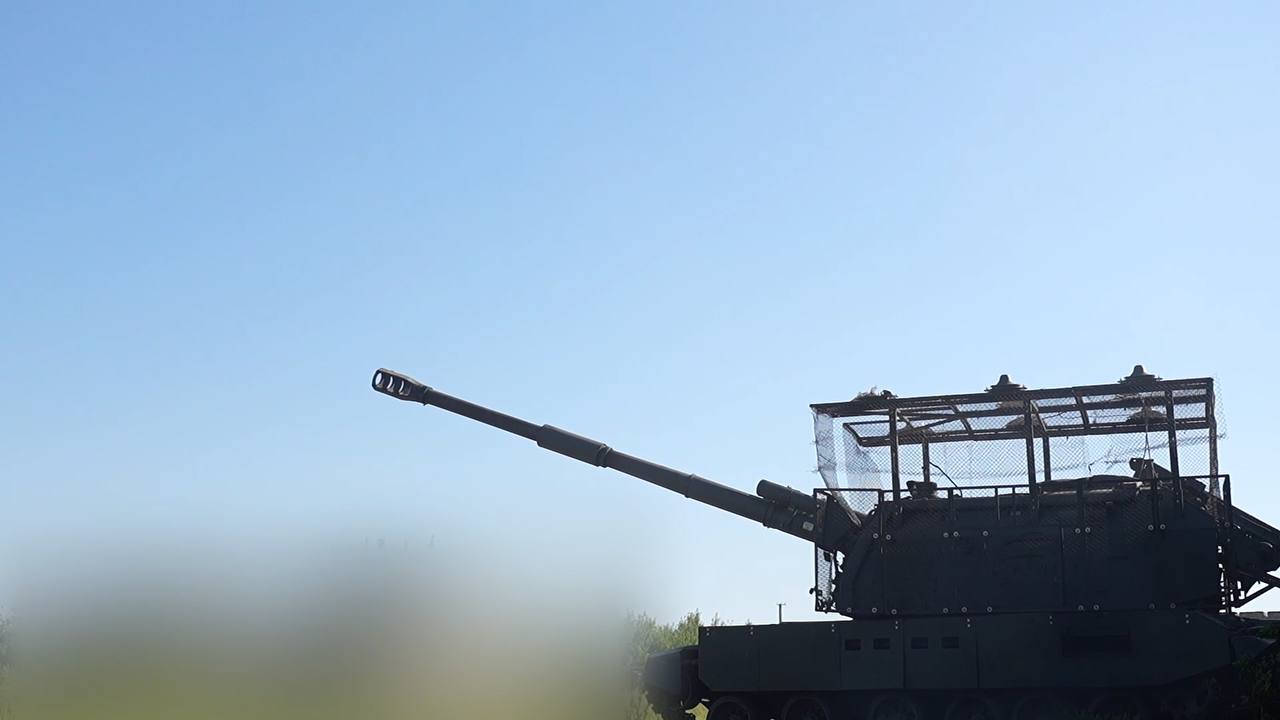
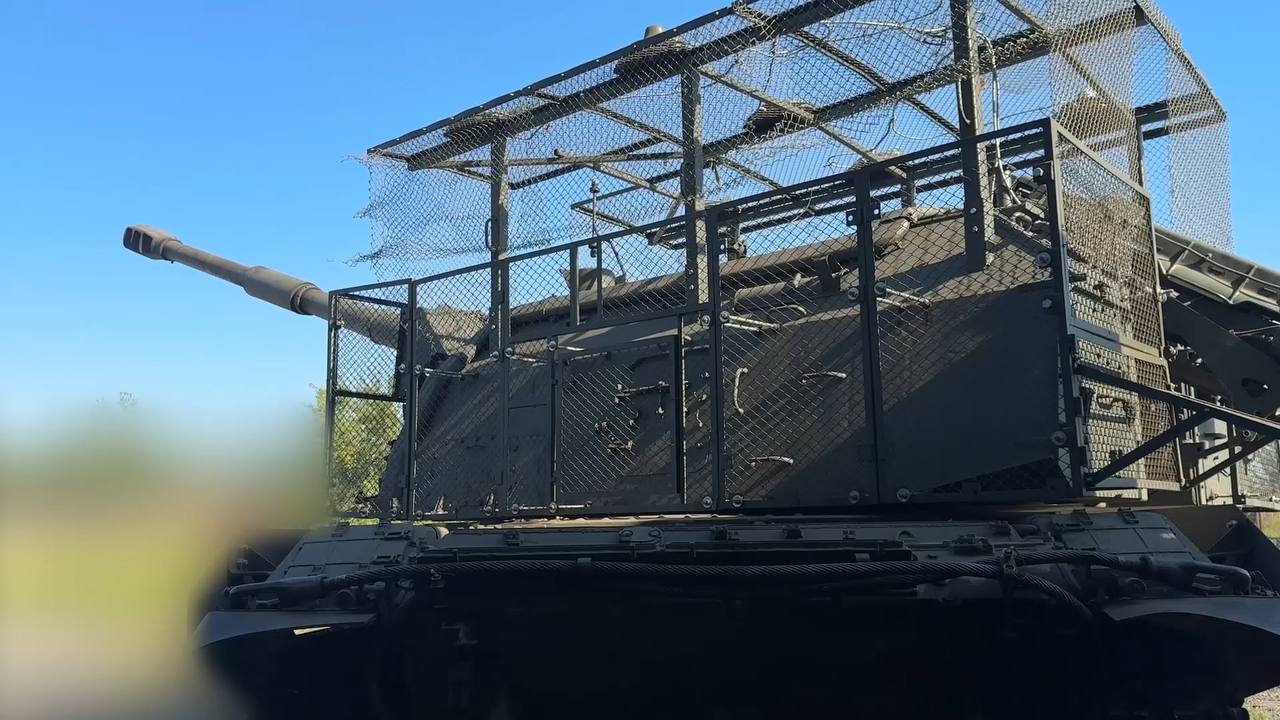
The 2S19M2 Msta-S, an upgraded version of the Soviet-designed self-propelled gun, has a firing range shorter than the NATO-standard artillery now employed by Ukraine. Kyiv’s forces, operating systems such as the domestically produced Bohdana and Western-supplied 155 mm howitzers, have been able to strike at ranges exceeding those of the Msta-S. As a result, Russian artillery units have increasingly relied on field improvisations to reduce losses from counter-battery fire, precision-guided munitions, and long-endurance strike drones.
The cage armor reflects a wider trend across Russian armored and artillery platforms, with tanks, self-propelled guns, and air defense systems being covered with makeshift overhead structures. These modifications are intended to defeat the downward attack angles used by loitering munitions and first-person-view (FPV) drones. While often crude, they represent a low-cost measure to provide at least partial protection against drone-delivered explosives.
Electronic warfare has also become a key feature of Russia’s defensive posture. By placing jamming antennas directly on artillery pieces, Russian forces seek to interfere with drone navigation systems and prevent operators from guiding munitions accurately to their targets. However, Ukrainian units have increasingly deployed drones fitted with Starlink-based communication systems, enabling them to operate at extended range and with greater resistance to jamming.