


Israeli-based Skana Robotics, a defense technology firm founded by naval special operations veterans and robotics experts, announced September 1 the launch of its first two autonomous maritime platforms: the Bull Shark, an autonomous surface vessel (ASV), and the Stingray, an autonomous underwater vessel (AUV).
The company said the systems mark a shift toward scalable, software-defined naval assets designed for integration with both manned and unmanned fleets across distributed operations.
With initial orders already secured, Skana said it is moving into the next phase of scaling deployment with partners worldwide. The platforms were engineered for mass production and NATO-standard interoperability, providing allied forces with cost-effective and flexible tools for extending naval presence while minimizing logistical demands.
According to the company, its production approach removes traditional barriers to naval expansion, enabling the deployment of thousands of autonomous vessels without reliance on conventional shipyards or extended manufacturing timelines. Skana described this as a redefinition of maritime resilience at scale.
The Bull Shark is designed as a tactical surface vessel capable of intelligence, surveillance, and reconnaissance (ISR) missions as well as interdiction. It features a payload capacity of up to 150 kilograms and can serve as a communications hub to coordinate multiple surface and subsurface assets.
The Stingray is configured for ISR, anti-submarine warfare, and infrastructure protection in complex underwater terrain. It supports autonomous navigation, seabed anchoring, and a silent standby mode with reactivation capability. The vehicle has a 24-hour battery life, extendable through modular upgrades, and can be deployed from docking stations, submarines, patrol boats, or other Skana and allied naval platforms.
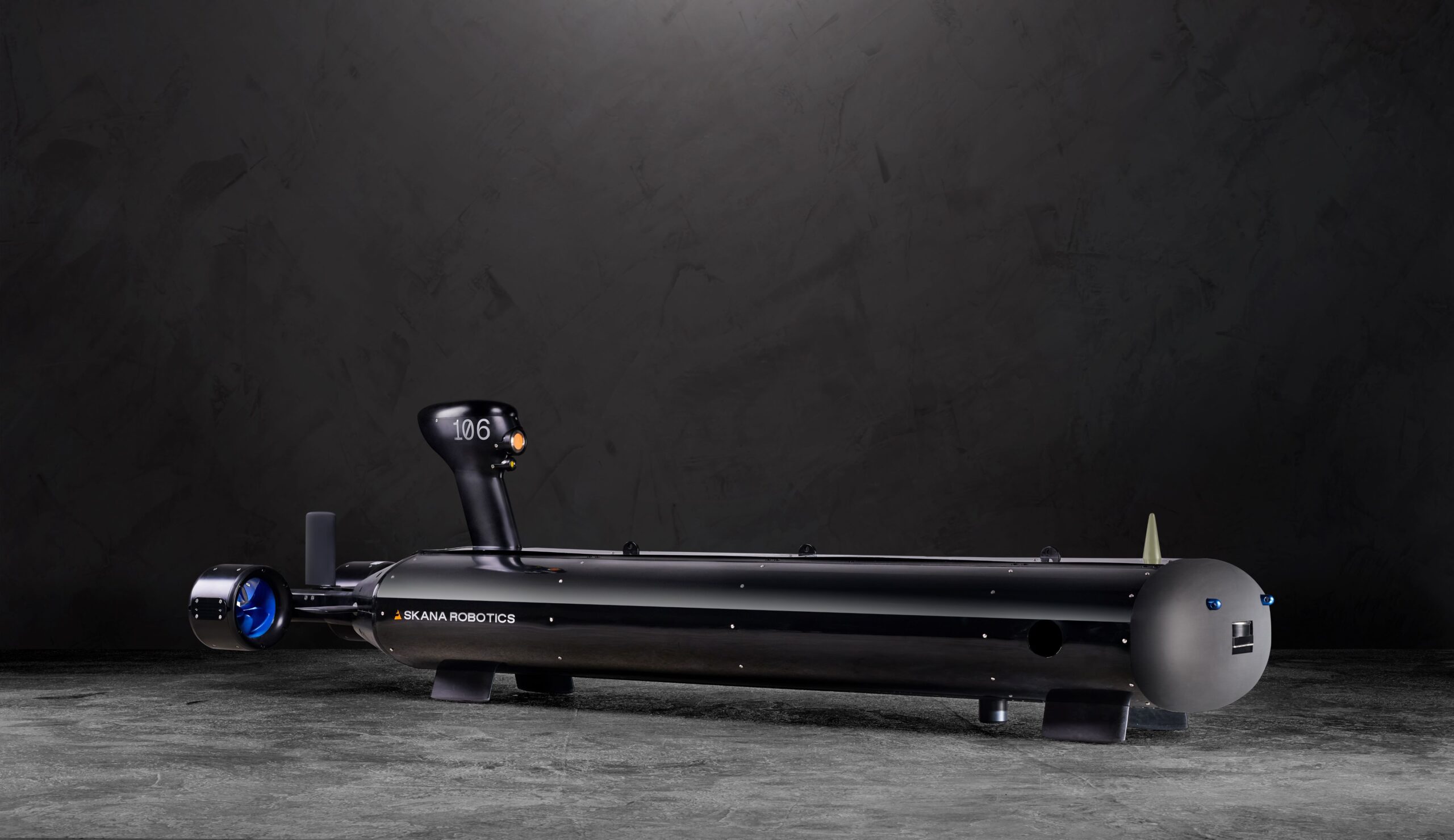
At the core of these systems is Skana’s software architecture, centered on the SeaSphere resource allocation and mission planning engine and Vera, a ROS2-based mission execution and supervision layer. Vera translates fleet-wide directives into localized actions, adapting autonomously to environmental changes in real time. The architecture allows for distributed command, collaboration between unmanned systems, and integration with manned platforms.
“The maritime domain demands autonomy that can survive complexity, adapt instantly, and operate without compromise,” said Idan Levy, Co-Founder and CEO of Skana Robotics. “We are making advanced autonomous capabilities accessible and scalable, enabling wide deployment and synergy between systems. Our ecosystem of vessels and technologies supports real-time data sharing, modular reconfiguration, and both fully autonomous and remotely operated missions, offering navies unmatched operational resilience, adaptability, and flexibility.”
Skana positioned the Bull Shark and Stingray as part of a larger unmanned ecosystem aimed at enabling distributed maritime operations and expanding allied naval capabilities without the cost and delay of conventional shipbuilding. By combining modular design with advanced mission software, the company said its platforms offer forces the ability to adapt rapidly to evolving threats and mission requirements.