

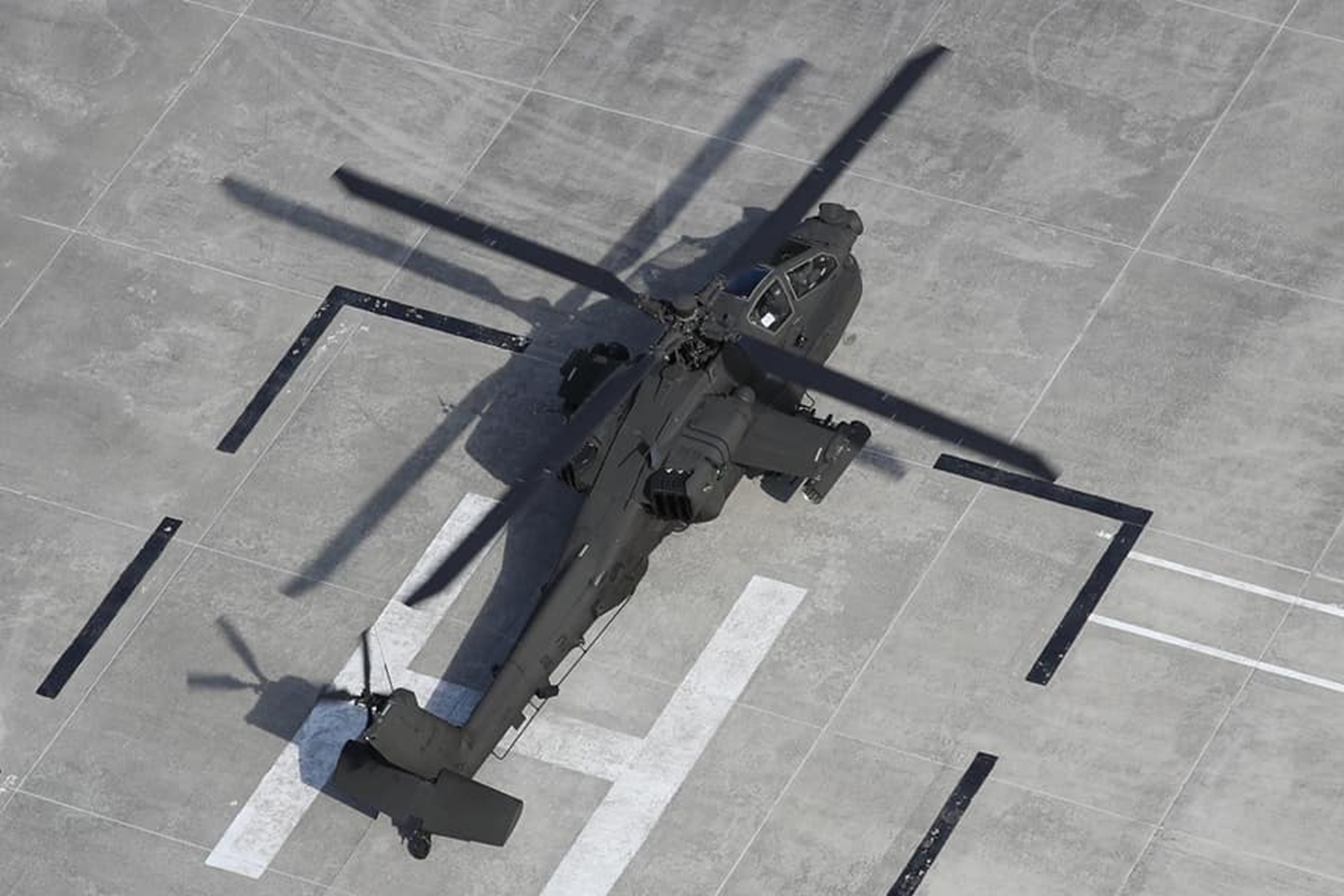
South Korea’s military is under investigation over allegations that armed Apache helicopters conducted provocative flight operations near the Northern Limit Line (NLL) last year, accompanied by false radio transmissions suggesting imminent strikes on North Korean territory.
The operations, reportedly ordered by higher command, are now part of a broader probe into whether Seoul sought to deliberately provoke a North Korean response.
According to Yonhap News reporter Kwon Hee-won, testimony recently submitted to the office of Democratic Party lawmaker Choo Mi-ae includes claims from Army insiders that, between September and November 2023, Apache attack helicopter pilots flew along the NLL in full combat configuration—with live ammunition and Hellfire missiles—while transmitting deceptive messages indicating an intention to strike specific North Korean sites.
The communications, described as “false radio chatter,” were allegedly carried out under direct orders from superiors and broadcast multiple times during low-altitude flights near the maritime boundary. Military sources told Choo’s office that the goal was not reconnaissance but to expose the helicopters to North Korean surveillance in a way that could be perceived as a direct threat.
This account appears to align with testimony recorded in an audio file obtained by the special investigation team (SIT), which is currently reviewing command-level decisions tied to these flights.
One soldier stated in the recording, “The purpose of the operation didn’t seem to be reconnaissance. It felt like they wanted North Korea to see us.”
The same recording also noted that there was no encryption or concealment of the transmissions, and that flights were conducted in daylight, contrary to standard procedures.
According to the whistleblower, flight plans are typically shared in writing and destroyed after distribution, while operational details are communicated through secure platforms such as Telegram. However, in this case, the use of unsecured open-channel radio added to suspicions that the missions were designed for visibility.
The SIT is now investigating whether these missions—described as “armed provocations”—were part of a larger plan to incite a North Korean military response. Investigators are preparing to obtain full communication logs from the Army Aviation Command to determine the nature of the radio messages sent during the operations.
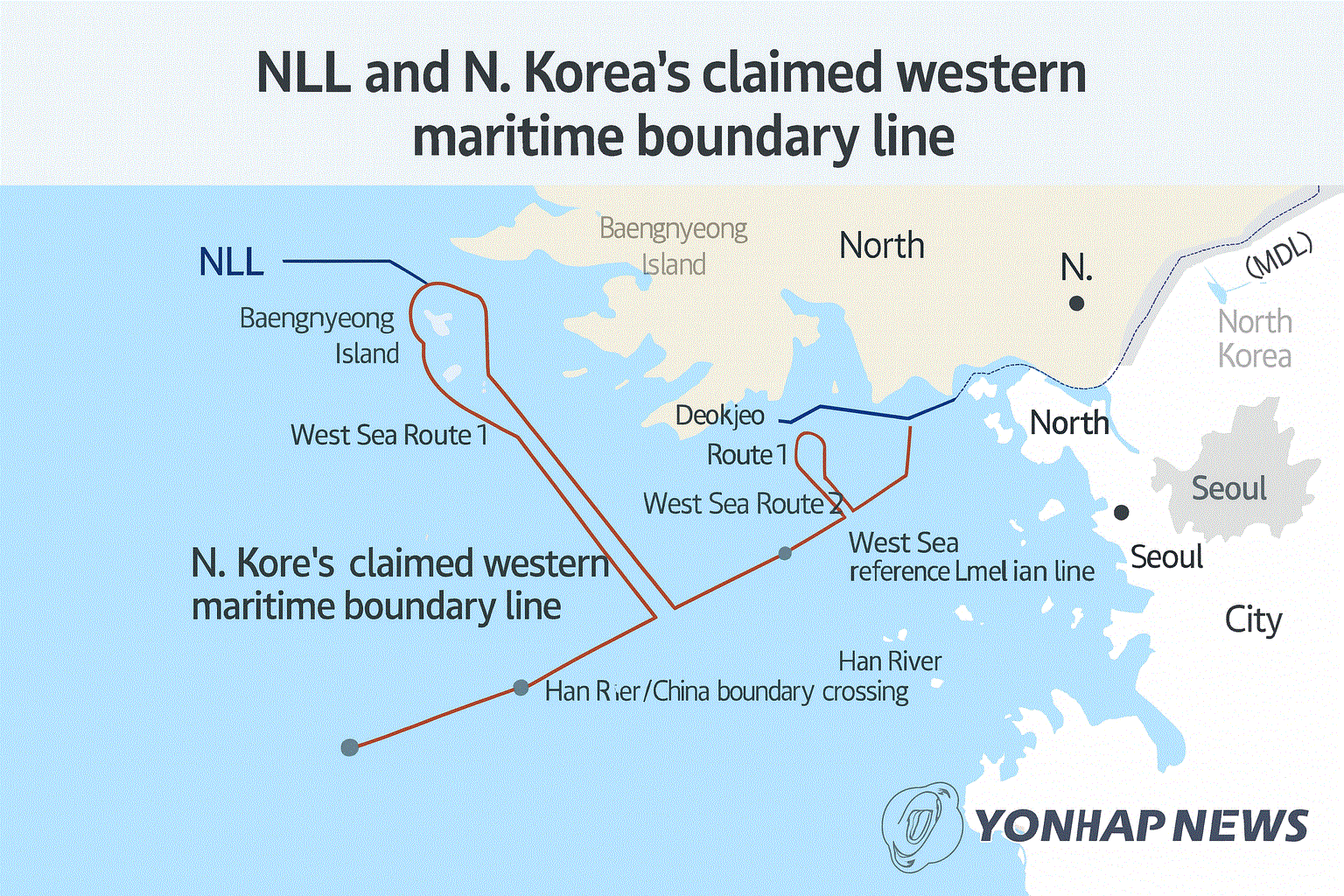
Normally, helicopter flights to Baengnyeong Island take a longer route to avoid detection, bending away from North Korean airspace in an “L-shaped” pattern. But in 2023, orders were reportedly issued for Apache crews to follow the NLL directly—an unusual and riskier flight path that placed the aircraft within range of North Korean observation and engagement systems.
The SIT is also examining the role of former Defense Intelligence Commander Noh Sang-won, after police discovered a handwritten note in his personal notebook referencing plans to “induce an attack near the NLL” and other phrases interpreted as evidence of a premeditated campaign. The note mentioned “balloon operations,” fueling speculation that senior defense officials, including former Defense Minister Kim Yong-hyun, may have coordinated efforts to escalate tensions with Pyongyang ahead of political deadlines.
Further, investigators are probing whether then-President Yoon directed South Korea’s Drone Operations Command in October and November 2023 to plan unmanned aerial incursions over Pyongyang. The investigation is looking into whether these instructions bypassed the standard Joint Chiefs of Staff command structure and were instead channeled through Kim Yong-hyun, then serving as Presidential Security Service Chief.
The SIT is reviewing whether the drone command fabricated documentation to conceal the operations, and whether any systematic effort was made to obscure the chain of command. If substantiated, such actions could implicate senior defense and political figures in a campaign to deliberately provoke a hostile reaction from the North.
As of August 2025, the investigation remains ongoing. Neither the Ministry of National Defense nor the Joint Chiefs of Staff has issued formal comment.