


The KHAN ballistic missile system, developed by Türkiye’s Roketsan, was spotted at an Indonesian Army installation in East Kalimantan.
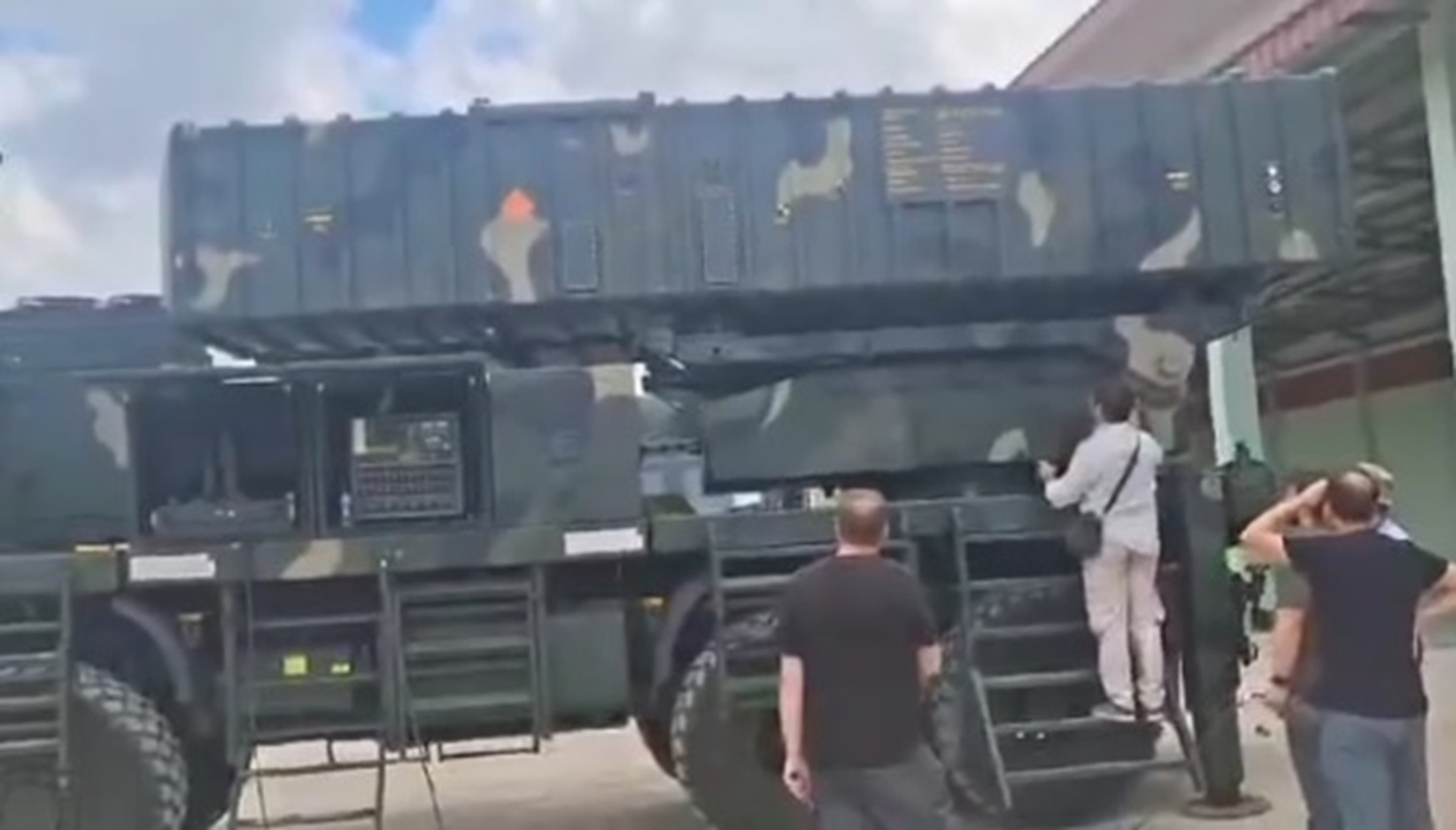
The missile platform, identified as the ITBM-600, was seen at the Raipur A base of the 18th Field Artillery Battalion (Yonarmed 18/Buritkang Tenggarong) on August 1, 2025.
This was first reported by the defense-focused platform Sahabat Keris, which published images showing the weapon system positioned for deployment.
Indonesia signed a contract in 2022 for the delivery of the KHAN ITBM-600 system, a tactical ballistic missile platform based on Roketsan’s proven technology. The system is mounted on a Tatra 8×8 high-mobility vehicle, allowing it to operate across varied terrain with minimal setup time. Designed for rapid deployment, the system gives the Indonesian Army a mobile, precision-strike capability that had previously been absent from its inventory.
According to Roketsan, the KHAN missile has a range of up to 280 kilometers and is capable of delivering accurate strikes against high-value targets under complex battlefield conditions. The company says the system is guided by a hybrid navigation suite using GPS and GLONASS-aided inertial navigation, allowing for reliable targeting even in contested environments.
The missile weighs approximately 2,500 kilograms and has a diameter of 610 millimeters. Roketsan emphasizes that the KHAN is engineered for both precision and survivability, offering “high lethality and operational flexibility” across a wide range of target sets. The system has already been integrated into the Turkish Armed Forces and is now finding a place within select partner nations’ arsenals.
For Indonesia, this deployment reflects a broader modernization effort aimed at enhancing its long-range deterrence and improving its ability to respond rapidly to regional threats.
In previous public statements, Indonesian defense officials have indicated that expanding the country’s artillery and missile forces is a key priority. The ability to conduct deep precision strikes within and beyond the archipelago’s borders is viewed as a strategic asset in a dynamic and often unpredictable security environment.