


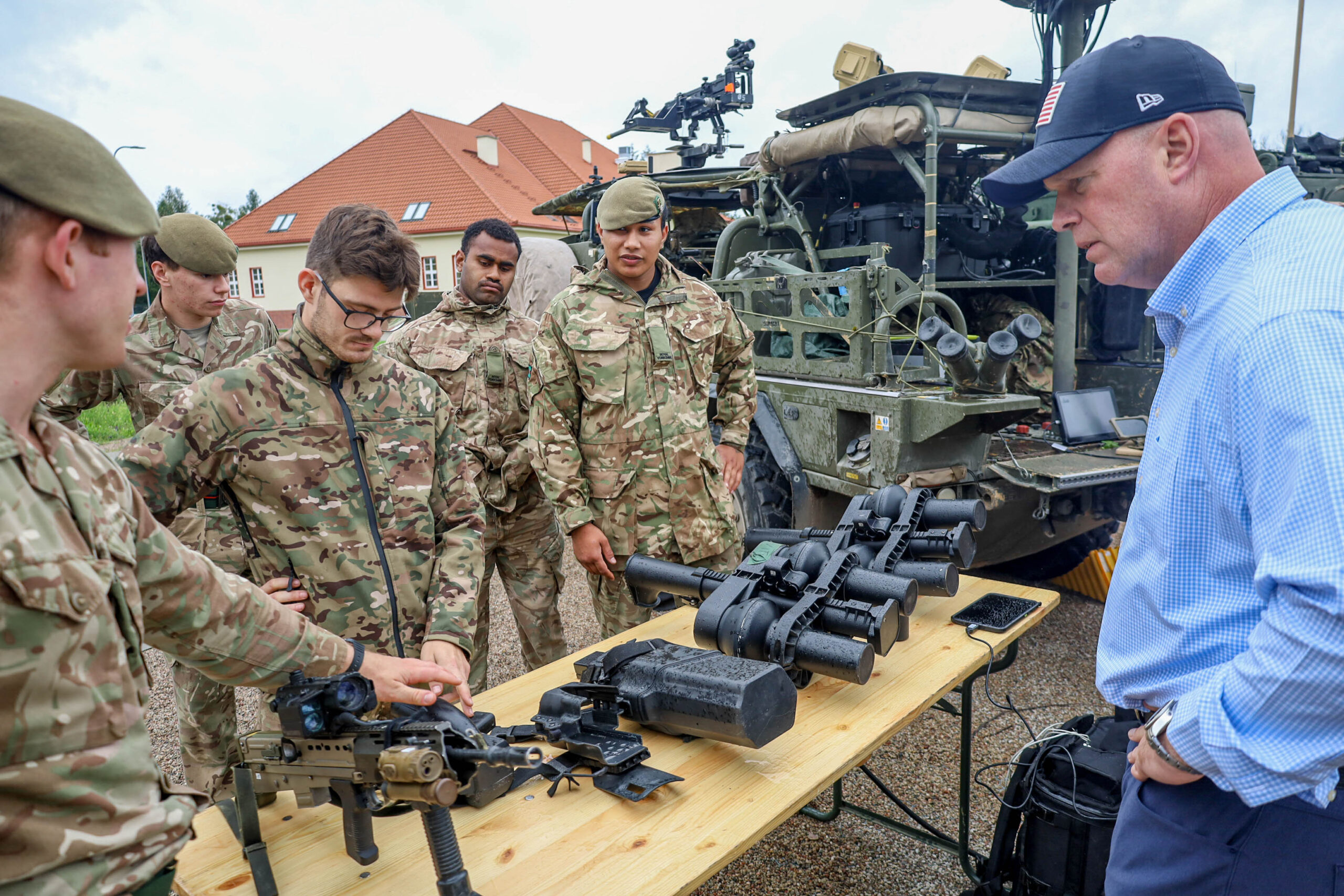
U.S. Soldiers from V Corps’ 2nd Cavalry Regiment and allied forces from the United Kingdom are conducting joint counter-unmanned aerial system (C-UAS) training this week at the Bemowo Piskie Training Area near Elk, Poland.
The multinational exercise, known as Project Flytrap 4.0, runs from July 27 to 31 and focuses on advancing low-cost, portable solutions for defeating hostile drones.
Project Flytrap 4.0 is the final iteration in a series of training events aimed at developing integrated C-UAS tactics, technologies, and operational doctrine for use by U.S. and allied forces. This phase features extended field operations at the company and battalion levels and emphasizes coordination between units in a sustained, multi-day training environment.
“C-UAS is essential to success on the modern battlefield,” said Lt. Gen. Charles Costanza, commander of the U.S. Army’s V Corps. “U.S. and allied forces must rapidly transform to the very real threat of unmanned drones by testing, adjusting, and ultimately integrating the best C-UAS platforms in the world to protect our forces. Project Flytrap is a key component of V Corps’ transformation strategy.”
The exercise brings together American and British troops in a combined operational setting to test new systems and field procedures for detecting, tracking, and neutralizing hostile unmanned aerial systems. The growing presence of drones on the battlefield—from surveillance to strike platforms—has prompted NATO forces to accelerate C-UAS development and deployment.
According to V Corps, Project Flytrap is intended not just to evaluate existing systems, but also to guide future requirements and adaptation. As drones become smaller, cheaper, and more autonomous, military planners are focused on scalable countermeasures that can be fielded at the tactical edge.
Previous Flytrap exercises tested fixed-site defenses and electronic warfare capabilities. The 4.0 iteration expands on those lessons, pushing into dynamic operations under field conditions where threats must be addressed in real time across dispersed units.
Officials say this final round of testing will help inform procurement and operational decisions across U.S. Army Europe and NATO formations. The joint nature of the exercise reflects the alliance’s push for interoperability and shared understanding of rapidly evolving drone threats.
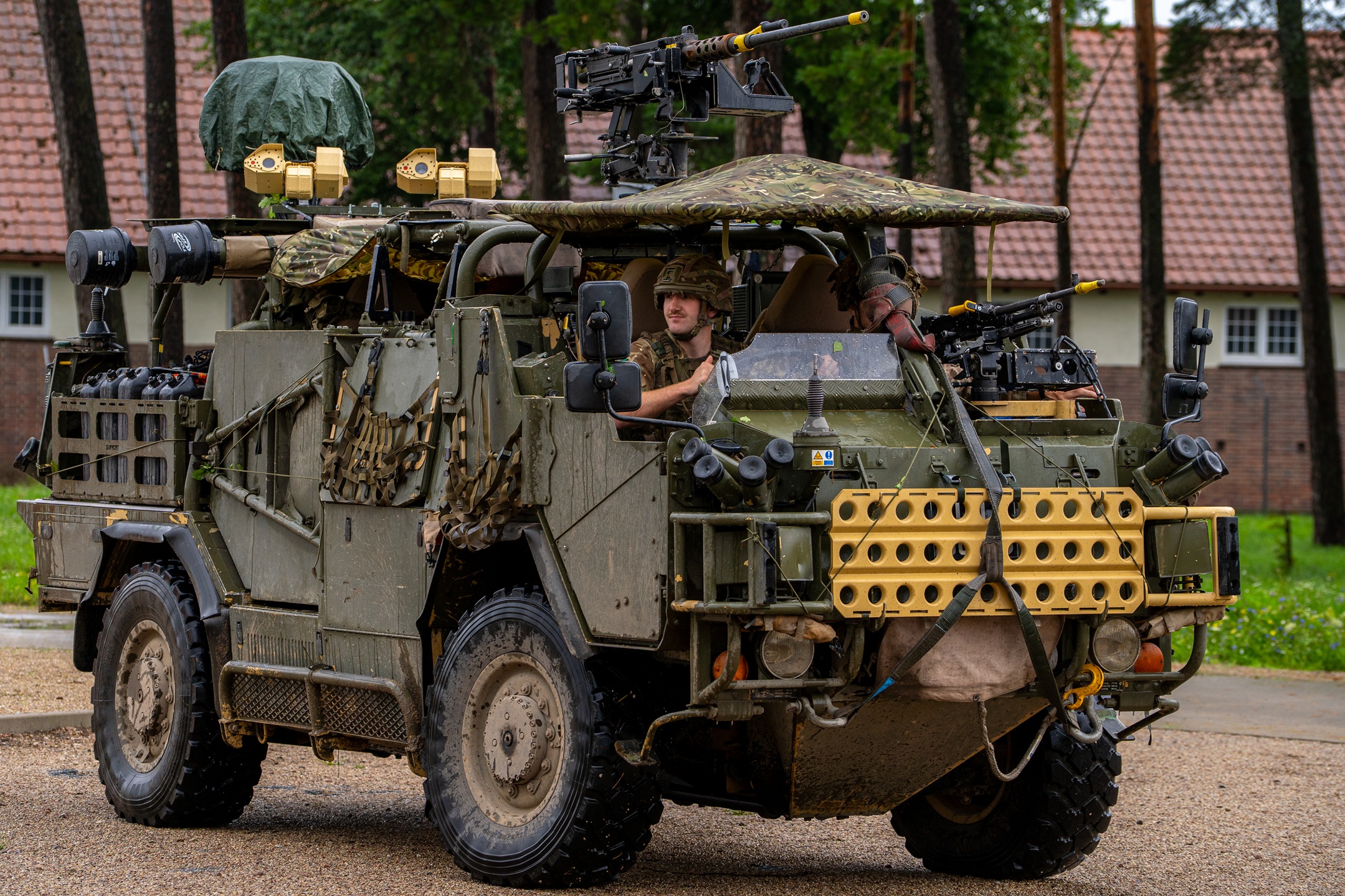
During the weeklong event, U.S. and U.K. forces will evaluate multiple low-cost, portable counter-drone technologies. These may include hand-held jammers, kinetic interceptors, sensor fusion platforms, and other tools designed to detect and disable unmanned threats in contested environments.
The exercise takes place under the command structure of NATO’s enhanced Forward Presence (eFP) Battle Group in Poland, which includes rotational contributions from the United States, United Kingdom, Croatia, and Romania. The presence of U.S. and British forces on Polish soil continues to serve both training and deterrence purposes amid heightened regional tensions.
The project also helps NATO partners establish shared procedures for identifying and neutralizing threats from unmanned systems—tools that are increasingly accessible to both state and non-state adversaries.