


- Gallatin AI was awarded an 18-month contract by III Armored Corps at Fort Hood, Texas to deploy its Navigator AI logistics platform for corps exercises and planning.
- Navigator delivers a logistics common operating picture, predictive supply algorithms, AI-assisted planning tools, and integration with Army simulation platforms.
Feeding, fueling, and arming a corps-sized force of tens of thousands of soldiers across months of sustained combat, with supply lines potentially stretching a continent away, is one of the hardest problems in modern warfare. The U.S. Army has quietly struggled with the software side of that problem for years, relying on planning tools built around spreadsheets and manual processes that break down precisely when speed matters most. A defense-tech startup thinks it has a better answer, and the Army’s largest armored formation just hired it to prove the point.
Gallatin AI, a defense software company founded in 2024 and headquartered in El Segundo, California, announced on June 11, 2026 that it has been awarded a contract by III Armored Corps, the U.S. Army’s major armored formation headquartered at Fort Hood, Texas, to deploy and refine its Navigator AI logistics platform in direct support of III Corps exercises and operational planning over the next 18 months. The contract was awarded through an Other Transaction Agreement, a streamlined procurement mechanism the Department of War uses to move faster with commercial technology than traditional acquisition contracts allow, and it maps directly to two of the department’s identified critical technology areas: Applied Artificial Intelligence and Contested Logistics Technologies.
III Armored Corps, known as “Phantom Corps” or “America’s Hammer,” is one of the Army’s primary warfighting headquarters, responsible for commanding and coordinating multiple divisions across large-scale combat operations. A corps headquarters sits between the tactical level, where individual battalions and brigades execute missions, and the strategic level, where theater commands allocate resources across entire regions. The operational level in between is where corps commanders translate national objectives into military campaigns, and it is exactly the level where logistics planning has historically been most difficult to automate. The variables are too many, the timescales too long, and the data too scattered for conventional planning tools to handle reliably.
Woody Glier, CEO of Gallatin AI, described the problem plainly. “A corps commander and staff must forecast what tens of thousands of Soldiers will require over months of sustained conflict while placing those requests against theater sustainment commands and depots that may be a continent away,” Glier said. “That requires a decision support capability built for operational timescales and operational complexity.”
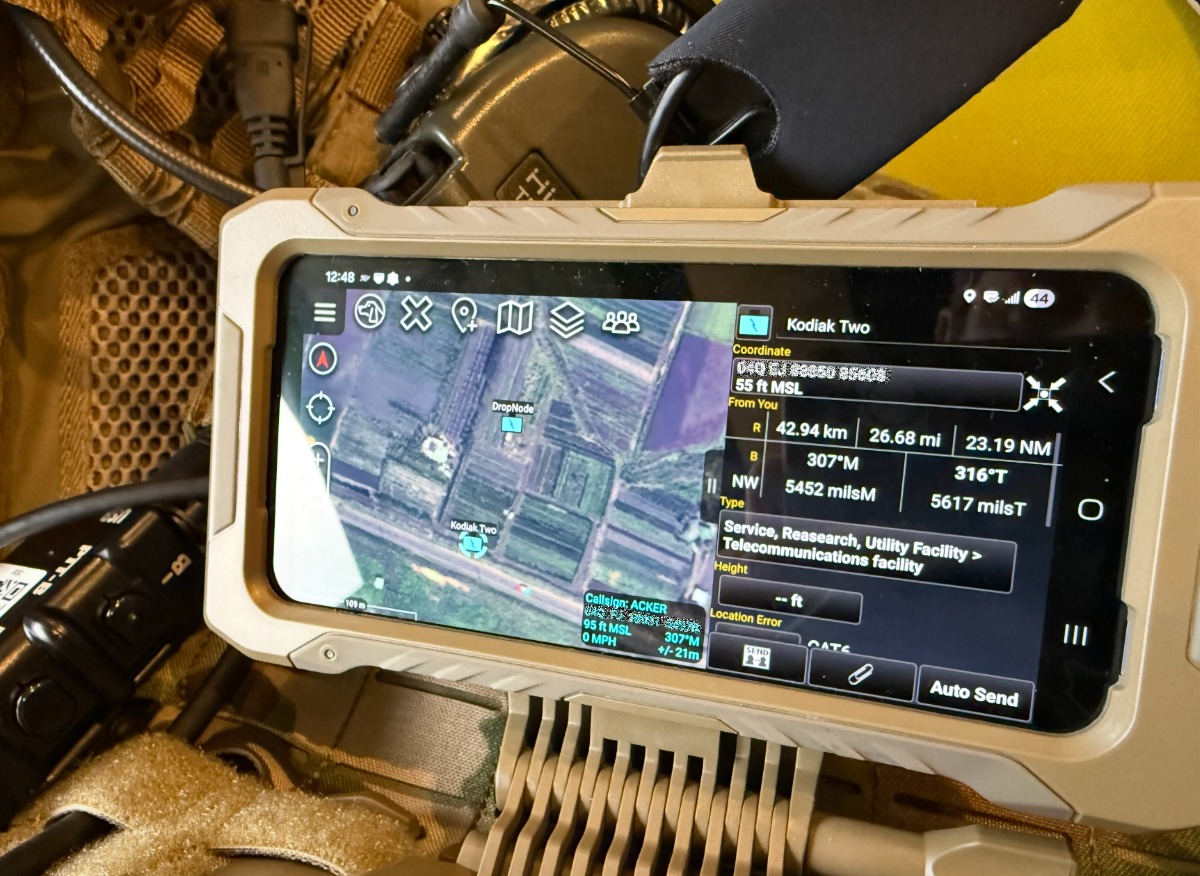
Navigator addresses that challenge through a combination of four integrated capabilities. The platform delivers a tailored Logistics Common Operating Picture, essentially a unified real-time map of where supplies are, where they are going, and where gaps exist across the entire corps footprint. It runs predictive consumption algorithms across all classes of supply, the Army’s term for the full spectrum of materials a force requires, from fuel and ammunition to food, water, medical supplies, and spare parts, forecasting demand before shortages occur rather than reacting after they do. It provides AI-assisted planning tools for the Military Decision Making Process, the structured analytical framework Army staffs use to develop and evaluate courses of action. And it integrates with Next Generation Constructive simulation platforms, the virtual environments where corps staffs rehearse large-scale operations before executing them in the real world.
Brian Ballard, Chief Product Officer at Gallatin AI, described what that means for a corps staff working a real planning problem. “A staff is pulling a noisy, continuous demand signal from formations that may be dispersed across more than one theater, and it has to turn those disparate pieces of information into supportable courses of action for validation with a Corps Sustainment Command before anyone commits resources,” Ballard said. “Navigator surfaces the right data at the right time and lets corps and CSC planners develop and stress-test those COAs together.”
The operational urgency behind this kind of capability has been building for years and crystallized into explicit policy priority following the lessons of recent large-scale combat operations. Senior defense officials have identified AI and advanced technologies as central to addressing contested logistics challenges, with U.S. military supply chains now facing recognized risks from kinetic strikes, cyberattacks, geopolitical instability, and infrastructure vulnerabilities. The scenario that Army planners worry about most is a high-intensity conflict in a theater like the Indo-Pacific, where U.S. forces would operate at distances far greater than anything seen in recent decades, with supply lines crossing thousands of miles of ocean, vulnerable to enemy interdiction at multiple points. Getting the logistics calculus right in that environment is not a planning convenience; it is a condition of operational survival.
Navigator already runs natively within Maven Smart System, the Army’s AI-enabled decision support platform, and is designed to ingest data from Army systems of record, providing planners a unified view of inventory, personnel, and equipment status through an open architecture that integrates with both legacy platforms and emerging capabilities via secure APIs. That integration matters because it means Navigator does not require corps staffs to abandon the systems they already use or retrain around a new data environment. The platform layers on top of existing Army infrastructure, pulling data in rather than forcing data out.
Gallatin was founded in 2024 and is backed by 8VC and leading defense and technology investors, a funding structure that allowed the company to build Navigator to commercial software standards before entering the government competition process. The III Corps contract is not Gallatin’s first Army engagement. The company was previously awarded a contract under the Army Applications Laboratory’s PORTAL program, a Direct to Phase II Small Business Innovation Research award focused on predictive logistics for contested environments, and opened an Austin, Texas engineering office in February 2026 specifically to position its development team closer to III Corps and the Army sustainment commands whose planning problems drive the platform’s roadmap.
Work under the III Corps contract will be validated through iterative delivery across multiple live exercise events, which means Navigator’s performance will be measured against real planning problems under realistic operational conditions, not simulated benchmarks in a controlled environment. That test methodology matters because it exposes the software to the genuine complexity and data noise of a corps-level planning process, the kind of stress test that reveals whether an AI logistics tool actually works when the stakes are real.