


Ukrainian military-affiliated sources report that Russia has begun using its newest air-to-air missile, known as Izdelie 180 or the K-77M, in combat operations over Ukraine.
The missile, a modernized variant of the earlier Izdelie 170 (R-77), is believed to feature a two-mode propulsion system, enhanced aerodynamic control surfaces, and a new active radar seeker.
According to a post by the Telegram channel Polkovnyk GSh, which maintains close ties with Ukrainian military personnel, “Izdelie 180 is an upgrade of the Izdelie 170 (R-77) missile. It includes a new dual-mode engine, new tail fins, and an active radar homing head.”
The post also claimed that the missile was designed for use with Russia’s Su-57 and Su-35 fighter jets to counter fourth-generation-plus adversaries.
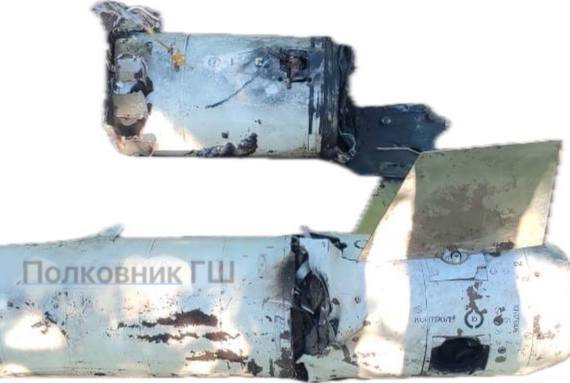
As reported by the channel, the missile’s advertised range is up to 190 kilometers against aircraft-type targets. Photographs of missile debris, allegedly from one of these weapons, were posted online and presented as evidence of its use in the Ukrainian battlespace.
The missile is also known under the designation R-77M. It is said to feature the 9B-1103M-200PA seeker — a combined active-passive radar guidance system that includes an additional semi-active channel. Unlike previous R-77 series missiles, the K-77M is equipped with flat, fixed control fins and a fixed aerodynamic surface attached to the main body just ahead of the engine section.
Experts familiar with the development of long-range air-to-air missiles have noted that this design enables the missile to maintain maneuverability even at subsonic speeds, a capability that has historically posed a challenge for many such weapons. This design solves a critical issue common to all long-range air-to-air missiles — the ability to maneuver at subsonic speeds.
Western analysts have previously warned that Russia’s investment in advanced munitions like the K-77M was aimed at achieving air superiority in future engagements, particularly against adversaries equipped with stealth platforms and long-range sensors. Whether this capability will have a measurable effect in the Ukraine conflict remains to be seen.