


The Royal Thai Air Force (RTAF) has announced the successful development and testing of an indigenous one-way attack unmanned aerial vehicle, also known as a kamikaze drone.
The kamikaze unmanned aerial vehicle (UAV), designed for precision strikes, was developed through collaboration between the RTAF’s Navaminda Kasatriyadhiraj Air Force Academy, the Air Force Armaments Department, and the Directorate of Aeronautical Engineering.
According to the service, the UAV successfully destroyed a mid-range target with a high-explosive warhead during recent trials, achieving a reported targeting error of less than five meters.
“This achievement represents an important step in advancing the Kamikaze UAV program toward production and operational deployment,” the RTAF said in a release. “The system will increase our capability with advanced equipment to protect the nation’s sovereignty and ensure peace and security for the Thai people.”
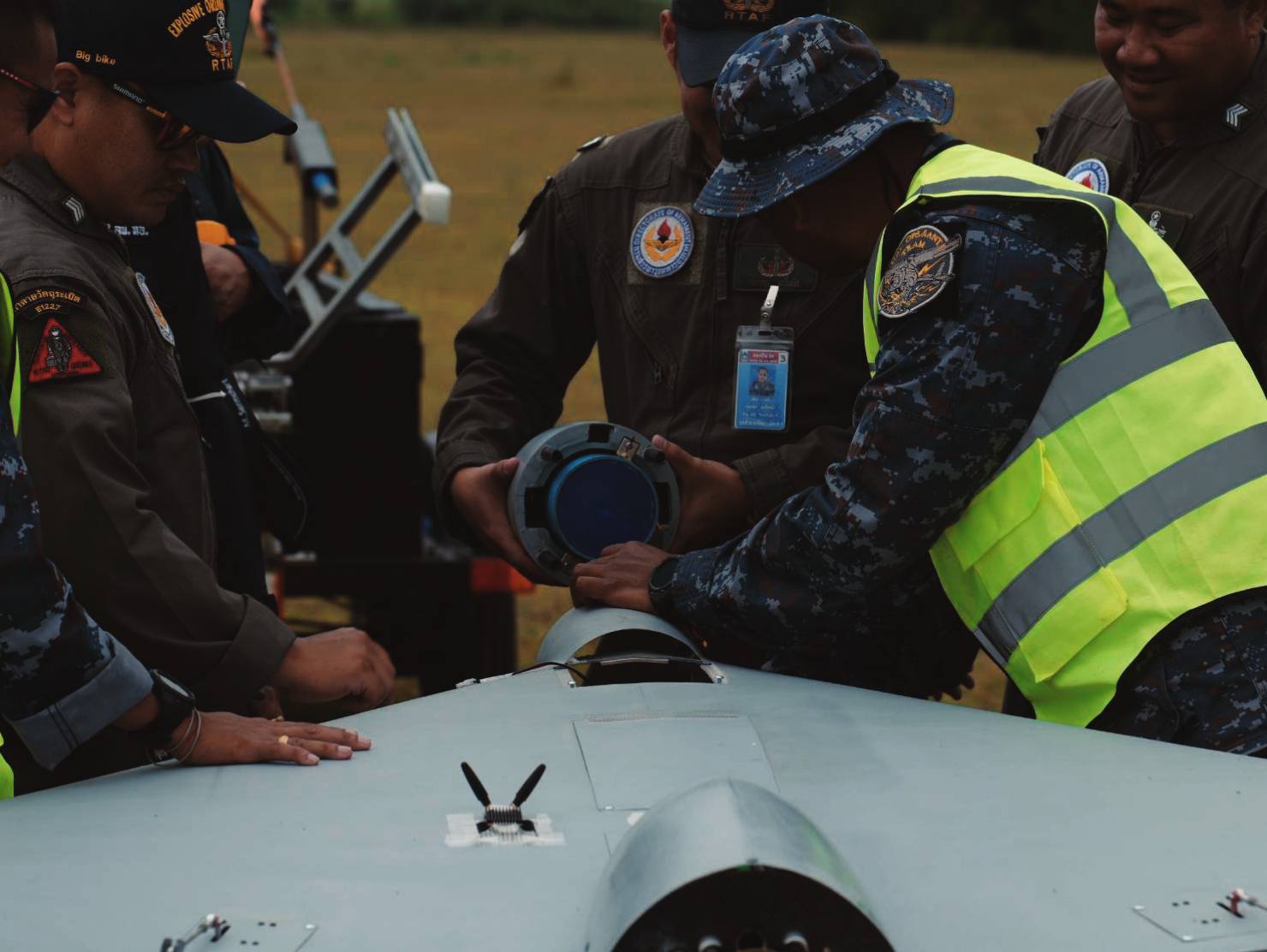
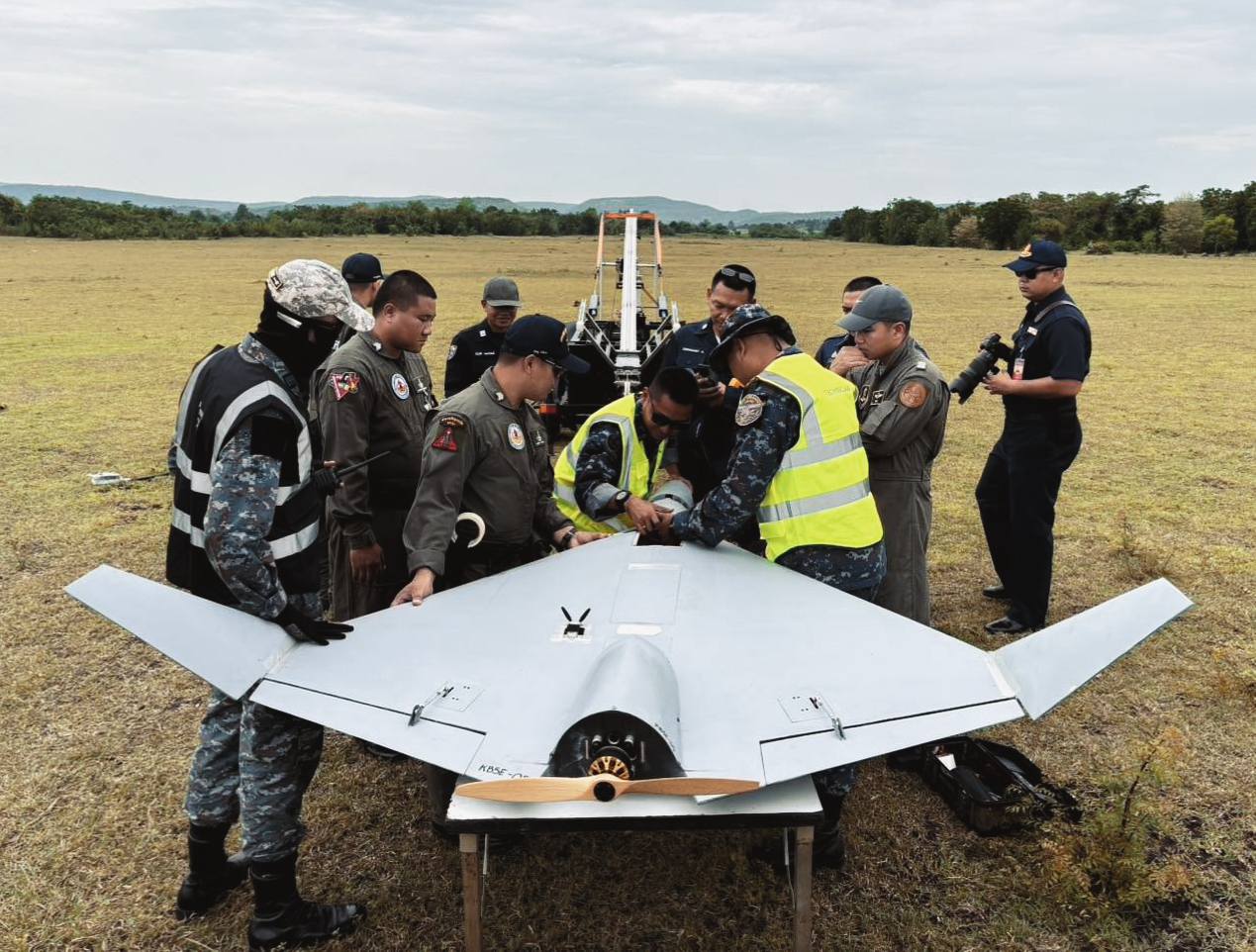
The Royal Thai Air Force emphasized that the project demonstrates the importance of domestic technological development for national security. “National security cannot be purchased with money; it must come from advancements made by our own hands,” the service added.
The kamikaze UAV, also known as a loitering munition, is designed to act as a precision-guided, expendable strike weapon capable of engaging targets autonomously. The system’s successful test underscores Thailand’s commitment to building indigenous capabilities to complement its existing air power and defense systems.
The RTAF has not provided details on the drone’s specifications, production timeline, or operational deployment schedule but indicated that the program is intended to supply Thai forces with a cost-effective and locally supported platform for future operations.