


The British Army has successfully conducted the first live-fire trials of the RapidDestroyer, a radio frequency-based directed energy weapon (RF DEW) designed to neutralize drone swarms at short range.
The trials, supported by the Ministry of Defence and led by Thales UK, mark a milestone in the country’s push to develop next-generation counter-drone capabilities.
According to a statement from Thales, the trials were carried out at a secure site and involved intercepting and disabling two simulated swarms of drones using the RF DEW system. The weapon uses concentrated radio frequency waves to disrupt and destroy electronic components in hostile drones, effectively causing a “hard kill” without the need for kinetic munitions.
In a release, the company said RapidDestroyer demonstrated the ability to track and defeat over 100 drones during testing, with one trial showing two swarms being neutralized in a single engagement. Sgt. Mayers of the 106 Regiment Royal Artillery was the first British soldier to disable a drone using this new system.
“RF DEW is an exciting concept,” Sgt. Mayers said. “We found the demonstrator quick to learn and easy to use. With improvements on range and power, this would be a great asset to Layered Air Defence.”
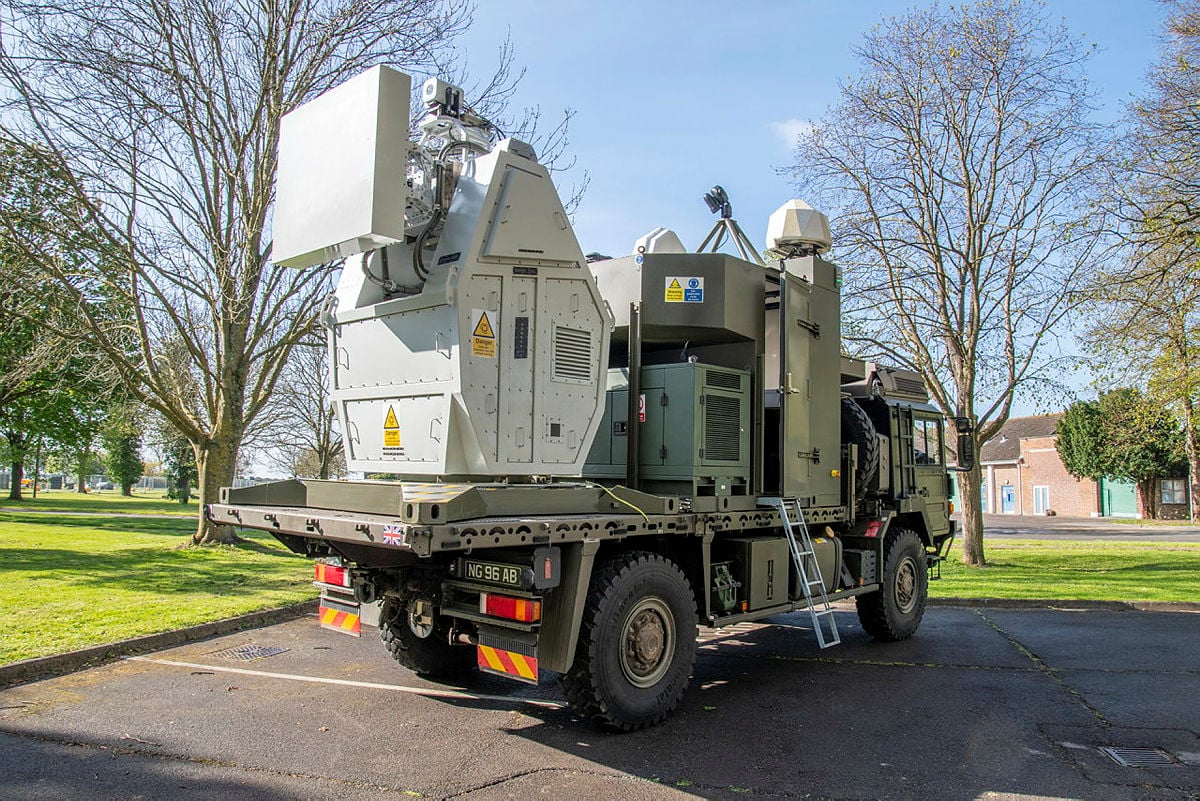
Thales said the system could prove especially cost-effective. Each shot costs approximately 10 pence, offering a cheaper alternative to traditional air defense munitions in environments saturated with low-cost drone threats. The weapon is effective against airborne targets at ranges up to 1 kilometer and can defeat drones that are immune to jamming.
The system’s development comes as the use of drone swarms increases in modern warfare. UK Defence Intelligence has reported that Ukraine faced more than 18,000 drone attacks in the past year alone.
“This significant experiment exemplifies the strength of British innovation,” said Minister for Defence Procurement Maria Eagle. “We continue to strengthen our defense sector, adding more cutting-edge capabilities to keep the UK secure at home and strong abroad.”
The UK government has pledged to spend 2.5% of GDP on defense by 2027 and is increasing investment in novel technologies as part of its broader modernization plan.
RF DEW development is part of Team Hersa, a collaborative effort between Defence Equipment & Support, Dstl, and a consortium led by Thales.