

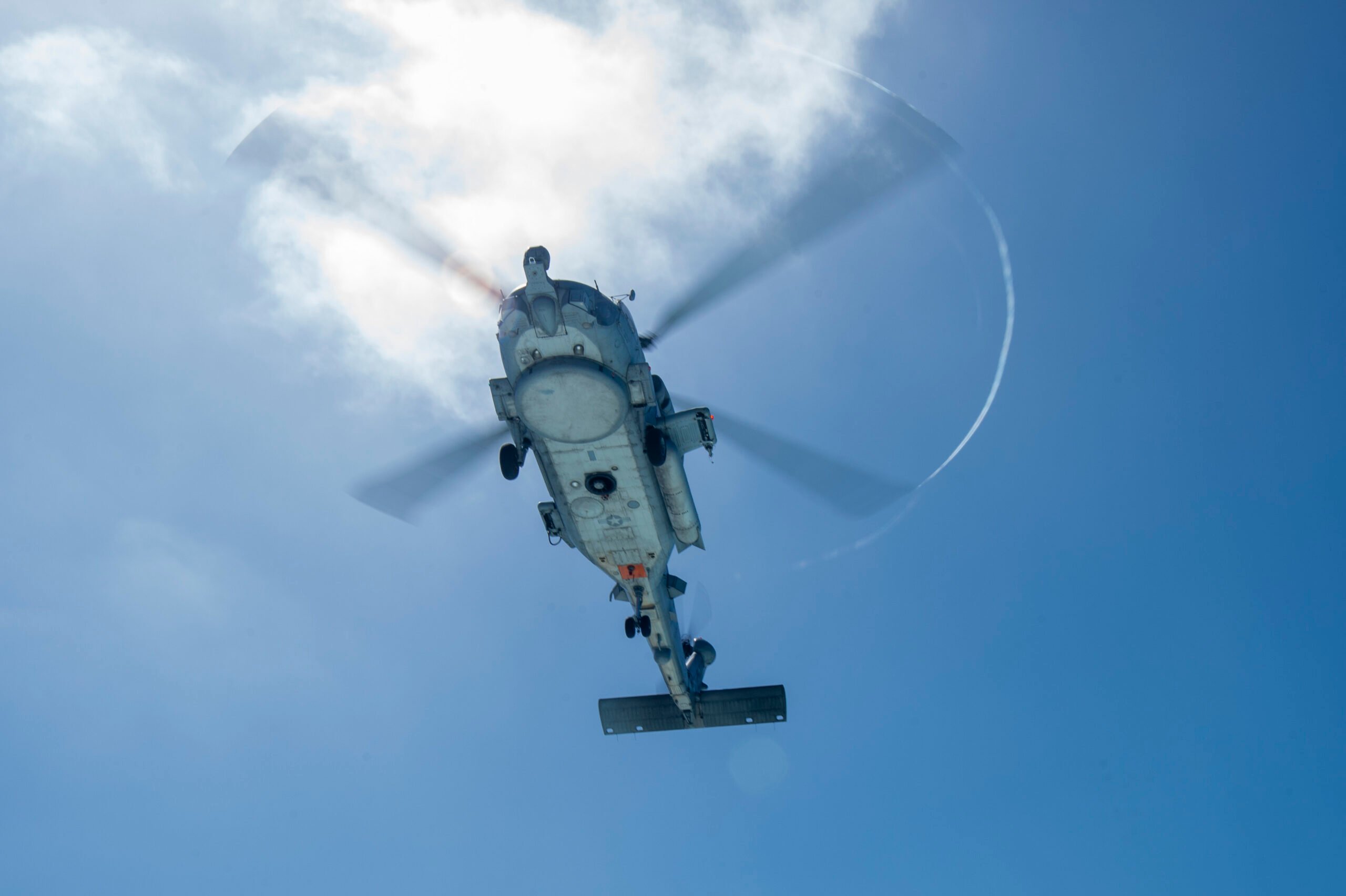
The U.S. Navy’s Future Vertical Lift (Maritime Strike) (FVL (MS)) program has recently completed its Analysis of Alternatives (AoA), culminating in a Deputy Chief of Naval Operations (DCNO) for Warfighting Requirements and Capabilities (N9) “Gate 2” Resources and Requirements Review Board (R3B).
The board unanimously endorsed the results of the AoA and directed the program to proceed with developing a Capabilities Development Document (CDD) and a Concept of Operations (CONOPS).
The Navy’s current helicopter fleet, comprising MH-60R and MH-60S Seahawks, will reach the end of their service lives in the late 2030s, even with Service Life Extensions. FVL (MS) provides an opportunity to transition this legacy fleet to a more advanced platform designed to operate within a Distributed Maritime Operations concept.
Rear Admiral Buzz Donnelly, Director of the Air Warfare Division (N98) at the Office of the Chief of Naval Operations, stated, “FVL (MS) will be the most widely distributed aviation platform in the Navy, embarking on all surface combatants from future FFGs to aircraft carriers and contributing to more primary mission areas than any other aviation platform in the Navy.”
FVL (MS) is envisioned as a Family of Systems (FoS) that will be both crewed and uncrewed, performing the same missions as legacy helicopters but with greater range, endurance, and modularity to leverage emerging technologies. The FoS will be developed under the same Program Executive Office (PEO) to ensure interoperability, including crewed-uncrewed teaming. The FVL (MS) FoS aims to be more capable, survivable, reliable, and sustainable.
The Navy’s FVL (MS) will be developed to perform unique maritime missions, primarily operating from surface combatants such as DDGs, FFGs, and LCSs. The program will leverage advancements from the Army and Marine Corps in areas such as engine design, digital backbone, Modular Open Systems Architecture (MOSA), advanced rotor blades, materials, and launched effects.
A press release from Naval Air Systems Command indicates that while working towards a materiel solution and aiming for an initial operational capability (IOC) in the early 2040s, OPNAV N98 and Naval Air Systems Command will hold an Industry Day in 2024 to relay requirements for FVL (MS) capabilities and to share details on the concept of employment (CONEMPS).