

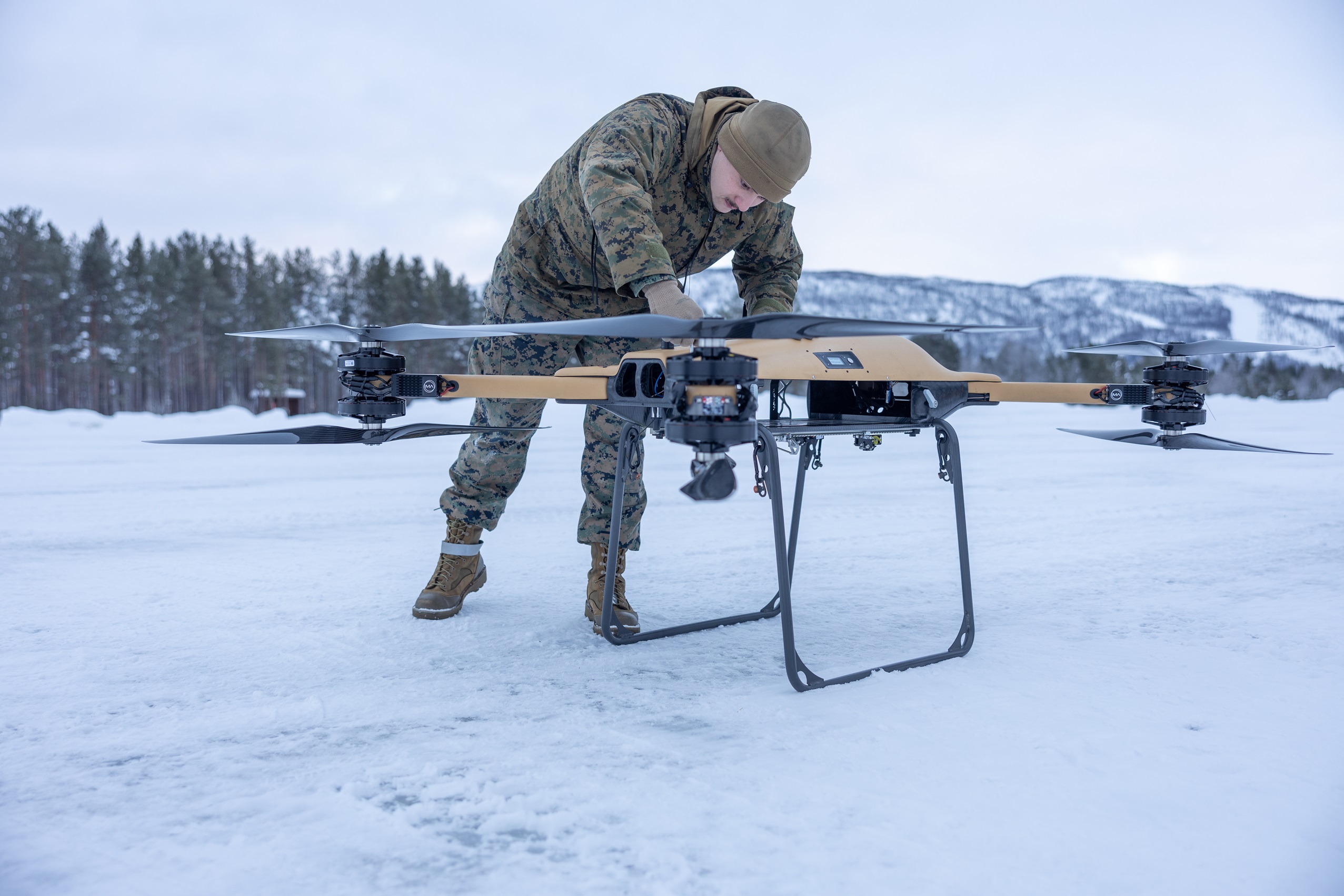
U.S. Marines from Combat Logistics Battalion 6, Combat Logistics Regiment 2, 2nd Marine Logistics Group, recently employed the TRV-150 unmanned aircraft systems during test flight operations in Setermoen, Norway.
The initiative, spearheaded by CLB-6, aimed to assess the performance and capabilities of the TRV-150 drone in Arctic conditions while enhancing system familiarization. This activity falls within the framework of Marine Rotational Forces Europe 24.1, a program focused on bolstering regional engagements across Europe through a spectrum of exercises, including arctic cold-weather and mountain warfare training, as well as military-to-military engagements, ultimately fortifying interoperability between the U.S. Marine Corps and allied forces.
The TRV-150, also known as the Tactical Resupply Vehicle, is a remote-controlled uncrewed eVTOL air cargo drone engineered to transport a wide array of supplies essential for battlefield operations, including food, water, medical supplies, equipment, fuel, and ammunition.
Operating at a cruise speed of 108 km/h (67 mph), the TRV-150 boasts a maximum range of 70 km (43 miles) and a flight time of 36 minutes, with a hefty maximum payload capacity of 68 kg (150 lb). Featuring eight propellers and electric motors, the drone’s power source consists of easily replaceable batteries, ensuring swift turnaround times. Additionally, its fixed skid landing gear simplifies operation, while redundant avionics enhance safety and durability.
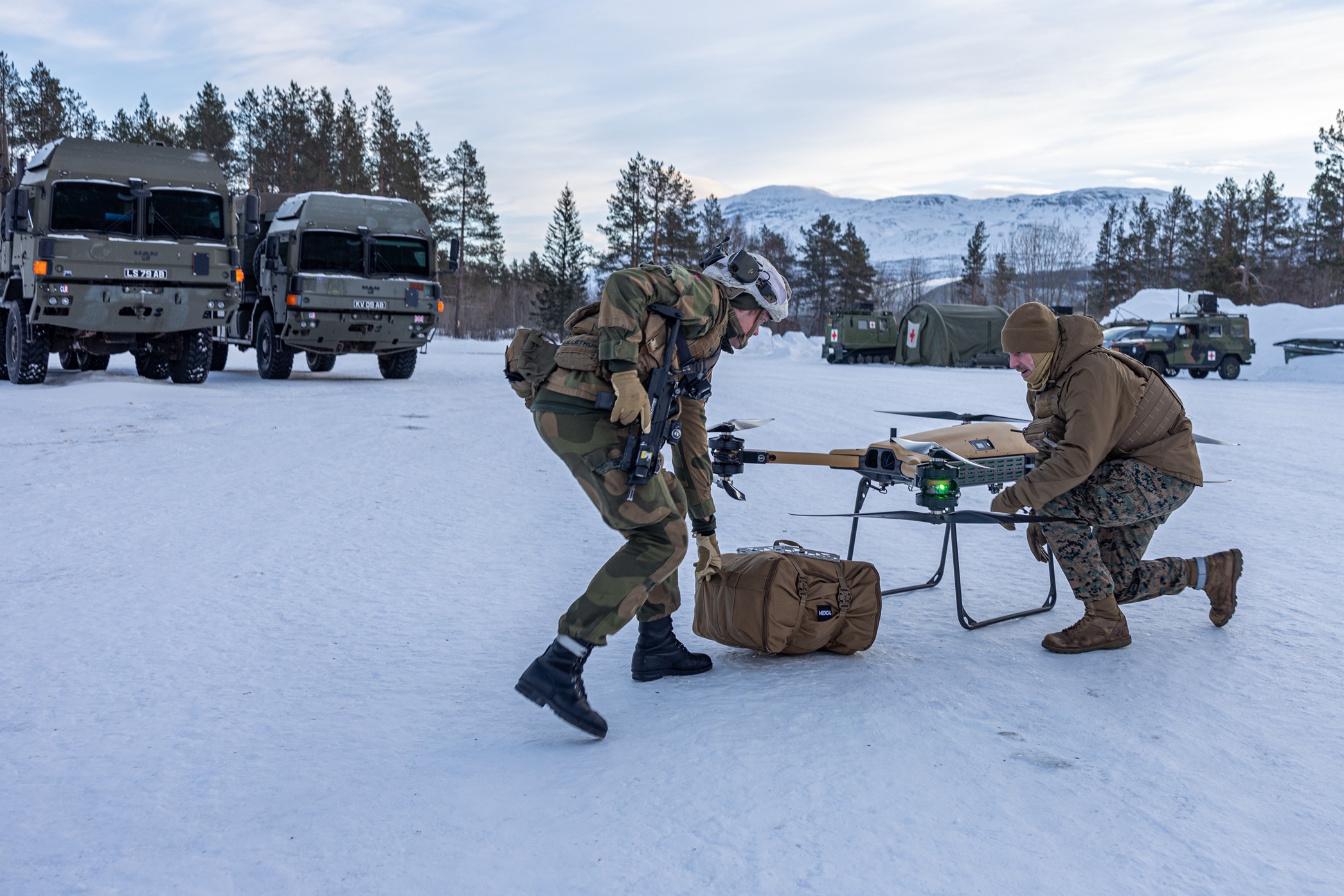
The utilization of the TRV-150 addresses the inherent risks associated with traditional cargo resupply missions, mitigating threats to military personnel by offering a secure and efficient alternative. With the ability to operate day or night, the drone facilitates timely and safe delivery of equipment to the battlefield, with remote piloting enabled through a laptop interface that allows for waypoint navigation and autonomous delivery. Furthermore, the TRV-150 affords flexibility in cargo handling, with options for both landed and in-flight drop-off procedures.