

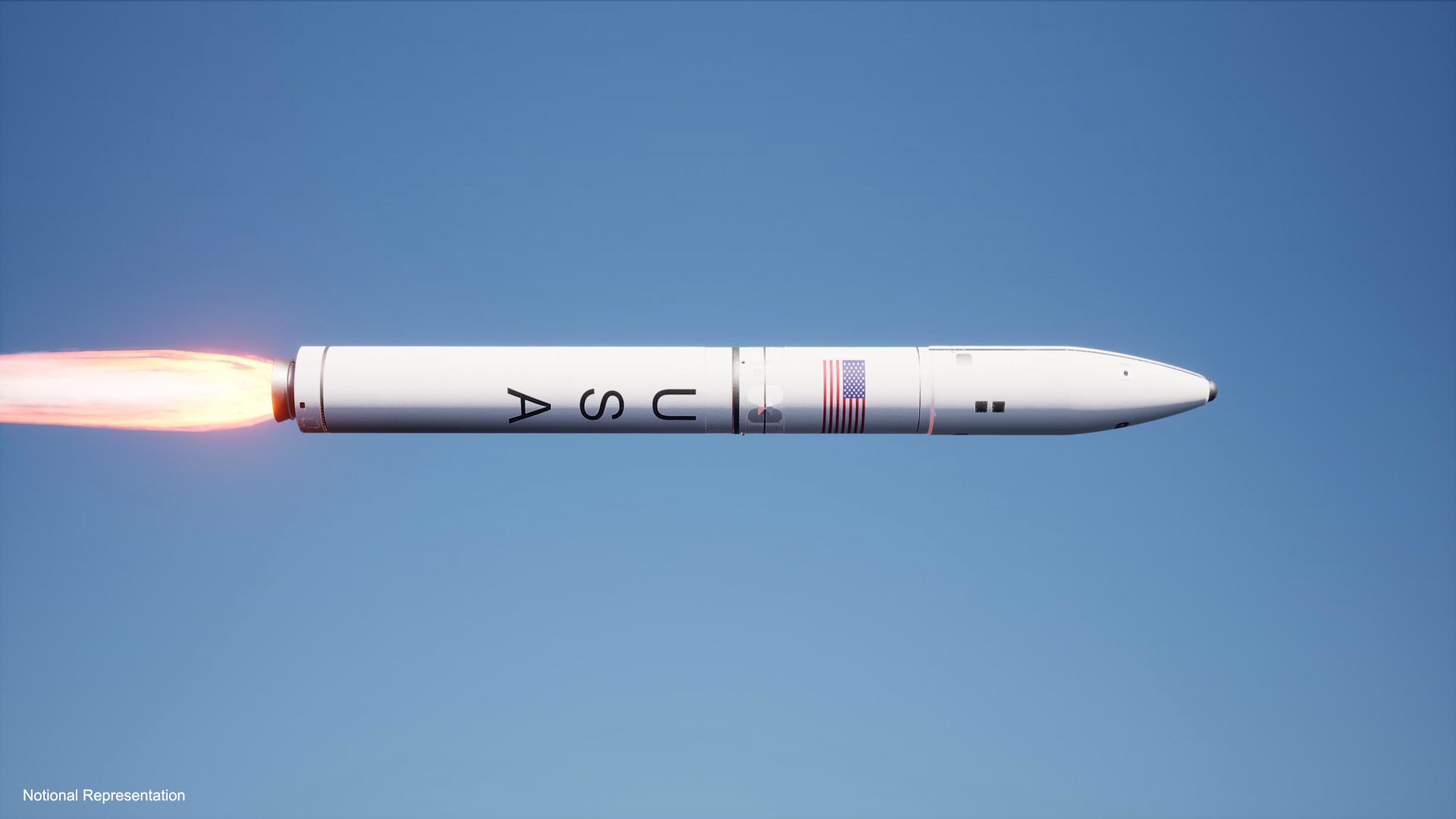
The U.S. Defense giant Northrop Grumman has announced that it achieved a significant milestone as its Next Generation Interceptor (NGI) team completed the All-Up Round (AUR) Preliminary Design Review (PDR) in partnership with the Missile Defense Agency (MDA) on January 26.
As noted by the company, this milestone marks a crucial step in delivering an essential homeland defense capability to the U.S. warfighter.
The PDR signifies the establishment of the technical approach for the full integration of Northrop Grumman’s interceptor design across all subsystems, propelling it into advanced development phases. A pivotal requirement of this achievement is demonstrating that the design maintains full capability while enduring challenging environments.
To facilitate the review process, the Northrop Grumman team provided on-site interactive demonstrators for MDA’s assessment, including a full-scale solid rocket motor, avionics, and other test hardware. Raytheon, a strategic partner of the NGI team, contributed kill vehicle hardware used during environmental testing, sensor hardware, kill vehicle hardware supporting manufacturing fixtures, and test equipment. Furthermore, a full-scale digital model of the AUR design was available for evaluation in a virtual reality environment.
Lisa Brown, Vice President, Next Generation Interceptor program, Northrop Grumman, stated, “The Northrop Grumman NGI PDR demonstrated our technology, innovation, readiness, and performance. We put actual hardware in the hands of the MDA, backed by a digital representation. Next Generation Interceptor holds global strategic importance, which is why production and manufacturing readiness continues to play a central role in our Next Generation Interceptor solution.”
The Northrop Grumman NGI solution aims to enhance technical capabilities for defending the U.S. homeland from Intercontinental Ballistic Missile (ICBM) threats as part of the Ground-Based Midcourse Defense (GMD) system. The team has proactively built and tested essential components of the NGI solution, exceeding customer timelines.
With the successful completion of PDR, Northrop Grumman will continue refining its NGI design towards the Critical Design Review, expected to conclude ahead of schedule. The initial operational deployment of the Next Generation Interceptor is projected as early as 2027.