

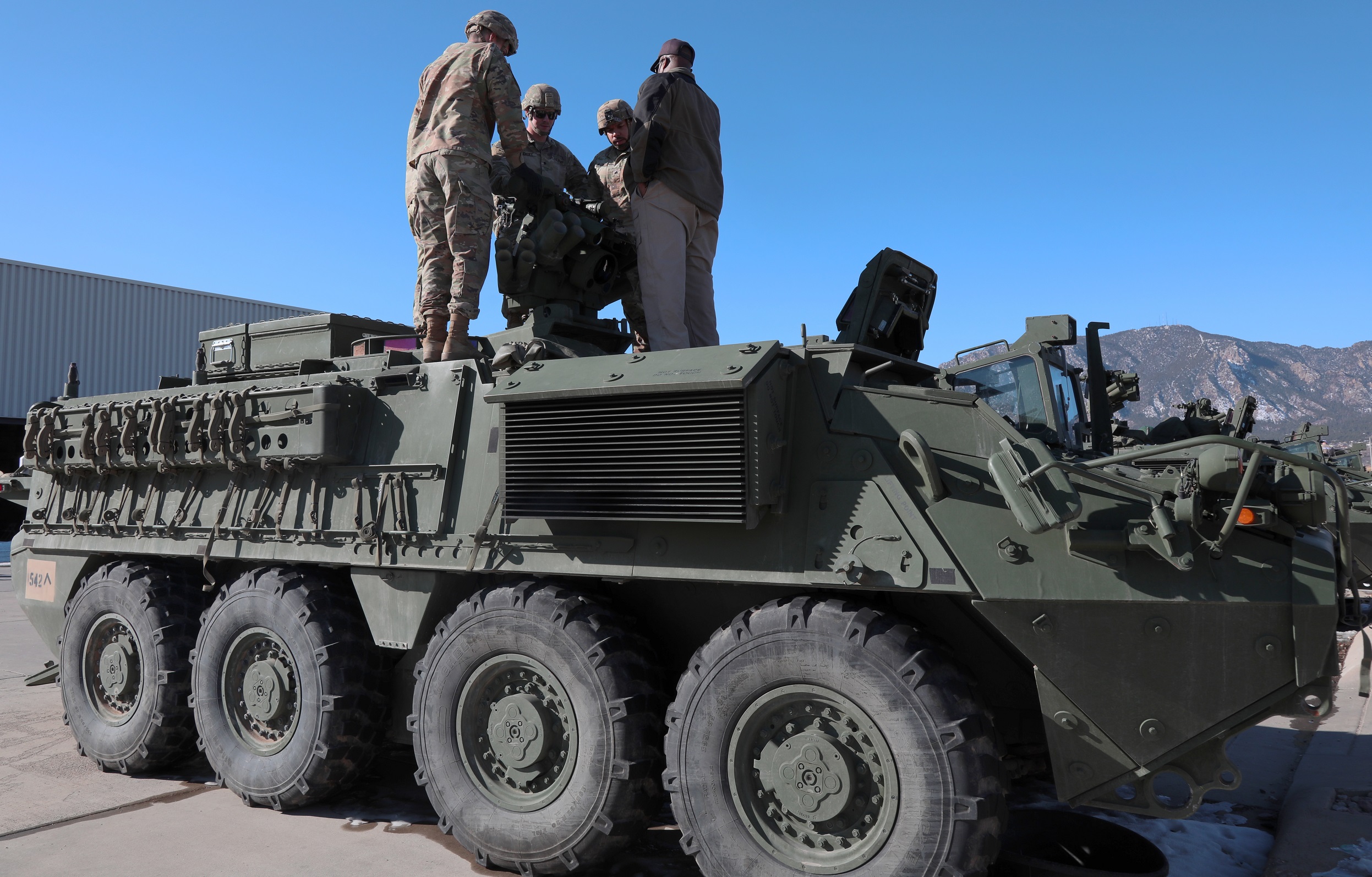
US Army upgrades its Strykers with lethal weapons system

The U.S. Army is fielding the new weapon system on Strykers, which replaces the Remote Weapon Station, as part of a larger effort to give Infantry Carrier Vehicles more lethal capabilities.

The details were given in a 17 February media release, to announce that the WarHorse Brigade at Fort Carson, Colorado began fielding and training on the Common Remotely Operated Weapon Station-Javelin and the Common Remotely Operated Weapon Station.

“This modernization enhances our Soldiers’ ability to detect, identify and destroy targets and achieve overmatch against peer threats,” said Col. Andrew Kiser, commander of 2nd Stryker Brigade Combat Team, 4th Infantry Division.

- ADVERTISEMENT - CONTINUE READING BELOW -

The CROWS and CROWS-J system also allows for Soldiers to engage threats from inside the Stryker, providing a more lethal approach to eliminating threats from a distance.
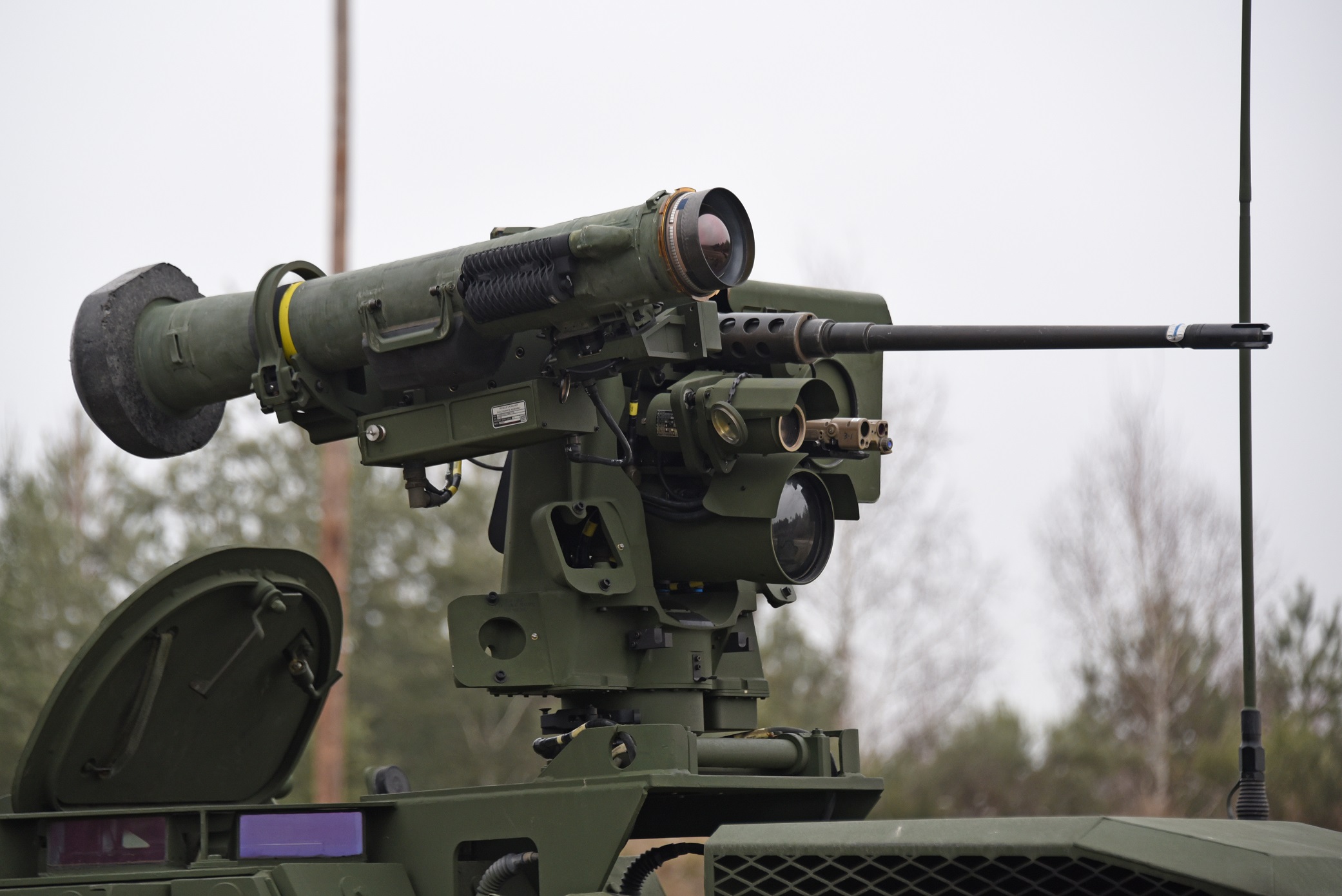
Picture shows a Common Remotely Operated Weapon Station-Javelin or CROWS-J, mounted on a Stryker Infantry Carrier Vehicle. Photo by Markus Rauchenberger

“It improves crew safety and survivability,” said Sgt. Joshua Carroll, infantryman with Headquarters and Headquarters Company, 2SBCT, 4th Inf. Div. “We can engage farther than a dismounted javelin.”

The systems include improved visual capabilities, increasing the Stryker’s lethality.

“Including both optics and control of the primary vehicular weapon system, they allow operators to engage targets from inside the vehicle at extreme distance with an increased resolution in the camera feed,” Kiser said.

The WarHorse Brigade began its transition from a light infantry brigade to a Stryker brigade in the summer of 2020 and became fully mission capable as a Stryker brigade in late 2021. These latest upgrades to the brigade’s fleet make it the most modernized in the U.S. Army.

“It makes us the most lethal Stryker brigade in the Army,” Carroll said.

Readers who wish to follow our weekly coverage can subscribe to the Weekly Defense Roundup.

If you wish to report a grammatical or factual error in this article, please let us know by using the online form.

Executive Editor

Support The Defence Blog

Independent reporting takes resources. Join us on Patreon.

Become a patron

More Like This

U.S. Air Guard to buy motorized paragliders for silent infiltration flights

A North Carolina Air National Guard unit, part of the U.S. military's part-time reserve force, wants to give its people the ability to quietly...

U.S. Air Force scouts companies to build its next robot fighter jet

The U.S. Department of the Air Force published a market research notice this week seeking companies capable of designing, developing, prototyping, manufacturing and fielding...

Bell to rewire U.S. Marine Corps’ Viper and Venom fleet

U.S. Marine Corps attack and utility helicopters are heading into a major upgrade built specifically to carry the next generation of weapons, and the...

Pentagon spends $333 million to keep fighter pilots’ helmets combat ready

The U.S. Defense Logistics Agency awarded Rockwell Collins ESA Vision Systems, a Fort Worth, Texas company, an estimated $333 million contract to supply spare...

Pentagon pays $400 million to run its new missile-tracking satellites

The U.S. Space Development Agency, the Pentagon office building America's next generation of missile-tracking satellites, awarded General Dynamics Mission Systems a contract with a...