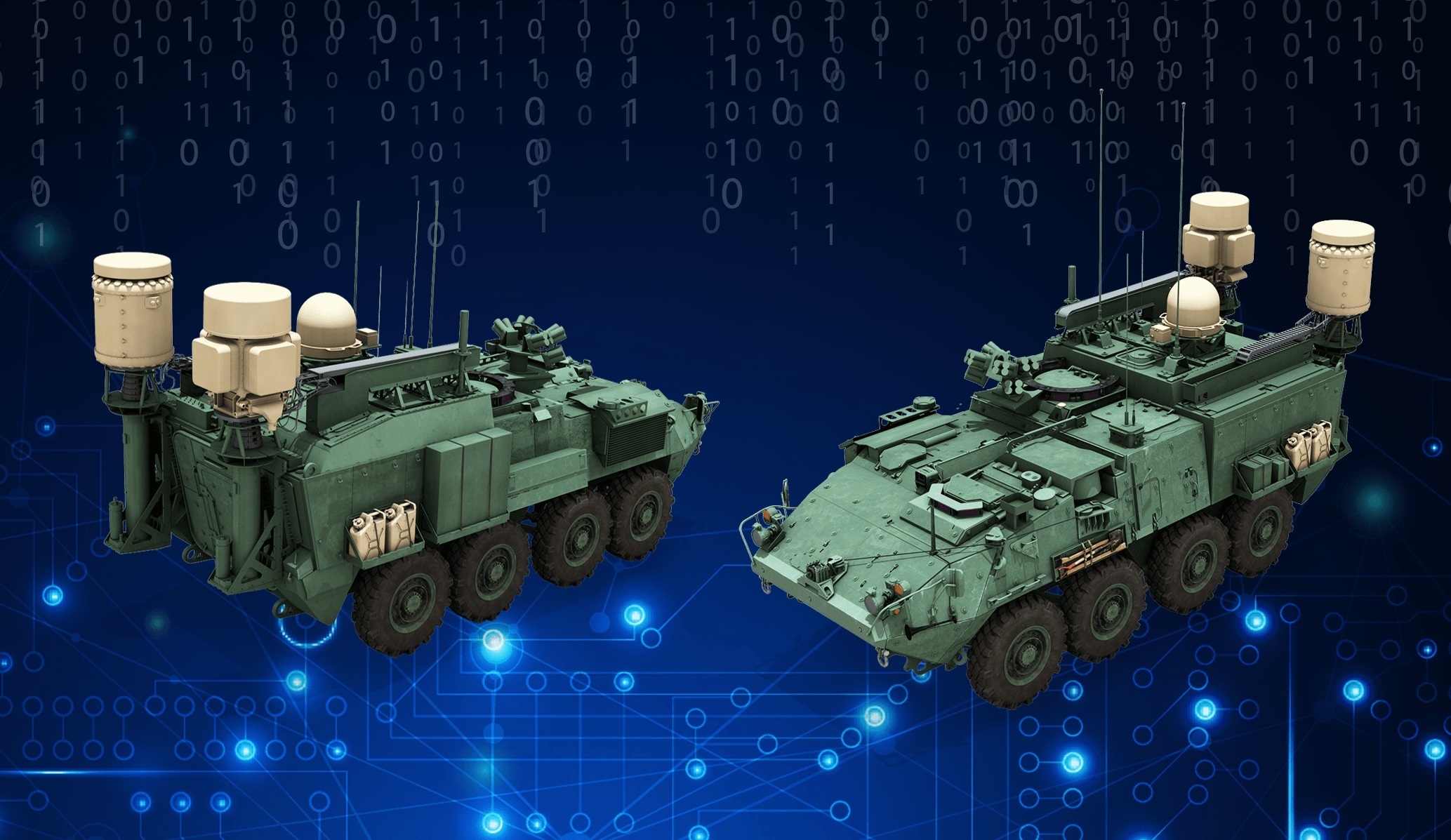
The U.S. Army announced in Monday that Lockheed Martin has been chosen to build the Army’s next generation tactical vehicle based system that delivers an integrated suite of Signals Intelligence (SIGINT), Electronic Warfare (EW), and Cyberspace Operations overmatch capabilities to enable the Joint All Domain Operational (JADO) Capable Force.
After more than 16 months of competitive prototyping the Terrestrial Layer System – Brigade Combat Team (TLS-BCT), the U.S. Army entered into an Other Transaction Authority (OTA) agreement with Lockheed Martin Corporation, Syracuse, NY to support Phase 2 as a fix-test cycle for prototypes from Phase 1. The agreement totals $9,672,781.00 for a three month Period of Performance. This second phase of a multi-phased OTA will provide prototypes ready for manufacturing proof of concept for the TLS-BCT.
“The Terrestrial Layer System is the Army’s next generation tactical vehicle based system that delivers an integrated suite of Signals Intelligence (SIGINT), Electronic Warfare (EW), and Cyberspace Operations overmatch capabilities to enable the Joint All Domain Operational (JADO) Capable Force,” said Ken Strayer, Project Manager for Electronic Warfare and Cyber (PM EW&C). “When fielded, TLS will be assigned to the Multi-functional Platoon and the EW Platoon organic to the Military Intelligence (MI) Company (MICO) in the BCTs. TLS will provide the warfighter at multiple echelons critical situational awareness of the enemy through detection, identification, location, exploitation, and disruption of enemy signals of interest.” Design tenets are expeditionary to support the maneuver commander with electronic attack and offensive cyber warfare options to deny, degrade, disrupt, or manipulate enemy signals of interest and the targeted force.
During Phase 1, PM EW&C conducted detailed technical reviews that leveraged Soldier Touch Point (STPs) events throughout the prototyping phase that culminated in Soldiers operating the prototypes during a capstone Operational Assessment. The Soldier represented a wide range of experience from both Intelligence and Electronic Warfare specialties making their input valuable for the development of this new system. PM EW&C plans to use the OTA for manufacturing proof of concept vehicles to support First Unit Equipped followed by additional prototype and integration efforts.