

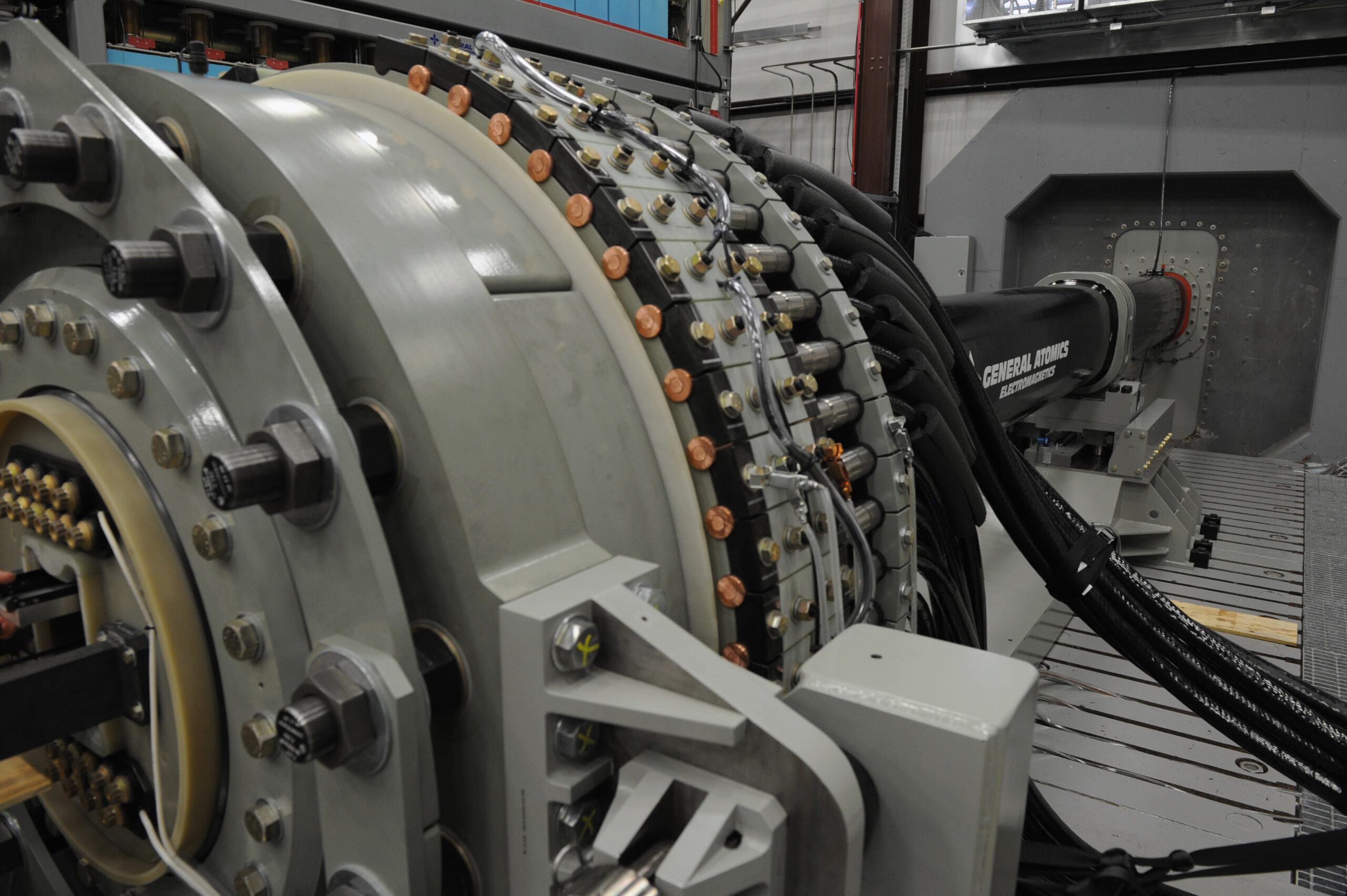
The U.S. Navy is issuing a noise advisory for the Naval Surface Warfare Center areas as military engineers will conduct live-fire tests of the railgun weapon system from Wednesday, Dec. 2, through Friday, Dec. 4.
A noise advisory has been issued by Naval Surface Warfare Center Dahlgren Division while the center prepares for upcoming tests at the Potomac River Test Range and the Explosive Experimental Area (Pumpkin Neck).
“These facilities are used by our military to conduct munitions testing and should be avoided while testing is in progress,” said in the noise advisory.
Also noted that potentially will create a “Very Loud” noise down range and in communities surrounding NSF Dahlgren.
The statement did not provide information on the type of weapon system ar its projectiles.
The railgun weapon system is designed to support air and missile defense, counter-battery fire, and precision indirect fire. It features electromagnetic launchers that use electricity instead of chemical propellants to fire projectiles at high speeds.
Using a massive electrical pulse rather than a chemical propellant, the railgun can launch projectiles much farther than the 13-nautical-mile range of the U.S. Navy’s standard 5-inch naval gun. Previous incarnations of the railgun suffered from limited muzzle energy and could only fire a few shots before the launcher needed to be replaced. These days, however, the railgun has increased its muzzle energy substantially and can shoot hundreds of projectiles before requiring refurbishment.
The railgun was initially envisioned for land attack until its potential warfighting advantages sparked examination of other vital missions. Modeling and analysis established a real potential for it to enhance integrated air and missile defense and anti-surface warfare. The railgun, with a hypervelocity projectile, is expected to be very cost-effective while adding offensive and defensive depth. It can inexpensively address many lethal threats while conserving much more costly missiles for the most challenging targets.
U.S. Navy will test electromagnetic railgun https://t.co/pETRbzENIu pic.twitter.com/h83504REHt
— 笑脸男人 (@lfx160219) November 30, 2020