

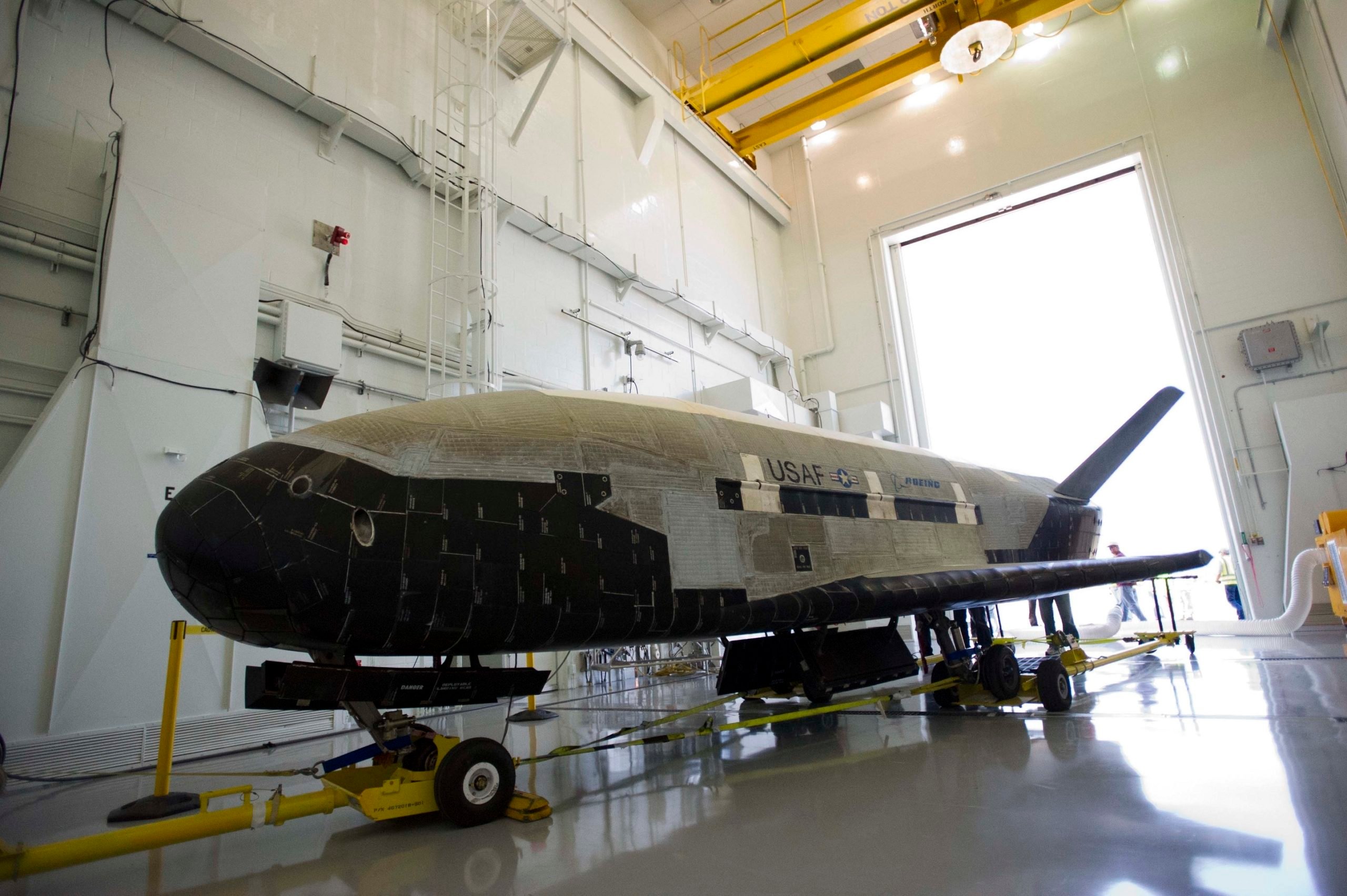
The U.S. Space Force has launched the next X-37B unmanned spacecraft into orbit for a classified mission.
America’s most experienced space launch provider United Launch Alliance (ULA) successfully launched the X-37B orbital test vehicle for the U.S. Space Force at 9:14 am EDT this morning from LC-41 at Cape Canaveral Air Force Station, Florida.
A live video stream of the launch showed the Atlas V lifting off into space and the separation of the rocket’s first stage from the Centaur upper stage. However, the livestream cut out afterwards due to the extreme secrecy surrounding the capabilities of the X-37B, said ULA chief executive officer Tory Bruno.
“It’s a classified mission, and what is classified about it as the details of the vehicle itself, the mission it will do on orbit and where it will do that,” he said. “Therefore we have to stop the live broadcast so that we do not make it easy for adversaries to figure those things out by having that much data about the flight and deployment.”
In a statement Sunday, the ULA said an Atlas V 501 configuration rocket launched the USSF-7 mission wit mystery spacecraft for the U.S. Space Force. In a show of national solidarity this launch will be dedicated to honor front-line responders and those affected by COVID-19. This will mark the sixth flight of the X-37B Orbital Test Vehicle (OTV-6).
The X-37B is the newest and most advanced re-entry spacecraft. Managed by the Air Force Rapid Capabilities Office, the X-37B program performs risk reduction, experimentation and concept of operations development for reusable space vehicle technologies.
The vehicle is the first since the Space Shuttle with the ability to return experiments to Earth for further inspection and analysis. This United States Air Force unmanned space vehicle explores reusable vehicle technologies that support long-term space objectives.
The X-37B has a lifting body-style and landing profile that is similar to the Space Shuttle, but the vehicle is one-fourth the size. The X-37B design combines the best of aircraft and spacecraft into an affordable system that is easy to operate and maintain.