

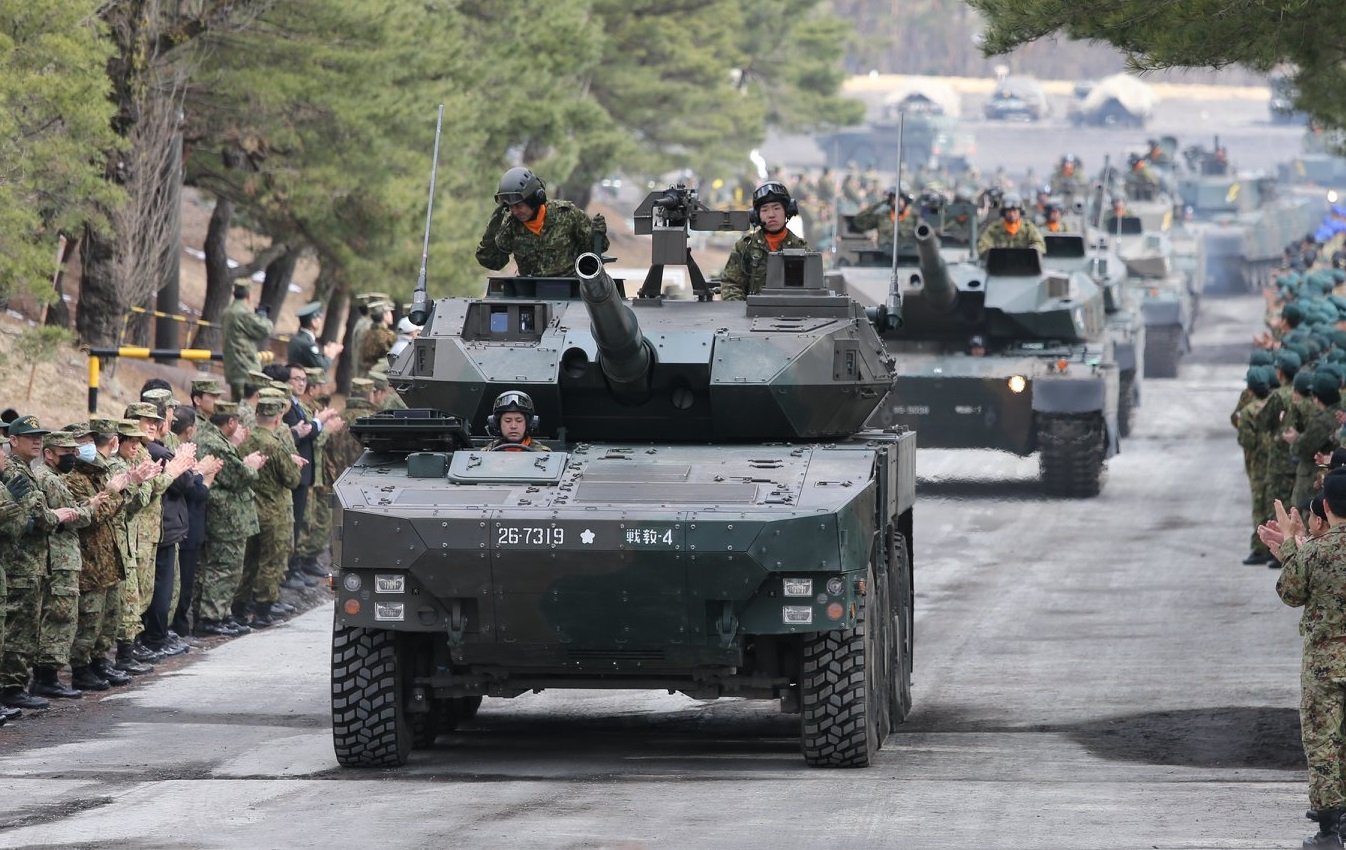
The Japanese Ministry of Defense will purchase an additional Type 16 Mobile Combat Systems, also known as a Japanese twenty-first-century tank destroyer, according to a document entitled Defense Programs and Budget of Japan, the 2020 version of which was published in late March.
The procurement of additional mobile combat vehicles suited for transportation by aircraft and other means will strengthen rapid deployment capabilities of the basic operational units (rapid deployment division and rapid deployment brigade), according to the Japanese Ministry of Defense.
The Japan Ground Self-Defense Force is requesting 33 Type 16 vehicles, according to budget documents. Japan’s government plans to spend $222 million (¥23.7 billion) to buy new Type-16 mobile combat vehicles.
CORRECTION: Story corrected on May 8 to note that Japan’s government plans to spend $222 million.
The Type-16 is a modern Japanese combat vehicle designed for light to medium territorial defense and tactical reconnaissance. The main role of this vehicle is to provide direct fire support for infantry units. It can engage hostile armored vehicles, buildings and field fortifications.
The Maneuver Combat Vehicle (MCV) is intended to help re-equip existing divisions and brigades reorganised into mobile (rapid reaction) divisions/brigades, as well as equip new dedicated rapid reaction regiments alongside (eventually) the Light-weight Combat Vehicle System which was also designed with defense of the outer islands in mind.
Type 16 is armed with a 105 mm rifled gun. It is compatible with standard NATO 105 mm ammunition.
As The National Interest previously reported, the MCV’s 105-millimeter gun has a fifty-two-caliber rifled barrel and is derived from the famous British L7 gun used on the Centurion and Leopard I tank. A human loader loads hefts either kinetic Type 93 Armor Piercing Fin-Discarding Sabot Rounds for maximum penetrating power or dual-purpose Type 91 High-Explosive Anti-Tank rounds, which also work against soft targets. A 7.62-millimeter machine gun is mounted coaxially next to the cannon, while an M2 .50-caliber machinegun is perched on the turret for anti-aircraft defense.