

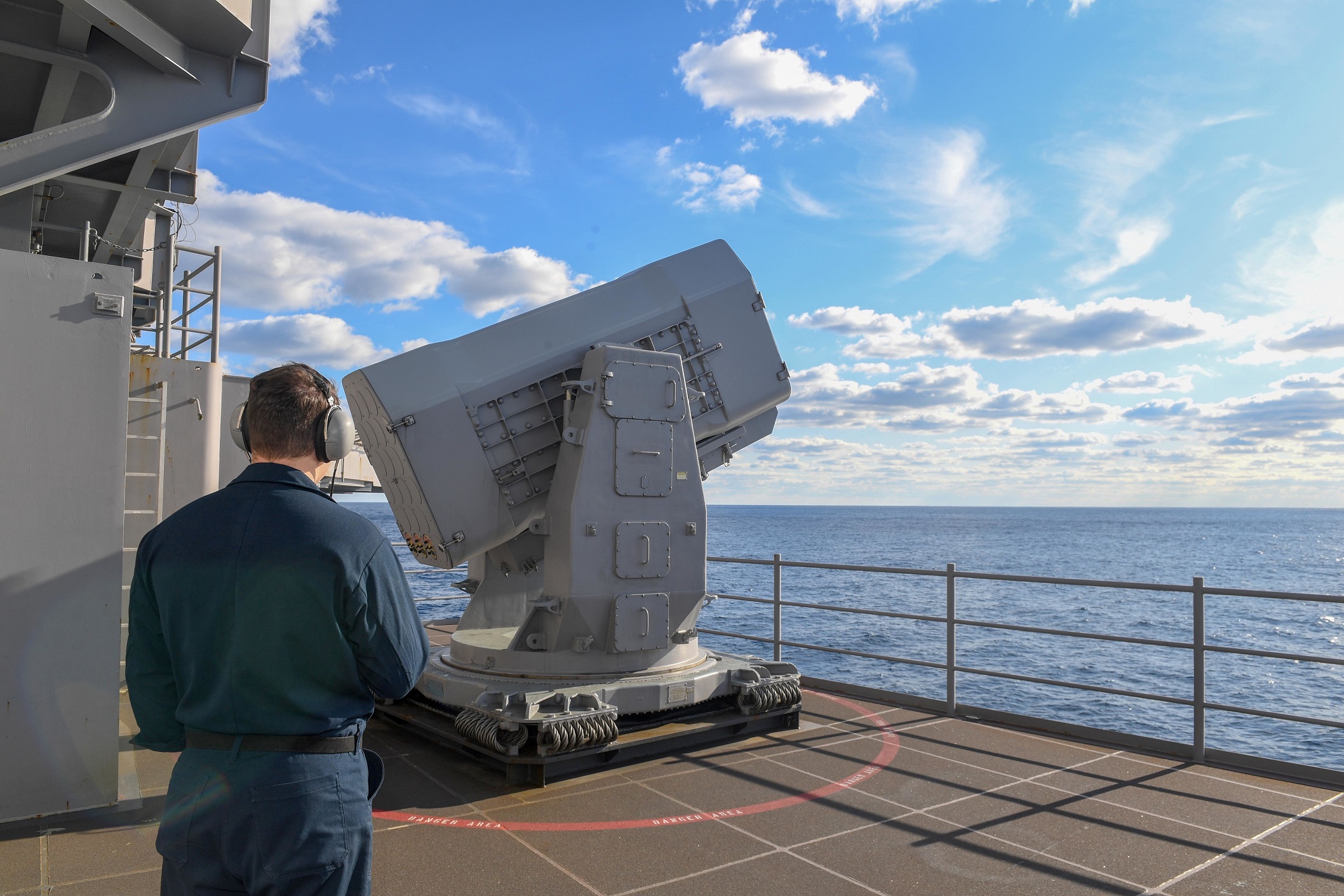
The U.S. Navy said in Monday that newest Gerald R. Ford-class aircraft carrier, USS Gerald R. Ford (CVN 78) recently completed testing of vital combat systems while underway in the Atlantic Ocean.
These tests, conducted during Ford’s post-delivery test and trials (PDT&T) phase, are designed to stress the ship’s combat system capabilities and demonstrate the successful integration of new technologies, which the crew employs to defend the aircraft carrier.
Cmdr. Ron McCallister, Ford’s combat systems officer, noted the testing was a collaborative effort between Naval Sea Systems Command along with the greater technical community and the ship’s force.
“The tests exercise the combat systems suite as a complete unit and ensure maximum availability to meet combat and self-defense mission requirements,” said McCallister. “In the end, the combat systems suite achieves maximum readiness and the Sailors develop more operational and technical competence.”
Ford’s first certification of integrated combat systems tested the Air Traffic Control Radar Beacon (ATCRB) and Identification of Friend or Foe (IFF). The tests, conducted over several days, evaluated the ATCRB’s ability to track air and surface contacts and to identify friendly and enemy aircraft using an advanced identification system. IFF is used not only for positive, secure, friend identification, but also to control aircraft.
“We use an interrogator system to challenge aircraft transponders for identification,” said Operations Specialist 2nd class Juannietagrace Okeli, from Moss Point, Mississippi. “The interrogator, cooperative engagement capability, and the Ships Self-Defense Systems (SSDS) work together to provide us the combat identification.”
Ford also recently completed sea-based developmental testing (SBDT) of vital combat systems. This was the first full test of the integrated combat system against tactical adversaries. Testing was conducted with Kfir and Hawker Hunter jet aircraft from the Airborne Tactical Advantage Company. Ship’s crew tracked the aircraft, using Ford’s Dual Band Radar (DBR).
“SBDT is a stepping stone towards Ford’s Combat Systems Ship Qualification Trial (CSSQT), and follow-on operational tests by the Navy,” said Cmdr. William Buell, Ford’s combat direction center officer. “Our SBDT operations ran very smoothly, which is a good indicator of future success on CSSQT.”
As part of the SBDT, Sailors in Ford’s combat systems department conducted an up-load of simulated munitions for operators in the ship’s Combat Direction Center (CDC) to simulate engaging the aircraft.
“It was encouraging to see the results of our collective labor pay off and prove the warfighting capability of the class,” said Fire Controlman 2nd class Sam Lantinga, from Grand Rapids, Michigan. “Without these self-defense systems, Gerald R. Ford wouldn’t be able to deliver lethal effects to our nation’s adversaries.”
Gerald R. Ford is a first-in-class aircraft carrier and the first new aircraft carrier designed in more than 40 years. Ford is underway conducting carrier qualifications in the Atlantic Ocean.