

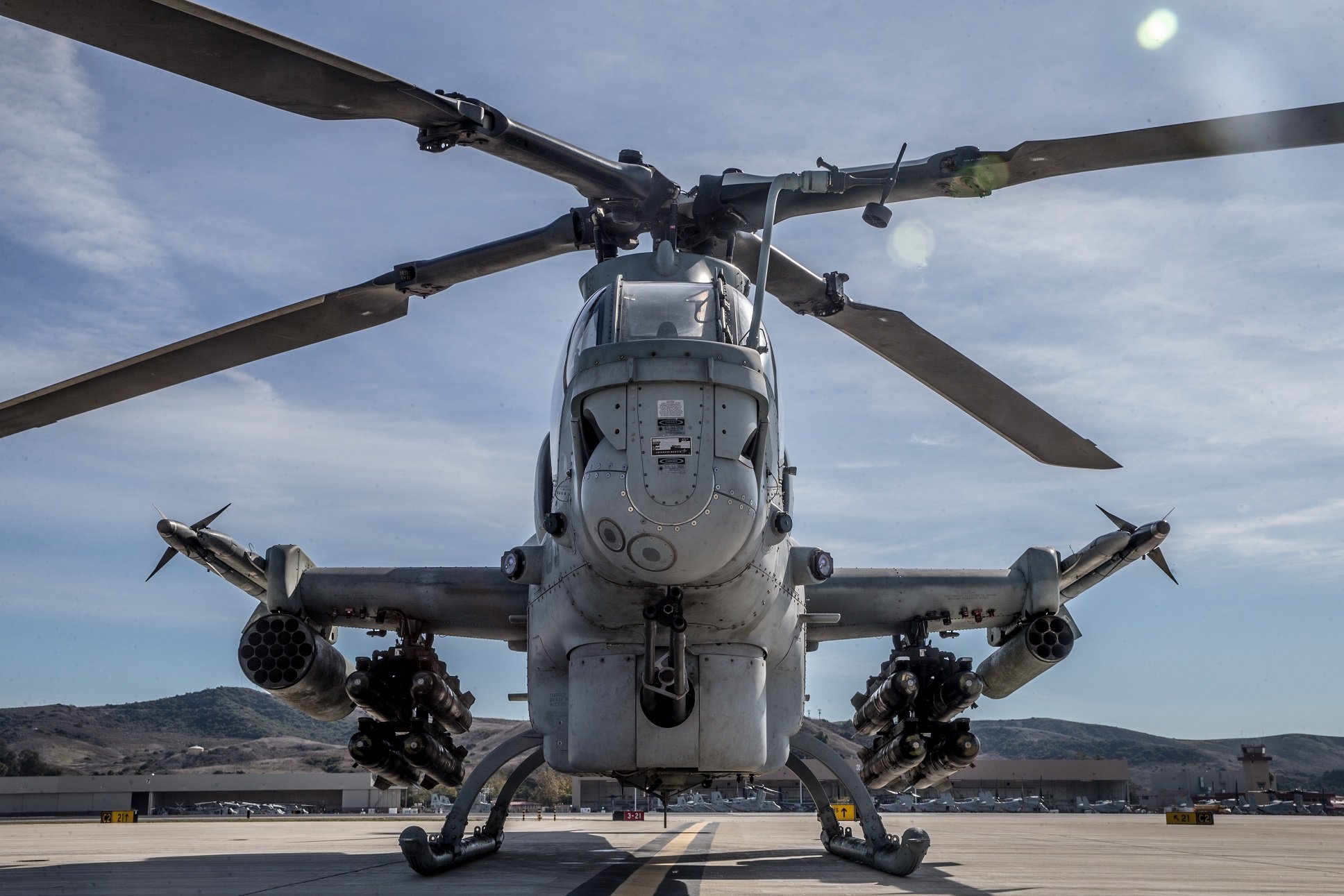
The U.S. Marine Corps has released footage that showing air-to-air missile capability of the AH-1Z Viper attack helicopter.
A few months ago, the U.S. Marine Corps demonstrated the power of Viper attack helicopter through exercise “Viper Storm” that was held at Marine Corps Air Station Camp Pendleton.
The Viper Storm exercise took place in Southern Calif. Dec 11, 2019. The attack helicopters flew from two separate locations – one on the coast and one inland – and struck simulated enemy targets representing peer and near peer threats capable of denying naval and joint forces the freedom of navigation essential to maritime control and enhancing operational-level flexibility.
A feature of the exercises was the demonstration of the AH-1Z’s little-known capability to attacking drones, other helicopters – and, even fixed-wing warplanes.
The 12 Vipers employed AGM-114 Hellfire air-to-ground and AIM-9 Sidewinder air-to-air missiles, emphasizing the versatility the Viper provides. With larger stub wings than its AH-1W Super Cobra predecessor, the Viper can carry a combination of up to 2 Sidewinders, 16 Joint Air-to-Ground Missiles (JAGM) or Hellfires, auxiliary fuel tanks, and up to 76 rockets with various fusing options, including the newest Advanced Precision Kill Weapon System (APKWS) LASER-guided rockets. This allows the platform to be tailored to any mission whether it be sea, land, or air related.
The AH-1Z Viper is more lethal and survivable than its predecessor in large part because of the modernized ordnance, sensory, and communication equipment. For example, it can carry the JAGM, which will replace the Hellfire missile. The JAGM is a multi-sensor, aviation-launched, precision-guided munition for use against high-value land and naval targets. It provides precision point and fire-and-forget targeting day or night, regardless of weather.
The AH-1Z’s glass cockpit provides pilots with superior situational awareness and the upgraded Target Sight System has an incredible range that enables the Viper to detect and engage targets from distances not previously possible for Marine attack helicopters.
Marine Attack Helicopters Demonstrate Naval Capabilities
Video by Sgt. Charles Plouffe pic.twitter.com/OaLax0oTbQ
— Dylan Malyasov (@DylanMalyasov) April 3, 2020
