

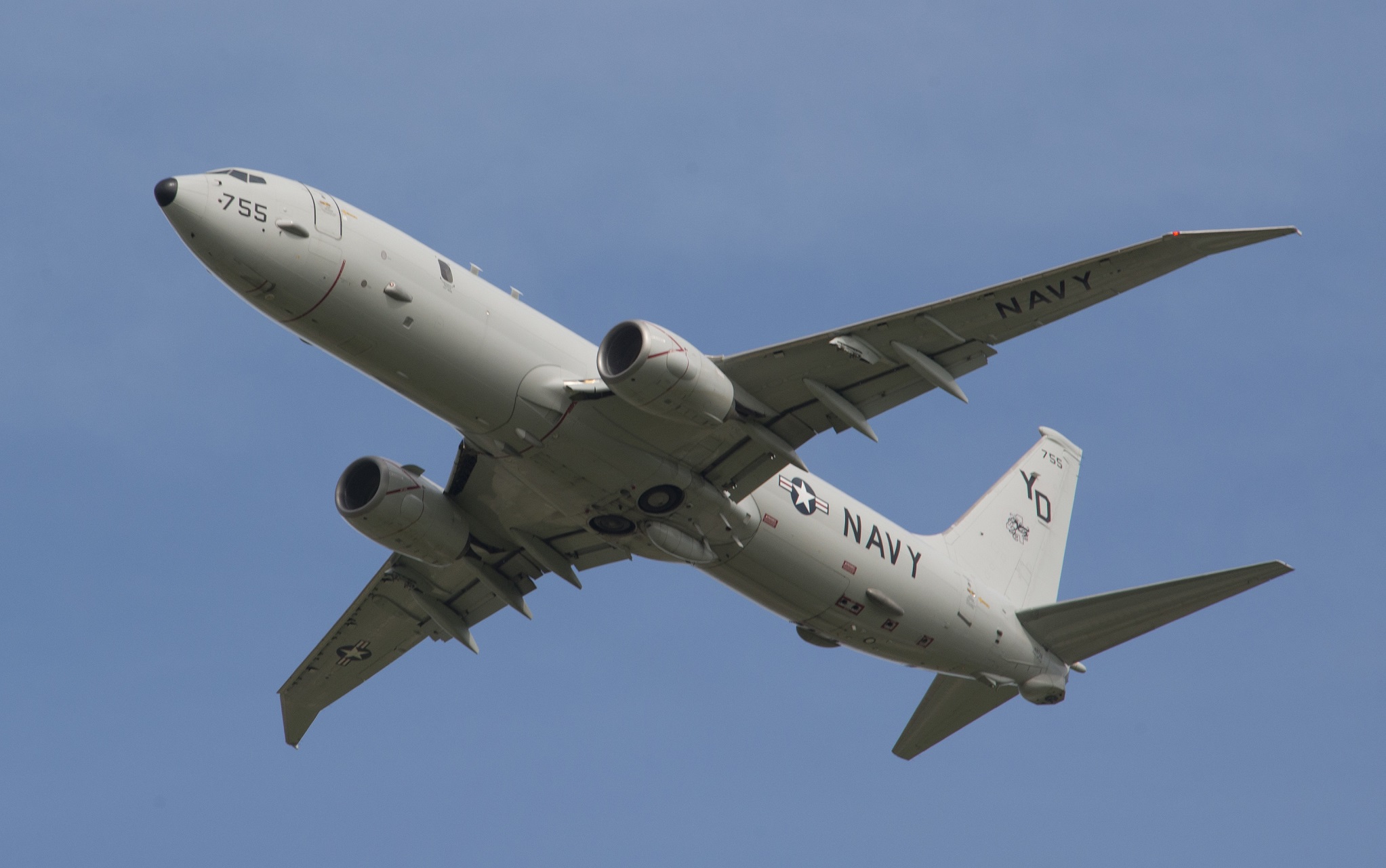
U.S. Secretary of Defense Mark Esper “raised concern” with China’s minister of national defense over an incident on February 17 in which a U.S. Navy P-8A Poseidon maritime patrol aircraft was lased by PRC navy destroyer 161 while flying in airspace above international waters approximately 380 miles west of Guam.
On March 3, 2020, Secretary of Defense Mark T. Esper spoke with the People’s Republic of China (PRC) Minister of National Defense General Wei Fenghe.
Secretary Esper called on the People’s Liberation Army to conduct itself safely and professionally in accordance with bilateral agreements and international standards of safety at sea.
The incident underscores the need for the two militaries to enhance bilateral crisis communication mechanisms to ensure incidents like this do not escalate or lead to miscalculation.
The P-8A was operating in international airspace in accordance with international rules and regulations. The PRC navy destroyer’s actions were unsafe and unprofessional.
Additionally, these acts violate the Code for Unplanned Encounters at Sea (CUES), a multilateral agreement reached at the 2014 Western Pacific Naval Symposium to reduce the chance of an incident at sea. CUES specifically addresses the use of lasers that could cause harm to personnel or damage to equipment. The destroyer’s actions were also inconsistent with a Memorandum of Understanding (MOU) between U.S. Department of Defense and the Ministry of National Defense of the PRC regarding rules of behavior for safety of air and maritime encounters.
The laser, which was not visible to the naked eye, was captured by a sensor onboard the P-8A. Weapons-grade lasers could potentially cause serious harm to aircrew and mariners, as well as ship and aircraft systems.
The P-8A is assigned to VP-45, based out of Jacksonville, Florida, and is forward-deployed to Kadena Air Force Base in Okinawa, Japan. The squadron conducts routine operations, maritime patrol and reconnaissance in the U.S. 7th Fleet area of operations.
U.S Navy aircraft routinely fly in the Philippine Sea and have done so for many years. U.S. Navy aircraft and ships will continue to fly, sail and operate anywhere international law allows.