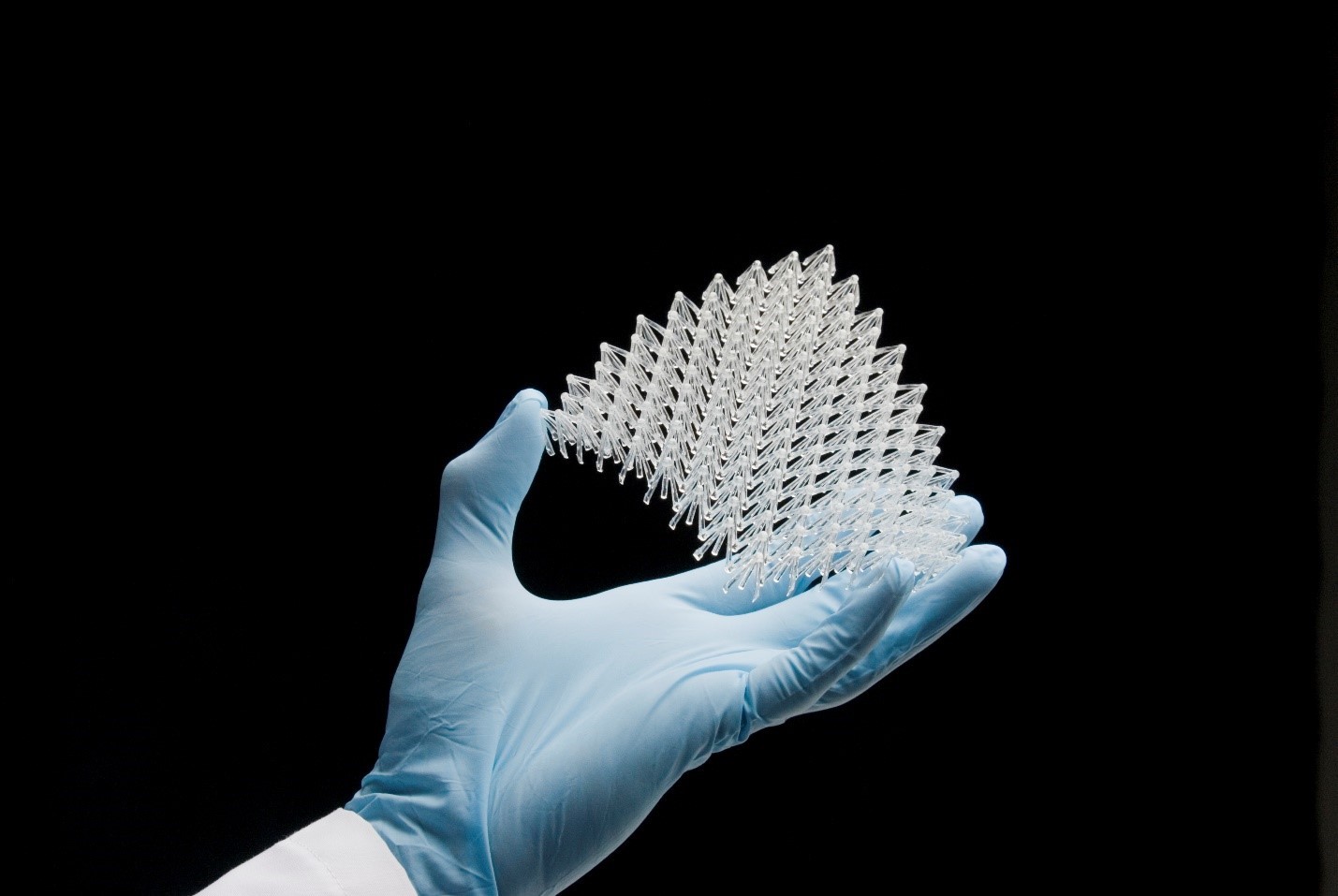
The U.S. Army Combat Capabilities Development Command Army Research Laboratory has announced that Army researchers and industry partners recently published a study showing how they developed new materials and manufacturing methods to create higher-performing helmet padding that reduces the likelihood of head injury in combat and recreational helmets.
A team from the U.S. Army Combat Capabilities Development Command’s Army Research Laboratory and its HRL Laboratories partners used advances in 3-D printing to create new helmet padding that consists of highly-tuned open-cell lattice structures.
“Careful control of the lattice design imparts novel compression characteristics to the padding that reduce peak head acceleration during blunt impact events compared to existing state-of-the-art foam padding,” said Dr. Thomas Plaisted, the lab’s project lead. “Testing demonstrated a 27% increase in energy attenuation efficiency when inserted into a combat helmet compared to current best-performing foam pads.”
A significant challenge for the design of protective padding is providing the highest level of impact protection while minimizing weight and space it occupies inside the helmet, Plaisted said. The padding must be comfortable to allow a Soldier to wear a combat helmet for extended periods.
“Typical multi-impact attenuating materials include expanded polypropylene and vinyl nitrile closed-cell foams, which absorb impact energy through the collapse of internal pores when compressed,” he said. “The material is carefully tuned to yield at a threshold force, or acceleration, specific to the tolerance of the head, thereby mitigating injury.”
Recent advances in additive manufacturing techniques have enabled the fabrication of cellular materials with architected lattice topology.
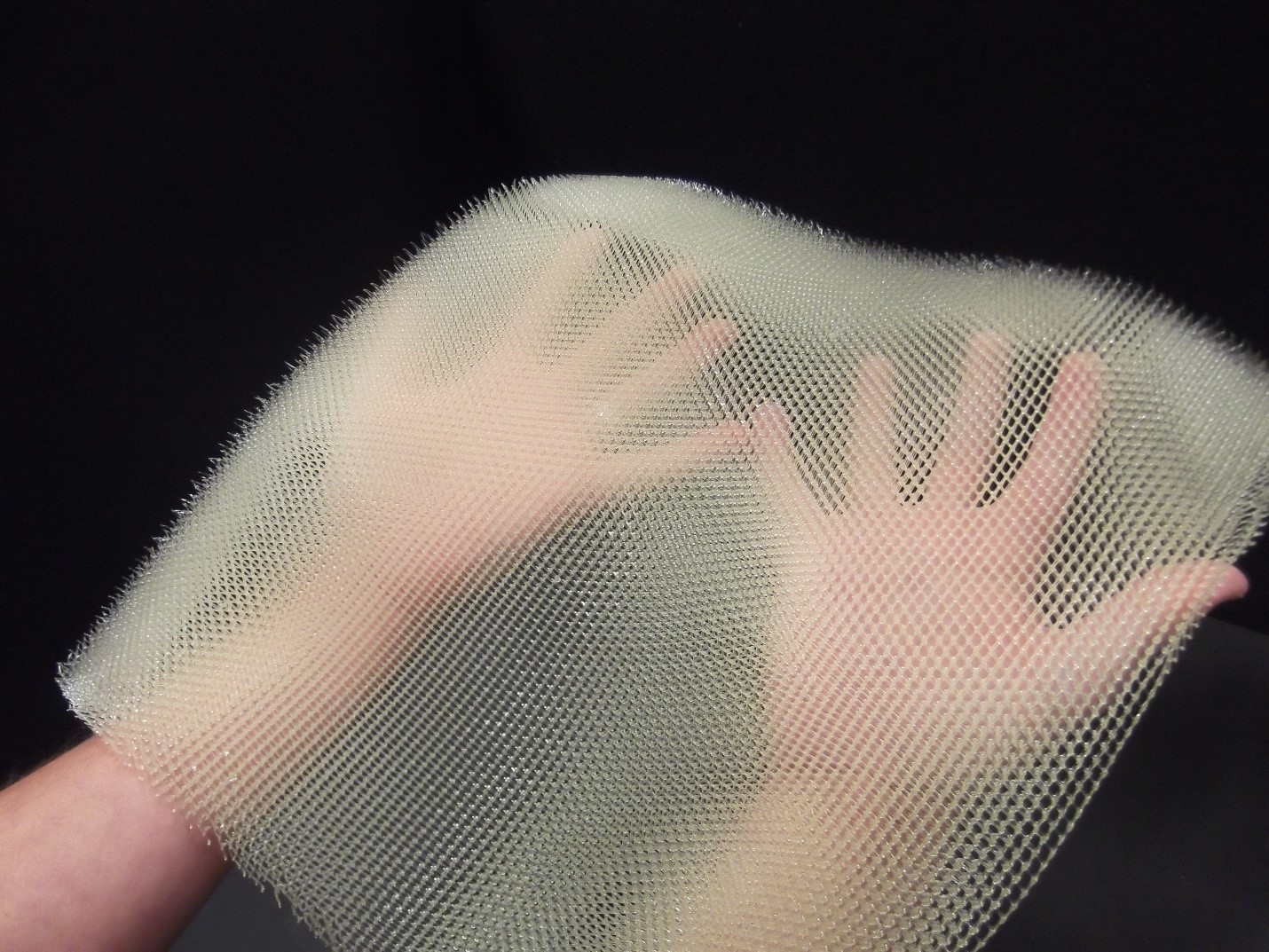
“We demonstrated, via design of the cellular architecture, improved control over the collapse process in elastomeric lattices that enables impact-attenuation performance exceeding state-of-the-art foams for both single- and multi-hit scenarios,” Plaisted said. “An improvement over state-of-the-art vinyl-nitrile foam helmet pads was achieved during a standard helmet test, leading to lower head acceleration. This breakthrough could pave the way to helmets with improved injury protection. The open cell design of the lattice further aids in comfort and breathability to dissipate heat away from the head.”
Researchers recently briefed their transition partners at CCDC Soldier Center on the performance of the new padding materials and helmet suspension technologies to mitigate blunt impact head injury. The laboratory is transitioning this technology to the center for further evaluation and implementation in future helmet systems.
“Building on this work, CCDC SC has initiated its own research efforts to develop and evaluate additive manufactured helmet pads,” Plaisted said. “Concurrently, we provided updates on an alternative helmet suspension technology, rate-activated tethers, invented at ARL that have demonstrated even greater performance for reducing blunt impact injury. We are working with the center to identify helmet industry partners to integrate the new rate-activated tether technology.”
The Army’s fundamental responsibility is to equip, train and field Soldiers with the tools and resources to engage with and destroy the enemy, while providing world-class protection, according to Army officials. As an Army Modernization priority, Soldier Lethality narrows the capability gaps to enhance a Soldier’s ability to fight, win and survive through increased lethality, mobility, protection and situational awareness in order to facilitate rapid acquisition of increased capabilities.