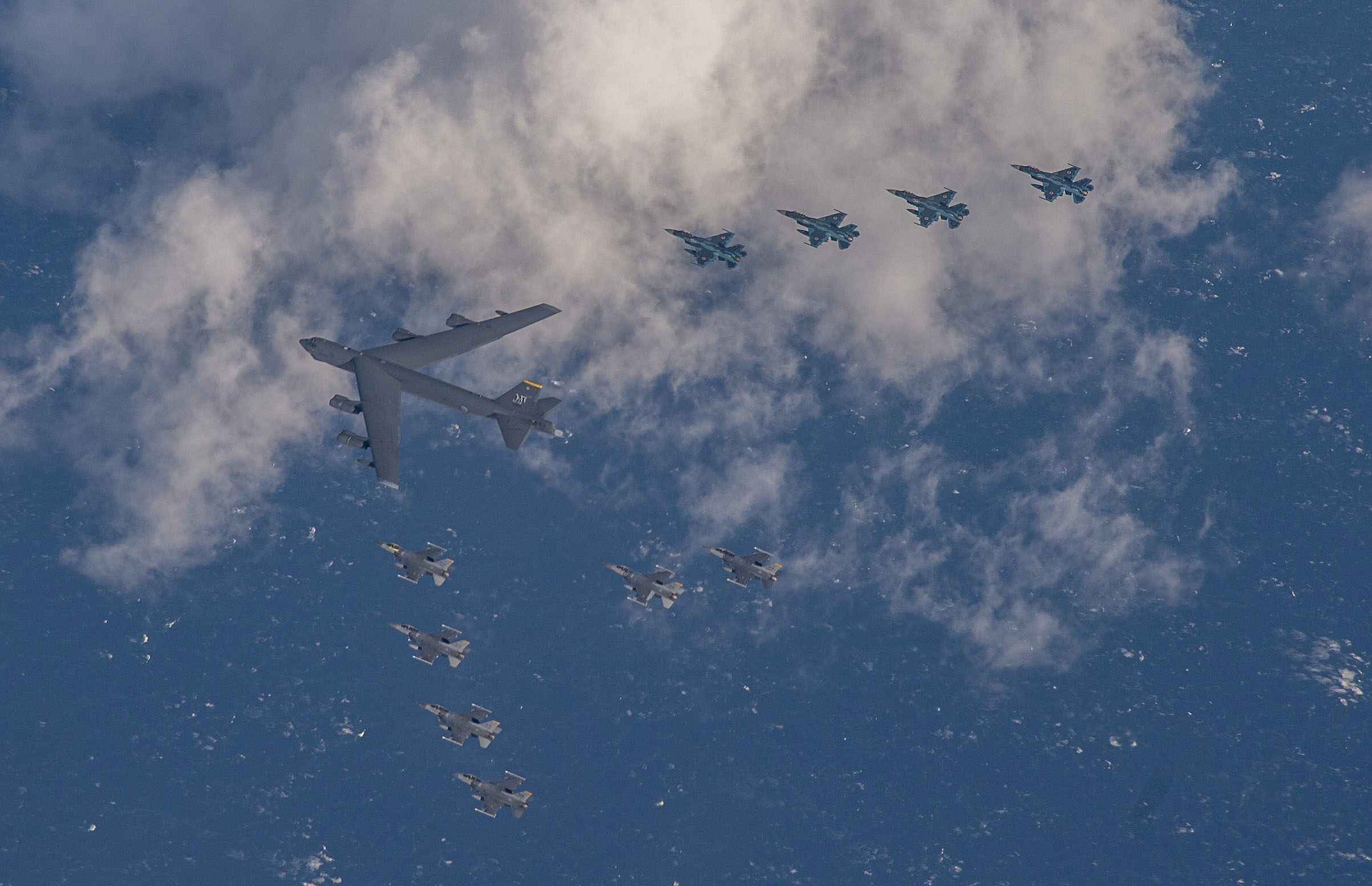
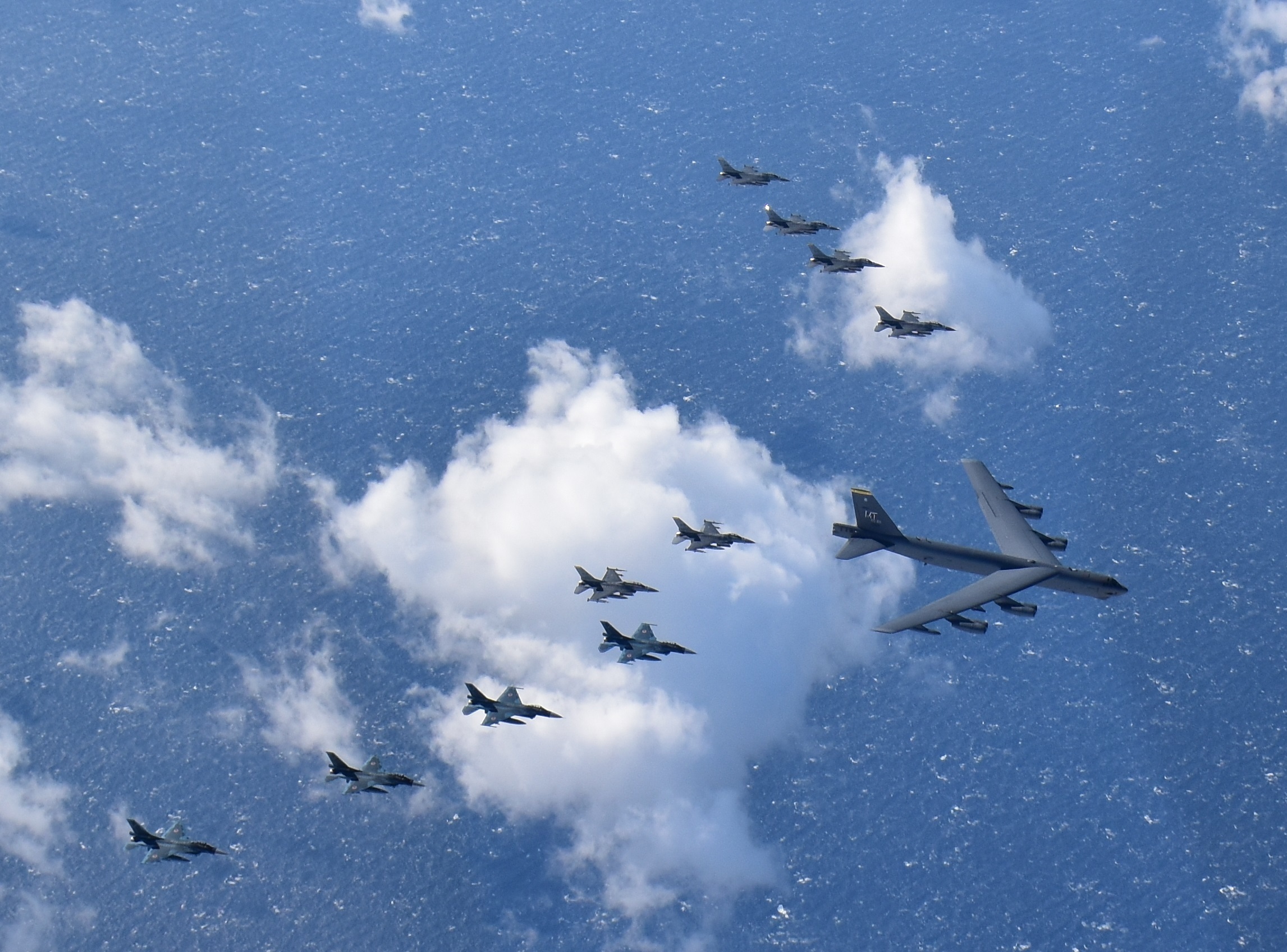
The U.S. Air Force and Japan Air Self Defense Force (JASDF) showcased its strength during bilateral aerial training near Japan Feb. 3.
U.S. Air Force aircraft from the Pacific theater and the continental United States integrated with the Koku Jieitai (JASDF) to conduct bilateral and theater familiarization training, according to a recent service news release.
A U.S. Air Force B-52H Stratofortress bomber from Andersen Air Force Base, Guam, flew north to join one B-52H from Minot Air Force Base, North Dakota, in the vicinity of Misawa Air Base, Japan, as part of a combined Continuous Bomber Presence (CBP) and Bomber Task Force (BTF) mission.
The two bombers subsequently conducted bilateral joint training with 13 JASDF F-2s, four F-4s, and 28 F-15s, and six U.S. Air Force F-16s in the vicinity of Japan before returning to Andersen.
Collectively, the flights from the Indo-Pacific and continental United States demonstrate U.S. commitment to allies and partners through the global employment of military forces.
“For more than 60 years, the U.S.-Japan Alliance has been the cornerstone of stability and security in the region. The integration of bomber aircraft operations in the Indo-Pacific, alongside our Koku Jieitai partners, provides a significant opportunity to enhance our combined readiness, promote interoperability, demonstrate our global power projection and provide transparency across the region,” said Gen. CQ Brown, Jr., Pacific Air Forces commander. “This mission fully demonstrates our enduring commitment to a Free and Open Indo-Pacific and our willingness to defend our interests and the freedoms enshrined in international law.”
U.S. Strategic Command’s bomber forces regularly conduct combined theater security cooperation engagements with allies and partners, demonstrating U.S. capability to command, control and conduct bomber missions around the world.
“This mission demonstrates the flexibility, long reach and responsive nature of our bomber force as we continue to assure our allies and deter aggressors globally,” said Maj. Gen. James Dawkins, Jr., Eighth Air Force and Joint-Global Strike Operations Center commander. “Joint and multinational integration provides an excellent opportunity for our Airmen to maintain their readiness and hone their global strike capability.”
The bombers from Guam are assigned to the 69th Expeditionary Bomb Squadron out of Minot AFB, North Dakota, deployed in support of U.S. Indo-Pacific Command’s CBP operations. Pacific Air Force’s have flown CBP operations for more than 15 years in support of a free and open Indo-Pacific. These missions routinely operate throughout the region in accordance with international law and norms.
The F-16s are assigned to the 35th Fighter Wing from Misawa Air Base, Japan.
U.S. Strategic Command has conducted bomber task force missions since 2014 as a demonstration of the U.S. commitment to collective security, and to integrate with Geographic Combatant Command operations. The first mission included B-52Hs and B-2 Spirits traveling from the continental United States to Joint Base Pearl Harbor Hickam in April 2014.
Strategic bomber missions enhance the readiness and training necessary to respond to any potential crisis or challenge across the globe.