

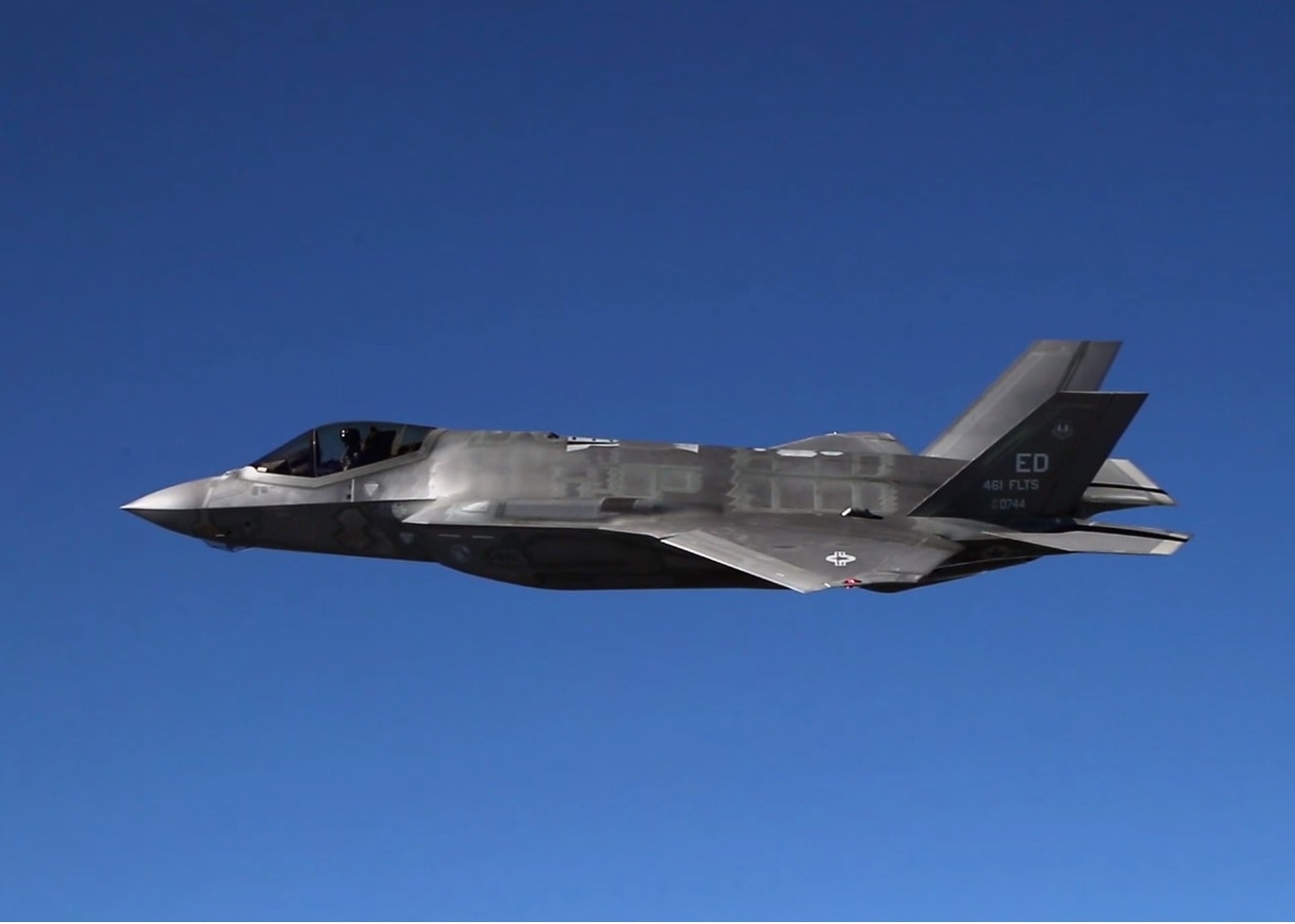
The U.S. Defense giant Lockheed Martin has announced that it in coordination with the Army Integrated Air and Missile Defense (AIAMD) Project Office and U.S. Air Force successfully integrated F-35 track data with the IAMD Battle Command System (IBCS) during Orange Flag Evaluation (OFE) 19-2 at Palmdale, Calif., and Fort Bliss, Texas.
The F-35 five-generation fighter demonstrated its ability to send track data to the U.S. Army’s Integrated Air and Missile Defense Battle Command System or IAMD Battle Command System (IBCS).
This was the first-time live F-35 track data has been sent to Northrop Grumman-developed IBCS via the F-35 ground station and F-35-IBCS adaptation kit, both developed by Lockheed Martin. This allowed IBCS to receive and develop fire control quality composite tracks during the exercise, leveraging the F-35 as an elevated sensor. This capability enables multi-domain operations and the detection of threats that could challenge ground-based sensors.
“This demonstration represents a significant growth in capability for the Army IAMD program and Army for multi-domain operations. The capability creates additional battlespace awareness, and the ability to track incoming targets and take action, if necessary,” said Scott Arnold, vice president and deputy of Integrated Air and Missile Defense at Lockheed Martin Missiles and Fire Control. “The F-35, with its advanced sensors and connectivity, is able to gather and seamlessly share critical information enabling greater joint force protection and a higher level of lethality of Army IAMD forces.”
This capability further demonstrates the Army IAMD program’s ability to gather sensor data from multiple platforms and is another building block for the future Army IAMD force. In 2016, the F-35 and Aegis Combat System successfully demonstrated the integration of the F-35 in support Naval Integrated Fire Control-Counter Air (NIFC-CA). The F-35 ground station has been relocated to White Sands Missile Range, New Mexico, to support follow on F-35 integration testing during AIAMD developmental testing.
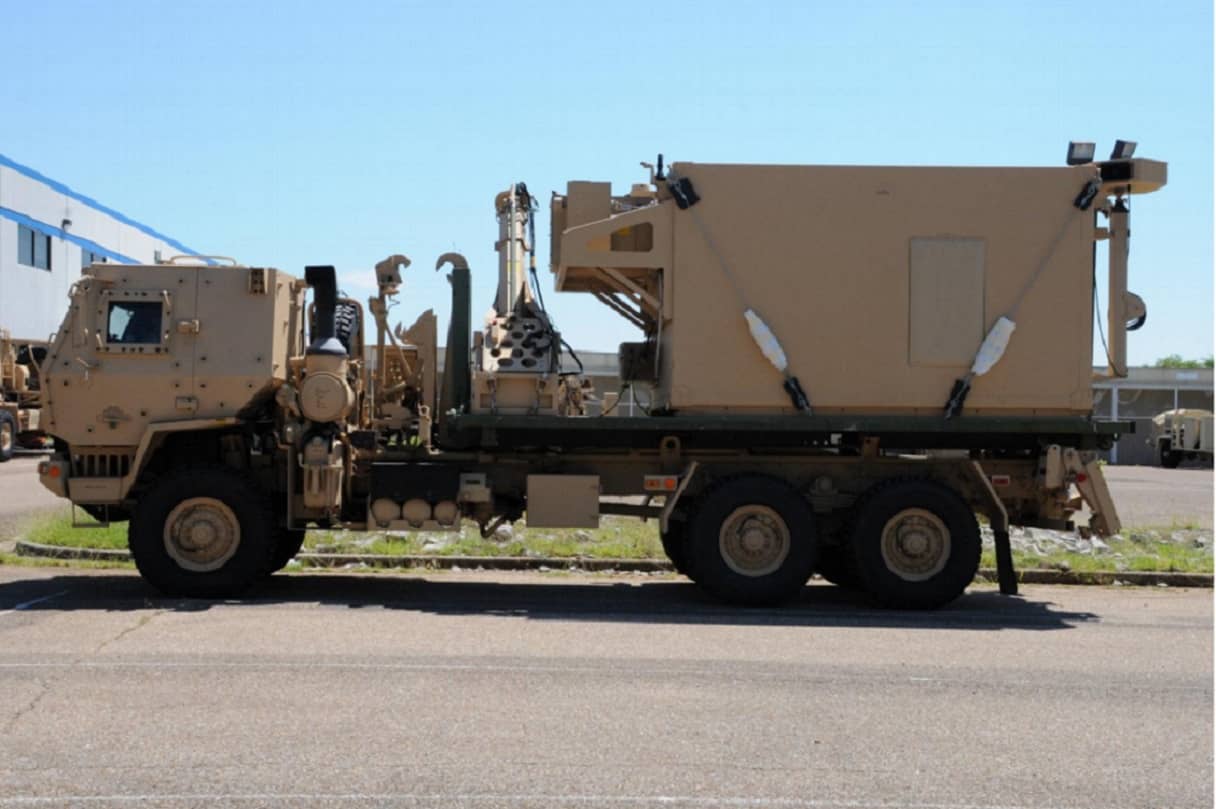
As to the IAMD IBCS, is the future command and control system for U.S. Army air defense assets, according to missilethreat.csis.org. It is intended is to integrate the communications between weapon launchers, radars, and the operators, allowing an air defense unit, such as a Patriot battery, to fire its interceptors using the information provided by the radar of another.
The Northrop Grumman’s website said this significantly enhanced aircraft and missile tracking improves the ability of combatant commanders and air defenders to make critical decisions within seconds. With its truly open systems architecture, IBCS enables integration of current and future sensors and weapon systems and interoperability with joint C2 and the ballistic missile defense system.
IBCS will result in a multi-mission AMD force capable of providing protection throughout the multi-domain operations battlespace framework.