

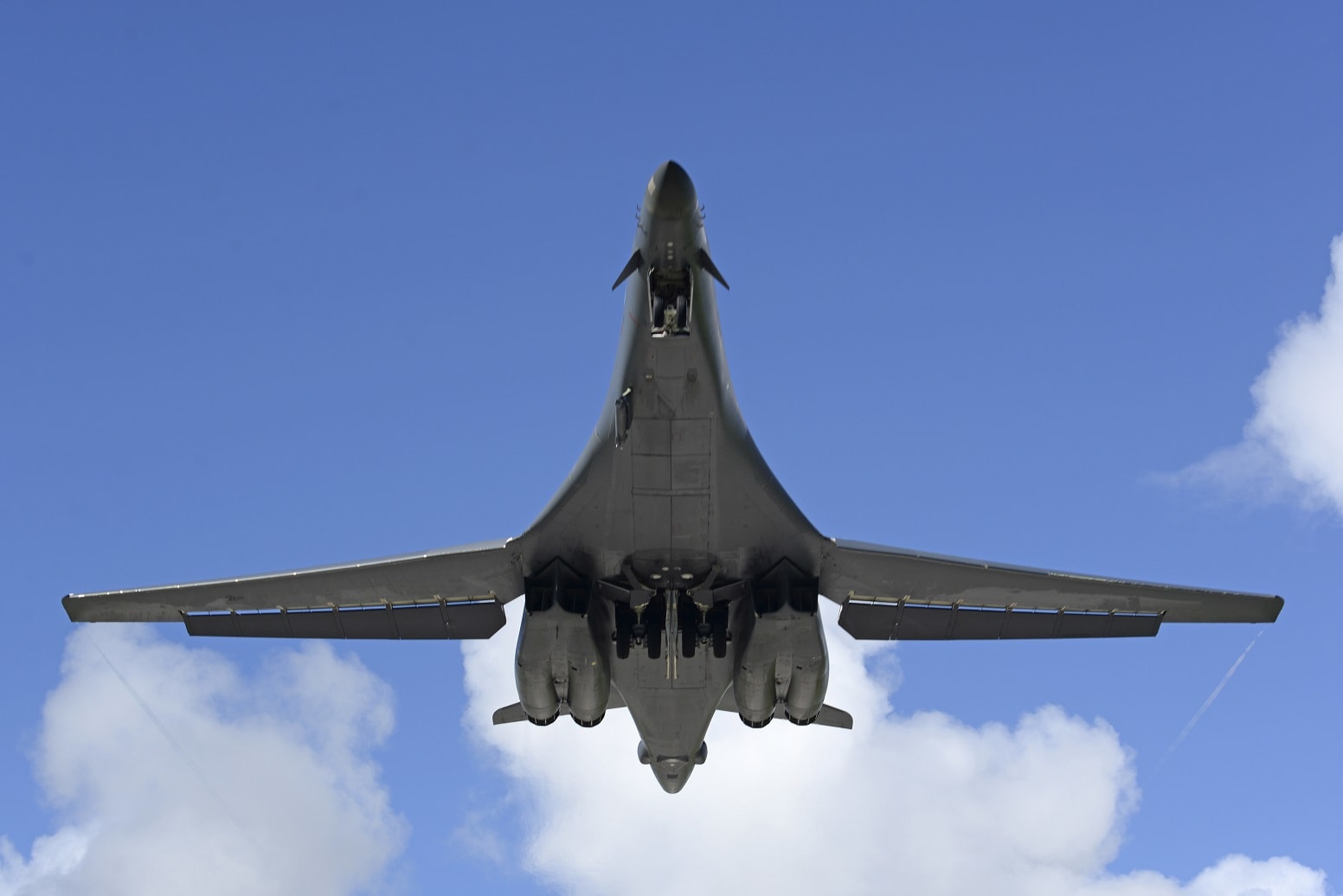
Only six of the U.S. Air Force’s 61 B-1 heavy bombers are fully mission-capable, according to Air Force Magazine citing the U.S. Senator Mike Rounds (R-S.D.), a member of the Senate Armed Services Committee.
The Magazine provides a statement from senator stating that of the 61 heavy bombers, 15 are in depot maintenance and 39 aircraft are down for inspections or other issues.
“The B-1 fleet is in the midst of an intensive slate of maintenance work and upgrades,” said Rounds during a Senate Armed Services Committee confirmation hearing for Gen. John Hyten, the US Strategic Command chief who is under consideration to become vice chairman of the Joint Chiefs of Staff.
In response, Hyten implored lawmakers to provide B-1 maintenance funding to reverse the fleet’s problems.
“We were just beating the heck out of them, deploying them, deploying them,” Hyten said. “We had to pull back a little and get after fixing those issues. The depots can do that if they have stable funding.”
Gen. Timothy Ray, head of Air Force Global Strike Command, has acknowledged B-1 inspections as necessary for the aging fleet despite affecting readiness. The Boeing-built B-1s entered service in the 1980s, but didn’t fly their first combat mission until 1998. Since then, however, it’s been a workhorse.
“It’s not a young airplane,” Ray said. “Wear and tear is part of the things we find.”
The Air Force’s website said the B-1 bomber was initially developed in the 1970s as a replacement for the B-52. The first production B-1 flew in October 1984, and the first B-1B was delivered to Dyess Air Force Base, Texas, in June 1985.
The swing-wing B-1 is a highly versatile, multi-mission weapon system. The B-1B’s synthetic aperture radar is capable of tracking, targeting and engaging moving vehicles as well as self-targeting and terrain-following modes. In addition, an extremely accurate Global Positioning System-aided Inertial Navigation System enables aircrews to navigate without the aid of ground-based navigation aids as well as engage targets with a high level of precision.
The B-1B is an improved variant initiated by the Reagan administration in 1981. The final B-1B was delivered May 2, 1988.
The B-1B holds almost 50 world records for speed, payload, range, and time of climb in its class. The National Aeronautic Association recognized the B-1B for completing one of the 10 most memorable record flights for 1994. The most recent records were made official in 2004.
The B-1 continues to be deployed today, flying missions daily in support of continuing operations.