

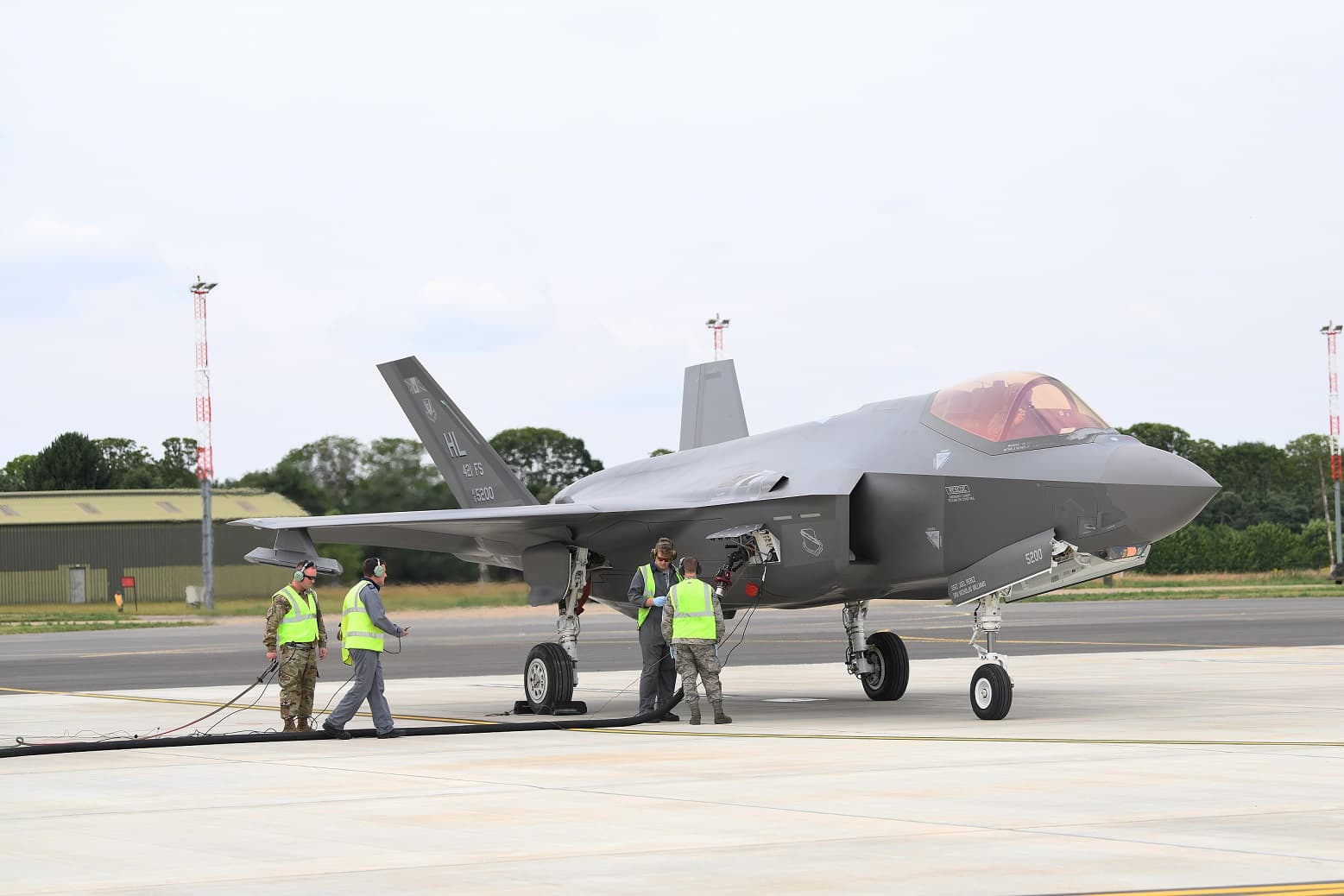
The British Royal Air Force and the United States Air Force performed joint F-35 Lightning II fighter aircraft hot pit refueling training at RAF Marham, England.
According to 48th Fighter Wing Public Affairs, Airmen assigned to Hill Air Force Base had the opportunity to train Royal Air Force personnel on hot pit refueling procedures at RAF Marham, England, July 18, 2019.
Hot pit refueling is the process in which the ground crew Airmen refuel an aircraft while its engines are still running, allowing the aircraft the ability to get back into the air as quickly as possible.
“It’s amazing that we have been given the opportunity to come to the United Kingdom and train with the Airmen of the RAF,” said Senior Airman Anthony Louden, 388th Logistics Readiness Squadron fuels journeyman. “If one of our F-35s needs to refuel at an RAF base, we now have the confidence and trust that these guys know what they’re doing.”
This was the RAF Marham Visiting Aircraft Servicing Section team’s first time refueling a U.S. Air Force F-35A Lightning II in preparation for future partnership capabilities. The VASS team learned the safety and troubleshooting procedures including emergency shutdown and evacuation processes.
“We’ve not had the F-35s here very long and this is the first time we’ve gotten to work with the F-35A model,” Senior Aircraftman Technician Joshua Staff, VASS personnel. “The U.S. Airmen were very professional and taught us exactly what we needed through a step-by-step process.”
According to Staff, it is a great advantage to be able to train with the U.S. as it gives the United Kingdom aircraft personnel the opportunity to strengthen and expand their capabilities to respond to operational mission requirements.
“It was when I picked up my hose and approached the aircraft after they taxied through our cursory and parked by the refueling unit, that the importance of this training dawned on me,” Louden said. “It set in right then that I was a part of the first step to solidifying the partnership with our NATO allies through shared knowledge and growth.”
Bilateral training events like this support and expand global reach through combat readiness and increases the U.S. Air Force’s ability to deploy alongside NATO allies and deter any adversary.