

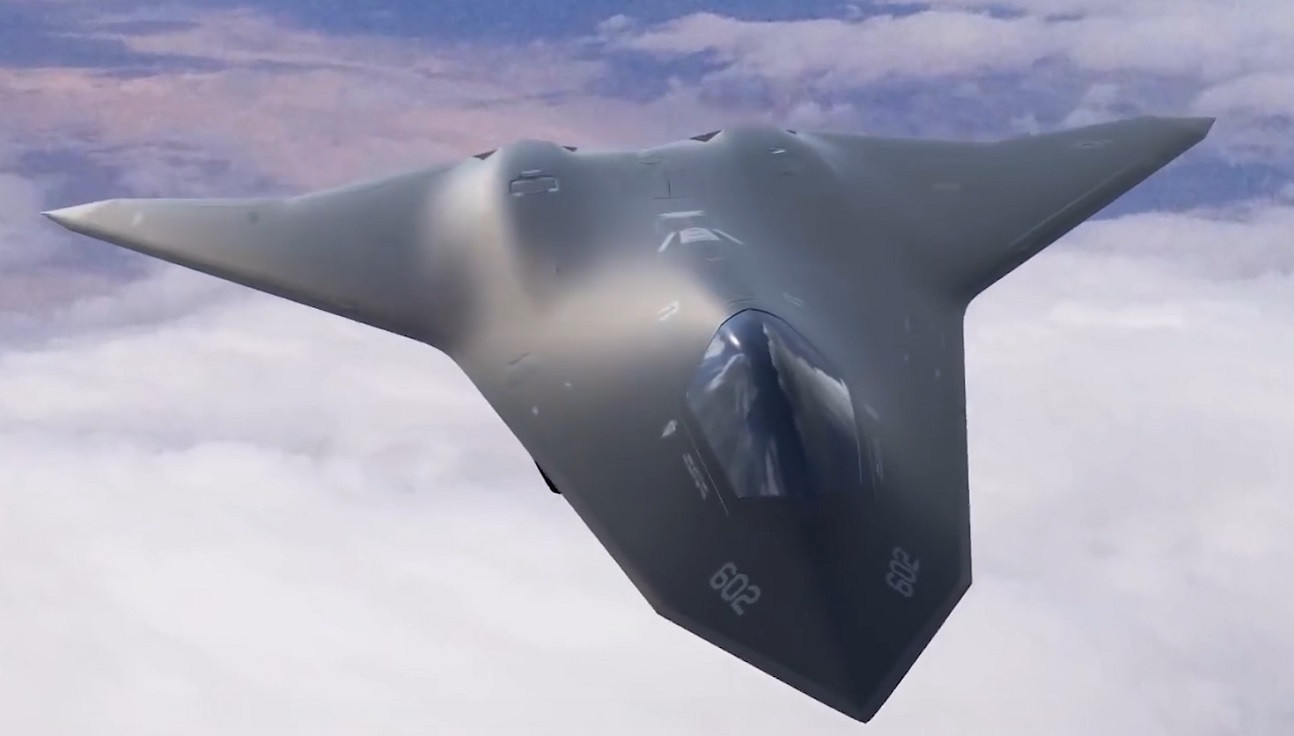
In an op-ed for the Airman official magazine of the U.S. Air Force, Defense Advanced Research Projects Agency (DARPA) and Air Force Research Laboratory officials have provided few details about future of American combat aircraft.
According to the Airman, Air Force Research Laboratory and DARPA are working to push the boundaries of speed and make future technologies possible today.
Since the first flight of Bell X-1 rocket plane in 1947, the Air Force has continually stretched and pushed the limits of speed – finding new ways to make its aircraft fly faster and farther.
However, the U.S. is not alone in this quest for speed. China and Russia are already flight-testing hypersonic weapons and several other countries have shown interest in pursuing technologies for hypersonic flight.
Hypersonic refers to flying at five times the speed of sound, also known as Mach 5 or higher. From an Air Force perspective, it is a game-changing capability, which can amplify many of the enduring attributes of airpower, including speed, range, flexibility and precision.
“My biggest fear is that the country’s lost the ability to stay ahead, and we’re moving slowly now, very deliberately, where we have adversaries that are moving unbelievably fast,” said Gen. John Hyten, commander of U.S. Strategic Command. “Twenty years from now, if we’re not careful, somebody could catch up to us. I believe we can never let that happen, so we have to stay ahead of technology.”
The Air Force Research Laboratory also has extensive efforts underway in foundational hypersonic technology maturation, including work in ordnance, tactical boosters, airframe and structures, guidance, navigation, and control, and materials and manufacturing.
The Air Force continues to partner with Defense Advanced Research Projects Agency on flight demonstration programs for high speed strike weapon technologies which address challenge areas such as air vehicle feasibility, effectiveness and affordability.
Helping the Air Force stay continually one step ahead for the past 60 years is the Defense Advanced Research Projects Agency or DARPA.
DARPA’s mission as the central research and development agency for the Department of Defense is to make pivotal investments in breakthrough technologies for national security and to prevent strategic surprise. Together with the Air Force Research Laboratory, a fusion of ideas is leading to newly highlighted innovations.
Future of Fusion from Airman Magazine on Vimeo.