

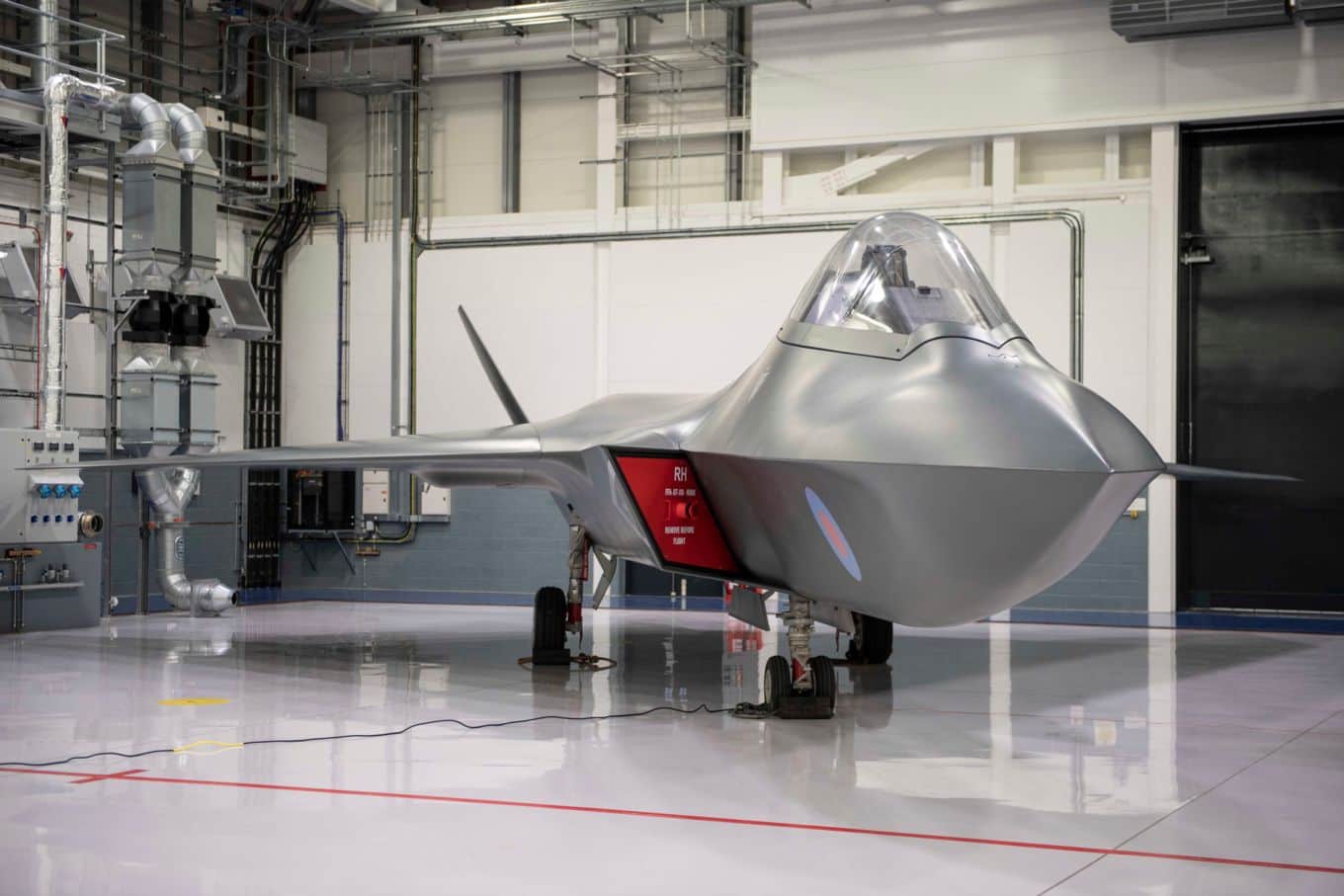
The Telegraph on Friday has reported that Sweden will be first partner nation in the British Tempest programme to build a next-generation fighter jet.
“Britain’s Team Tempest programme to build a new fighter jet has moved a step closer to getting into the air with Sweden poised to announce it has signed up as the project’s first international partner,” according to The Telegraph.
A future combat air system, called the Tempest, is a joint project with British aerospace companies BAE Systems Plc, Rolls Royce Holdings Plc, MBDA UK Ltd and Anglo-Italian firm Leonardo SpA.
The Tempest programme aims to harness and develop UK capabilities that are critical for Next Generation (NextGen) Combat Air capability and to retain the UK’s position as a globally competitive leader through understanding of future concepts, technologies and capabilities.
A future combat air system must be able to survive the most challenging combat environments meaning that payload-range, speed and manoeuvrability will be key. Britain officials say that they expect that the system will be equipped with a range of sensors including radio frequency, active and passive electro-optical sensors and advanced electronic support measures to detect and intercept threats.
The system is likely to operate with kinetic and non-kinetic weapons. The integration of Laser Directed Energy Weapons for self-defence and use within visual range combat is also highly likely. The ability to deploy and manage air launched ‘swarming’ Unmanned Air Vehicles (UAV) through a flexible payload bay allows the system to address dangerous Anti-Access Area Denial environments.
Air forces of the future will require a fighter system that is highly flexible and can be applied to a wide variety of military operations. Operators will have the ability to rapidly adapt the system to perform new functions or to change its performance.
According to The Telegraph, next-generation jet – planned to be in service in 2035 – is aimed at maintaining Britain as a world power in military aircraft.