

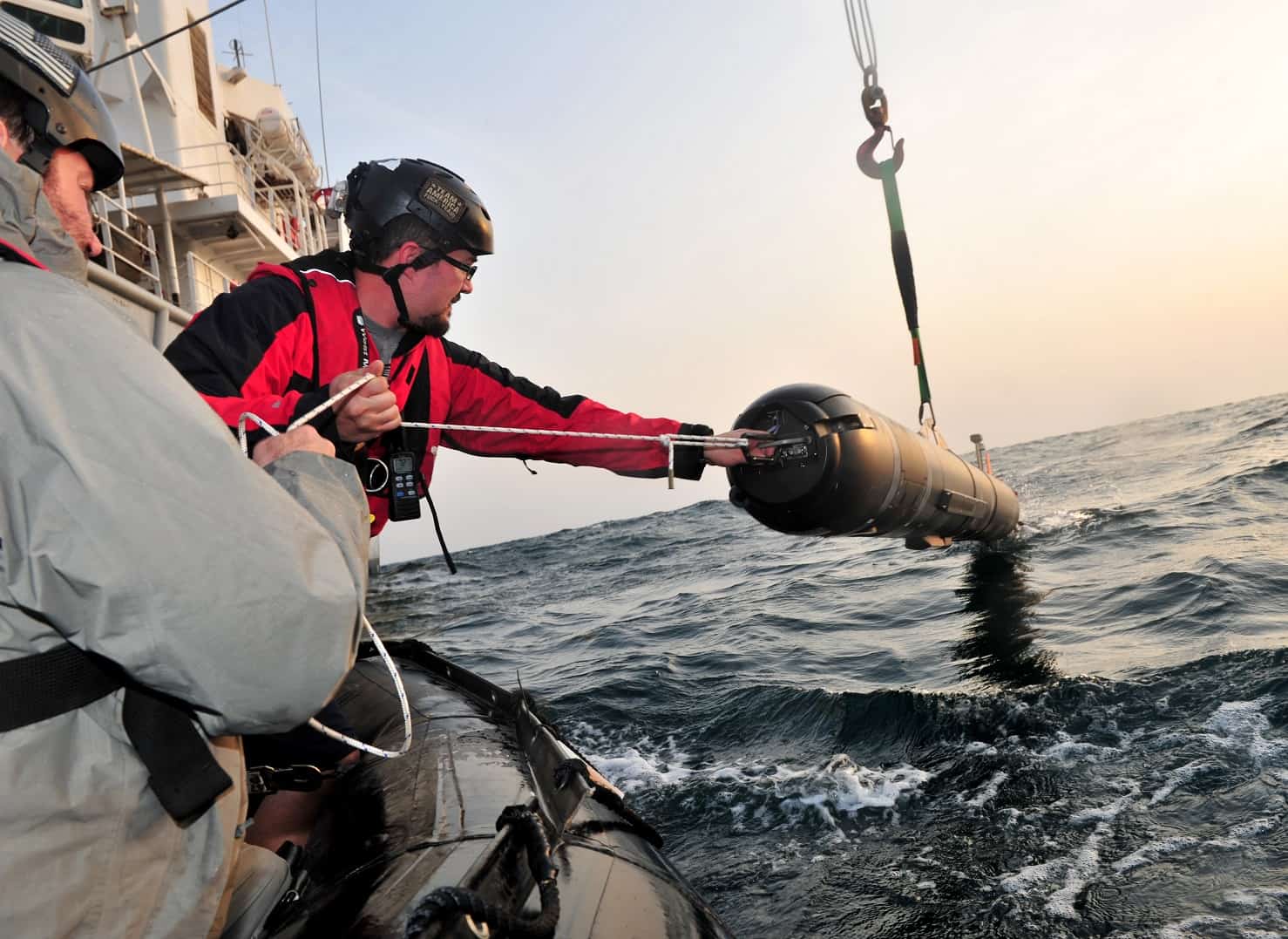
U.S. Naval Forces Central Command has announced on Monday that U.S. and United Kingdom naval forces conducted routine bilateral mine countermeasures training in the Arabian Gulf, June 10-20.
This recurring series of maritime assurance exercises brings U.S. and UK mine countermeasures forces together for the third time this year.
“Integrated training such as this exercise focuses on addressing mine warfare threats to the freedom of navigation and free flow of commerce in international waterways. Alongside our regional partners and allies we maintain a high-readiness force equipped and organized to perform this mission if called on,” said Capt. Andy Lamb, Royal Navy, deputy commodore of U.S. 5th Fleet’s Combined Task Force 52 (CTF 52).
The defensive counter mine rehearsal exercise was conducted to practice mine countermeasures operations, focused on maintaining maritime access and free flow of navigation.
Units from the United Kingdom included Commander UK Mine Countermeasures Force, RFA Cardigan Bay (L3009), minehunters HMS Ledbury (M30) and HMS Blyth (M111), and HMS Brocklesby (M33). U.S. forces included CTF 52, the fleet ocean tug USNS Catawba (T-ATF 168), Avenger-class mine countermeasures ship USS Sentry (MCM 3), two expeditionary mine countermeasures company dive units, the Mine Hunting Unit, and the Blackhawks of Helicopter Mine Countermeasures Squadron (HM) 15.
The wide variety of drills provided a platform for the U.S. and U.K. to exchange techniques to enhance effective maritime security procedures. The simulations were performed to practice mission organization and assistance between the task forces. Similar mission trainings are regularly held in the region to evaluate and reinforce bilateral mine countermeasures teamwork.
U.S. 5th Fleet area of operations encompasses about 2.5 million square miles of water area and includes the Arabian Gulf, Gulf of Oman, Red Sea and parts of the Indian Ocean. The expanse is comprised of 20 countries and includes three critical choke points at the Strait of Hormuz, the Suez Canal and the Strait of Bab al Mandeb at the southern tip of Yemen.