

The U.S. Army will update its Guided Multiple Launch Rocket System (GMLRS) launchers for use with a next-generation ballistic missile, calls the Precision Strike Missile (PrSM), designed to attack area and point targets at planned ranges of 400 kilometers or more.
Pentagon’s No.1 weapons supplier Lockheed Martin Corp also reported that it has been awarded a $10.5 million contract to develop a new modular pod for GMLRS. The new pods will replace the depleting inventory of M26 rocket pods and support the increased production of GMLRS rounds.
According to a news release put out by the company on Wednesday, the modular pod is designed to allow for reloading of individual rocket tubes as they are expended, whereas the original GMLRS pods are discarded after use. The pod will be able to fire the GMLRS Unitary and Alternative Warhead variants, as well as the developmental Extended-Range GMLRS rockets and future rounds.
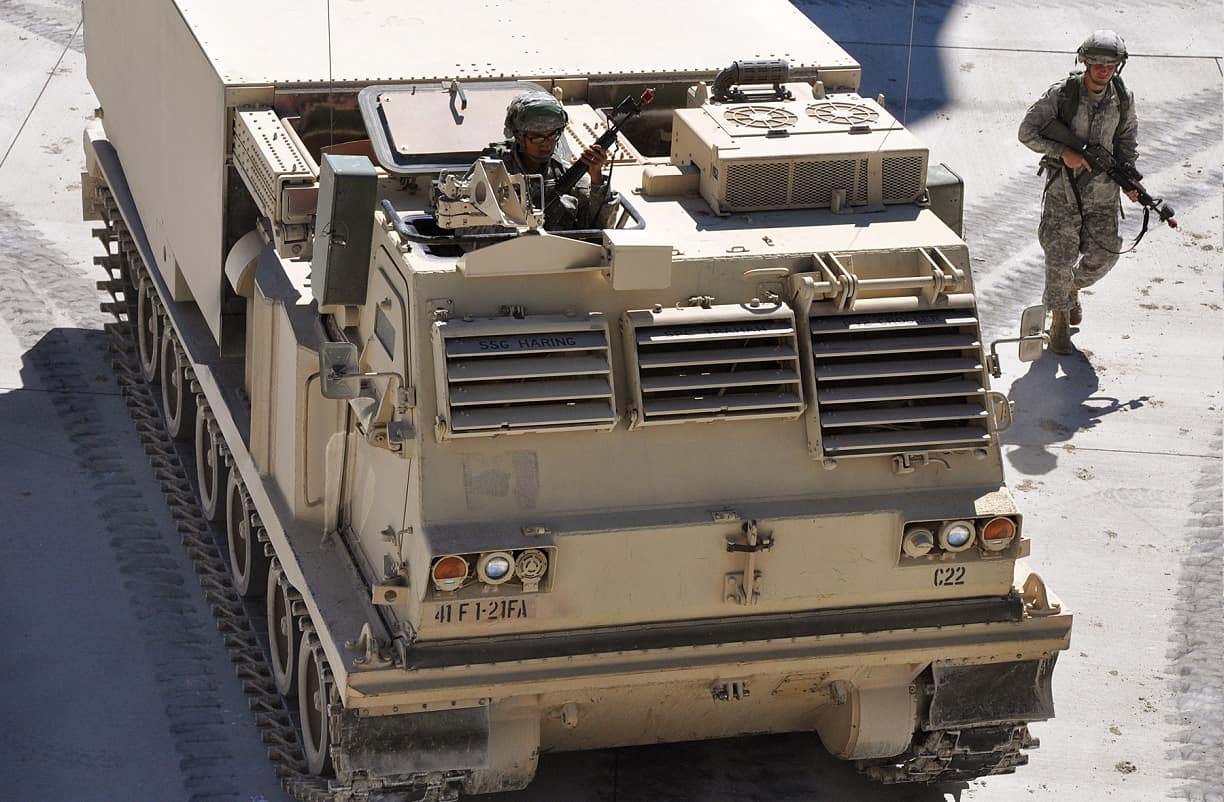
“The new pods will be compatible with both the High Mobility Artillery Rocket System (HIMARS) and MLRS M270 family of launchers,” said Gaylia Campbell, vice president of Precision Fires and Combat Maneuver Systems at Lockheed Martin Missiles and Fire Control. “These new pods will improve reload operations and assure our warfighters have adequate rounds available to them when they are most needed.”
The modular pods will be produced at Lockheed Martin’s Precision Fires Center of Excellence in Camden, Ark. Ground testing will begin this fall, with a planned flight test before the end of the calendar year. The first deliveries of the new modular pod are anticipated in the fall of 2021.
According to Army’s officials, the PrSM provides field artillery units with long range and deep strike capability while supporting brigade, division, corps, Army, theater, joint/coalition forces and Marine Air-Ground Task Forces in full, limited or expeditionary operations.
The Army identified PrSM as a priority and has accelerated the missile’s acquisition schedule to provide an early capability in fiscal year 2023. However, the missile will be usable only from the M142 launcher by then. A program official stated that legacy systems on the M270 launcher need to be updated before PrSM software can be integrated.