

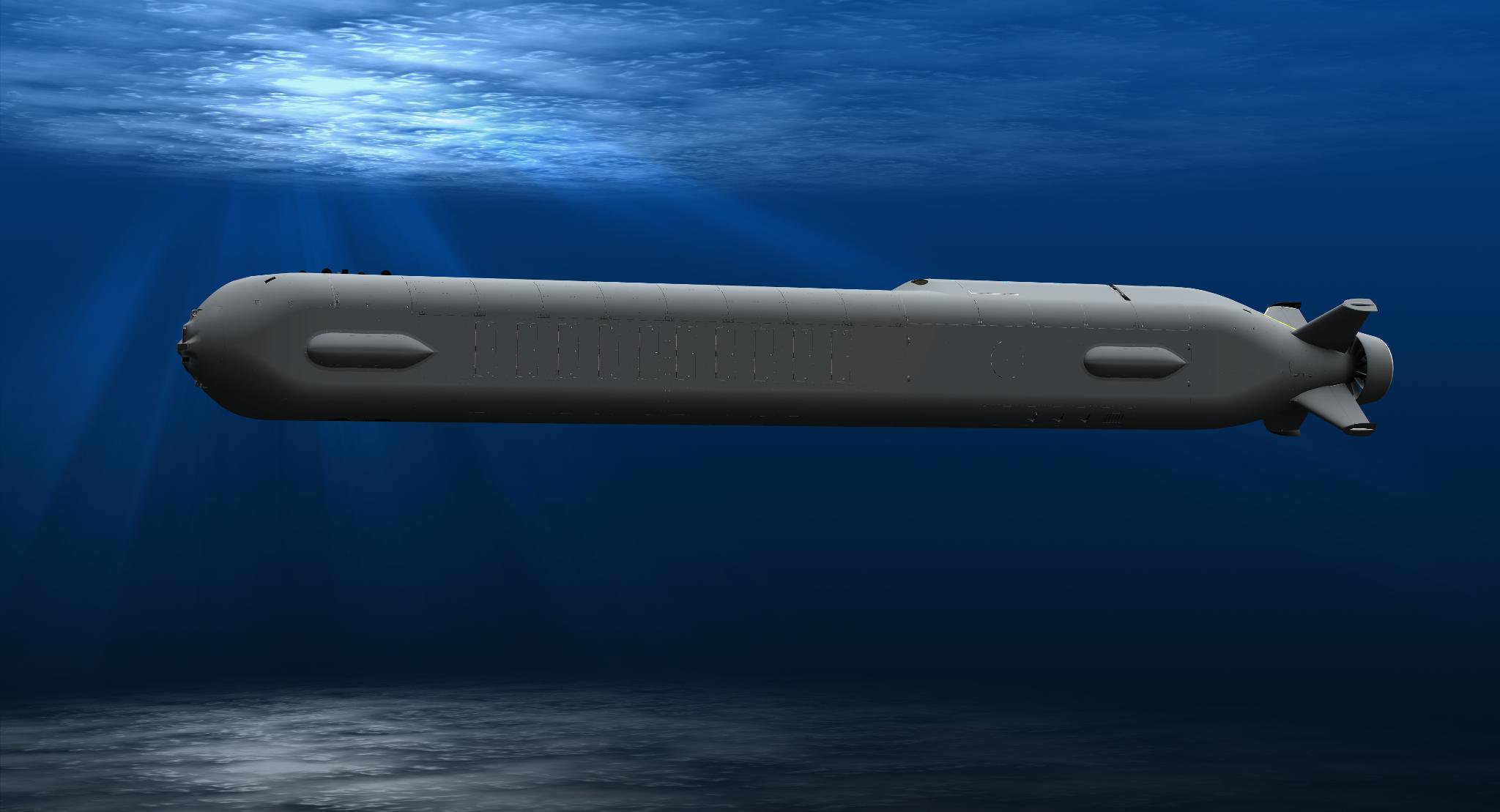
U.S. defense contractor Boeing has confirmed that it ready to deliver the future of undersea autonomy to the Naval Sea Systems Command (NAVSEA), the largest of the U.S. Navy’s five system commands.
“We’re ready to deliver the future of undersea autonomy to NAVSEA,” Boeing announced on Twitter, pointing to building a total of five Orca XLUUV Advanced Undersea Prototypes for the U.S. Navy.
The company’s presentation noted the Orca is a fully autonomous extra large unmanned undersea vehicle (XLUUV) class UUV that can be used for a variety of missions that were previously impossible due to traditional UUV limitations.
Orca is complete with an extensive internal and external payload volume and available energy capacity, expanding the parameters of what is possible in current unmanned undersea systems.
The vehicle’s advanced autonomy enables it to perform at sea for months at a time, delivering a more affordable, mission-capable solution over traditional UUVs.
Boeing has designed and operated manned and unmanned deep sea systems since the 1960s, including Rockwell International legacy systems and U.S. Navy support programs. Prior to Orca, Boeing developed Echo Seeker and Echo Ranger, autonomous and large UUVs as test beds for its current XLUUV.
A new giant unmanned submarine is a fully autonomous extra large unmanned undersea vehicle class UUV that can be used for a variety of missions that were previously impossible due to traditional UUV limitations.
The XLUUV will be modular in construction with the core vehicle providing guidance and control, navigation, autonomy, situational awareness, core communications, power distribution, energy and power, propulsion and maneuvering, and mission sensors.