

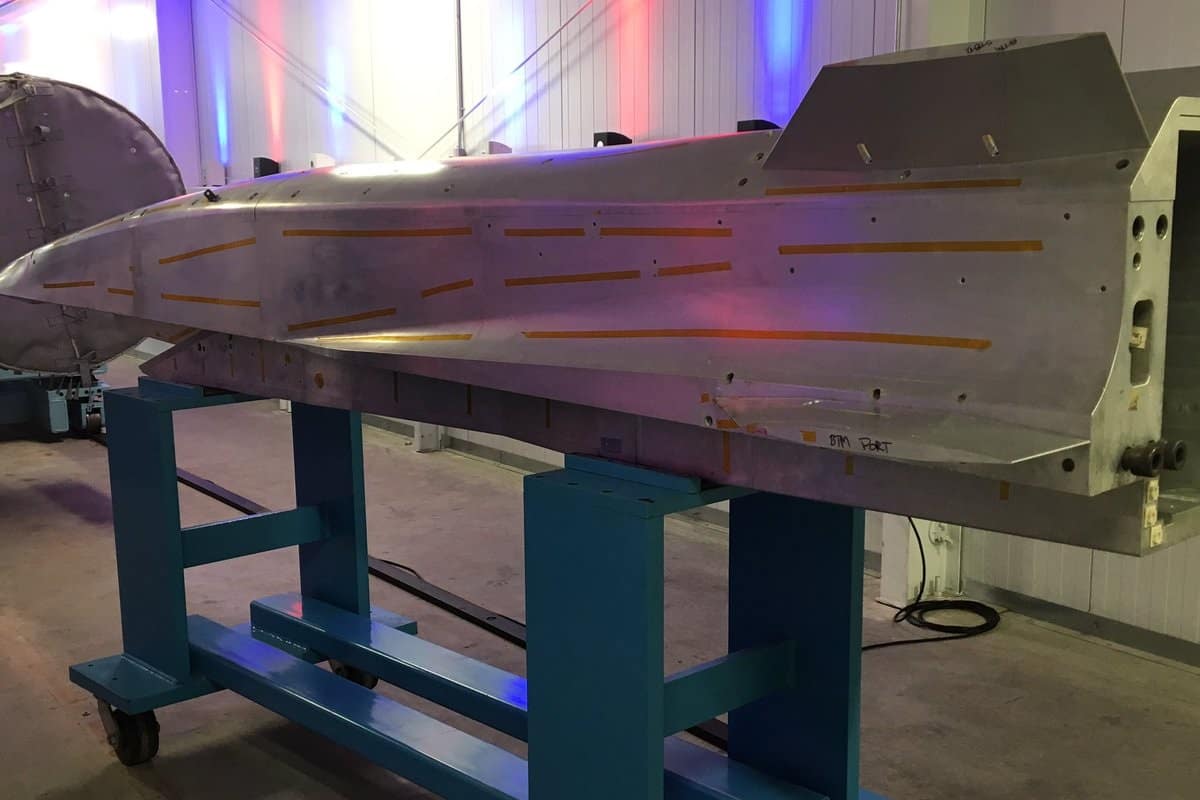
The U.S. Army will continue to focus on developing new weapon systems over the next five years, including long-range hypersonic missile system.
Army Secretary Mark T. Esper while testifying before the House Appropriations Committee’s defense subcommittee on Capitol Hill said that the U.S. Defense Forces plans are to develop a long-range hypersonic weapon, extended range cannon artillery, long-range cannon and precision strike missile, also known as Prism.
“All of those programs in combination, both the acquisition piece of it and the fires piece of it, will reestablish U.S. dominance in fires” Milley said.
The Army plans to invest $1.2 billion over the next five years toward a hypersonic weapon, which is being developed in collaboration with the Air Force and Navy.
A flight test of a land-based hypersonic missile, which can travel five times the speed of sound, is expected in fiscal 2023, Esper said.
Last month, the U.S. Army has announced that CUBRC Inc., a leading Research, Development, Testing and Systems Integration company, has been awarded a $23,2 modification to contract from the U.S. Army Contracting Command.
“CUBRC Inc., Buffalo, New York, was awarded a $23,208,996 modification (P00010) to contract W31P4Q-15-D-0015,” the U.S. Defense Department said on Friday.
The modification contract includes research and testing of high-speed vehicle concepts and analysis of supersonic and hypersonic vehicles and their components.
Work on the high-speed vehicle concepts is expected to be completed by Feb. 22, 2020, with the US Army Contracting Command-Aberdeen Proving Ground (ACC-APG) in Maryland functioning as the contracting activity.
From @cubrcinc in #Buffalo, @SenSchumer announced another $16M for this one of a kind hypersonic weapons testing facilities in the country. Expected to add more jobs and stay competitive with China and Russia. @SPECNewsBuffalo pic.twitter.com/kNBHJPxYTY
— Mark Goshgarian (@Mark_Goshgarian) 21 March 2019