

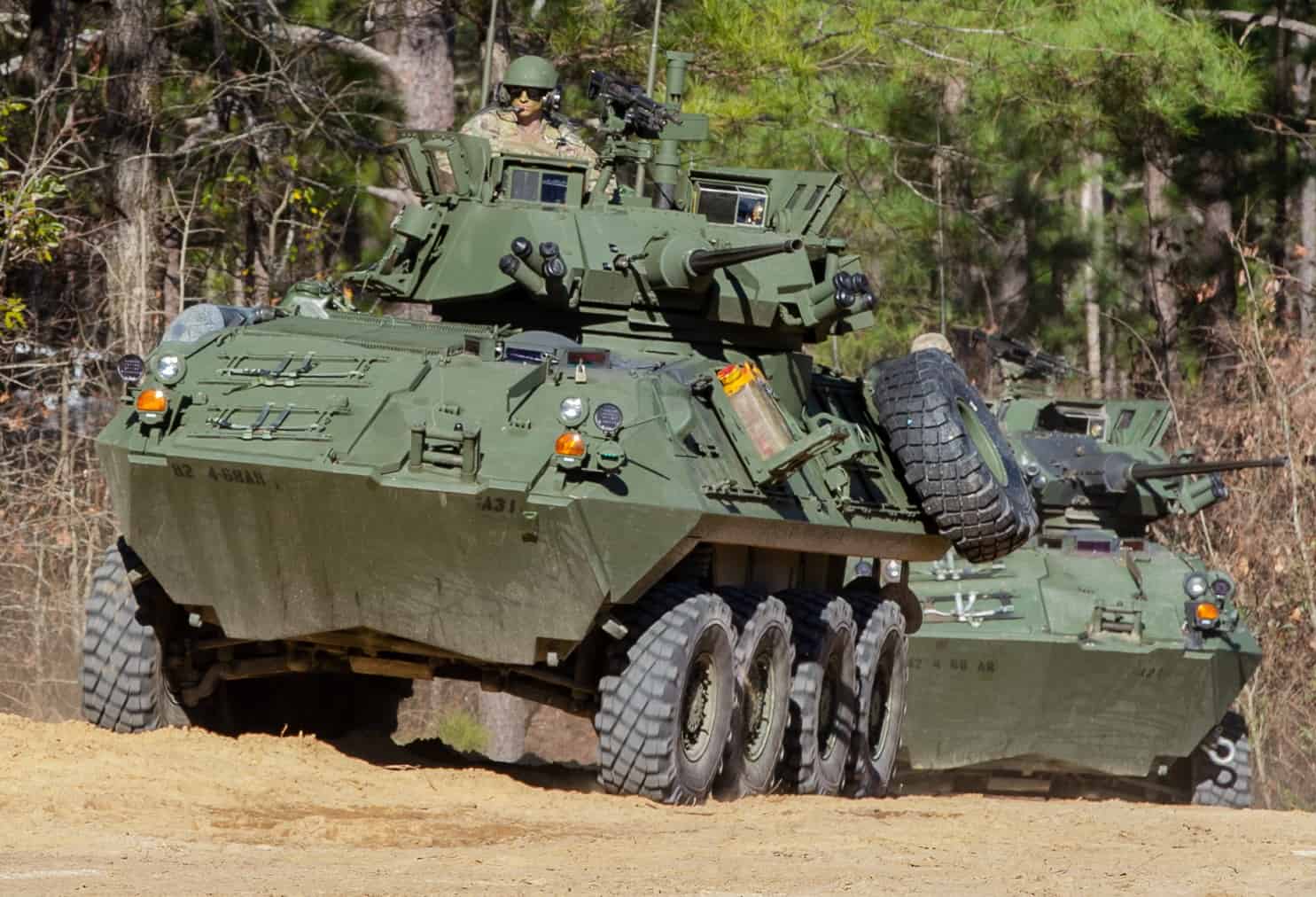
The U.S. Marine Corps has announced plans to extend the service life of the Light Armored Vehicle (LAV) into the 2030s before it finally retires.
The fleet of Marine Corps Light Armored Vehicles will begin receiving a number of necessary upgrades under the terms of a $37.2 million contract awarded Jan. 4. General Dynamics Land Systems-Canada will perform the work, which includes the procurement of 60 hardware kits in support of the Light Armored Vehicle Reset Program.
The enhancements are designed to extend the service life of the LAV into the 2030s.
Embedded in their original design, LAVs combine speed, maneuverability and firepower to perform a variety of functions, including security, command and control, reconnaissance and assault. The first LAVs were initially fielded in 1983.
The reset effort will focus on five key areas:
• modernized powerpack to improve reliability, cooling capacity and diagnostics with the added benefit of better fuel economy
• new drive train which will improve towing capability
• steering dampener to improve road feel and usability
• digitized drivers’ instrument panel
• LAV 25 slip rings—doubling power supply capability to the turret and modernized to handle additional channels for
“The Marine Corps is committed to ensuring this platform remains viable into the 2030s,” said Steve Myers, LAV program manager.
Active light armored reconnaissance battalions will be the first units to receive the upgraded vehicles, which will become LAV A3s.
The hardware kits will be installed at Marine Corps Depots, with Initial Operational Capability targeted for the second quarter of fiscal 2021.
The contract was awarded through the Army Contracting Command in Warren, Michigan.