

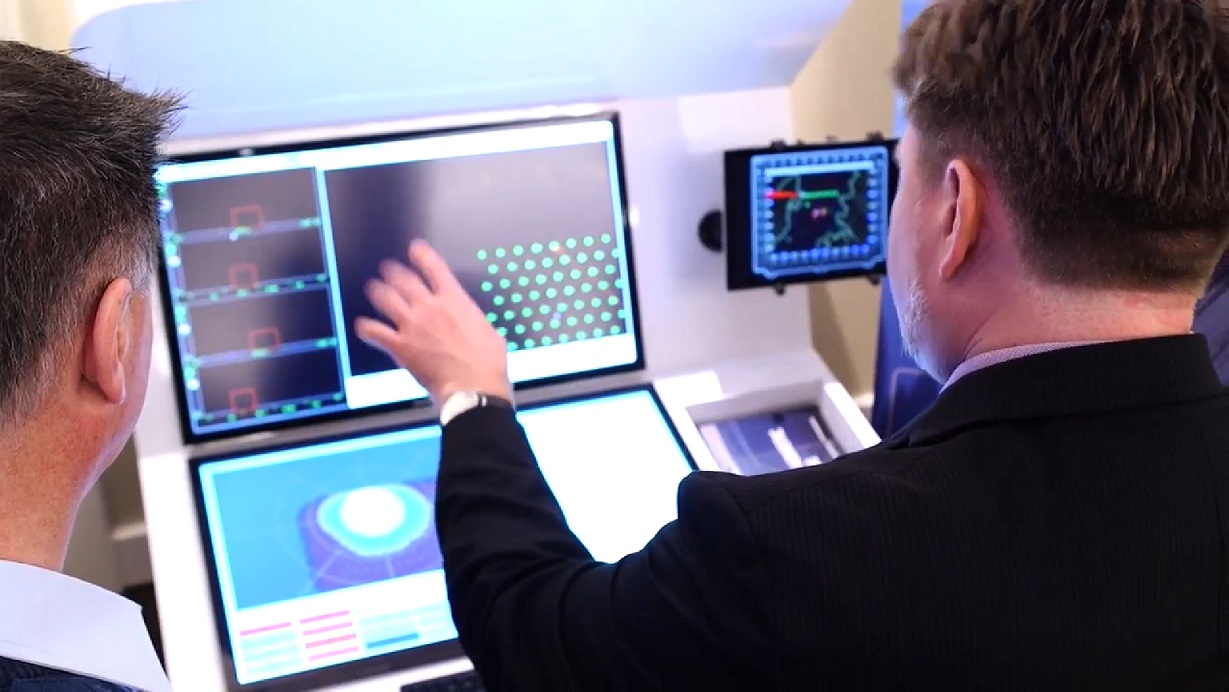
There couldn’t be a more appropriate, or even important, moment for the Underwater Defence & Security meeting to take place in 2018. Technology is moving at a rapid pace in the underwater domain and it has the potential to affect all forces and headquarters.
Government policy-makers, military and industry are all being challenged. The quality and quantity of submarines and underwater capability is increasing rapidly
and no country holds the upper hand for long
To counter the threat, Nations require innovative technology, agility in applying the doctrine and tactics, and to develop and maintain close relationships with allies, partners and industry experts.
Underwater Defence & Security will feature presentations updating the audience on progress with the Collins-class replacement, Walrus-class replacement, Victoria-class submarine upgrades and Barracuda-class updates.
It will be crucial for navy leaders to learn how these approaches and how the customer/client relationships are managed. The expertise and culture required to deliver such complex projects cannot be underestimated. The dedicated submarine focus day will supplement key discussions during the main 2-day programme providing a wealth of information for decision makers and industry to guide their future decisions.
The role of ASW will come into significant prominence as nations continue to develop their submarine capabilities. In fact, submarines are now so quiet that sometimes a ‘hole’ in the water IS a way of identifying it.
Nations will deploy a mix of surface and air ASW to work independently, and in tandem, to locate hostile activity. The need to improve and hone sensor performance, an inch by inch development, to generate the operational edge is needed as the quality of the threat increases.
Air ASW is often preferred because it can cover bigger areas quicker as they can look on the surface, locate magnetic signatures and drop sonobuoys. RW can carry torpedoes and deploy dipping sonars.
While industry continue to develop capabilities within traditional ASW, there is a high demand from nations to understand how next generation technology, including UAVs, can be successfully deployed. Underwater Defence & Security will spend considerable time exploring the options through its dedicated ASW focus day.
In the MCM arena where the promise of technology, with strong links to civil programmes, is beginning to be a serious answer to some of tactical challenges we face. MCM Vessels are, £ for lbs, the most expensive naval item to produce and a lot of attention is being paid to what could replace a number of platforms coming to the end of their service life.
Nations are currently looking to incorporate modules that fit on OPVs which specialise in mine hunting, or autonomous ‘off-board’ systems, including UAVs, that rove ahead of frigates clearing areas.
However, the mine is still one of the most advanced, cheapest and effective weapons available. We will spend some time during the Mine Counter Measures focus day discussing how to mitigate the mine threat with cost-effective MCM vessels, technology and tactics.
The overall pace of development within the underwater domain has created a steep learning curve for all those stakeholders in this area. The Underwater Defence & Security conference is an opportunity for nations to meet with industry and to work together to solve the key challenges we face, both today and tomorrow.
Read more at underwater-defence-security.com