

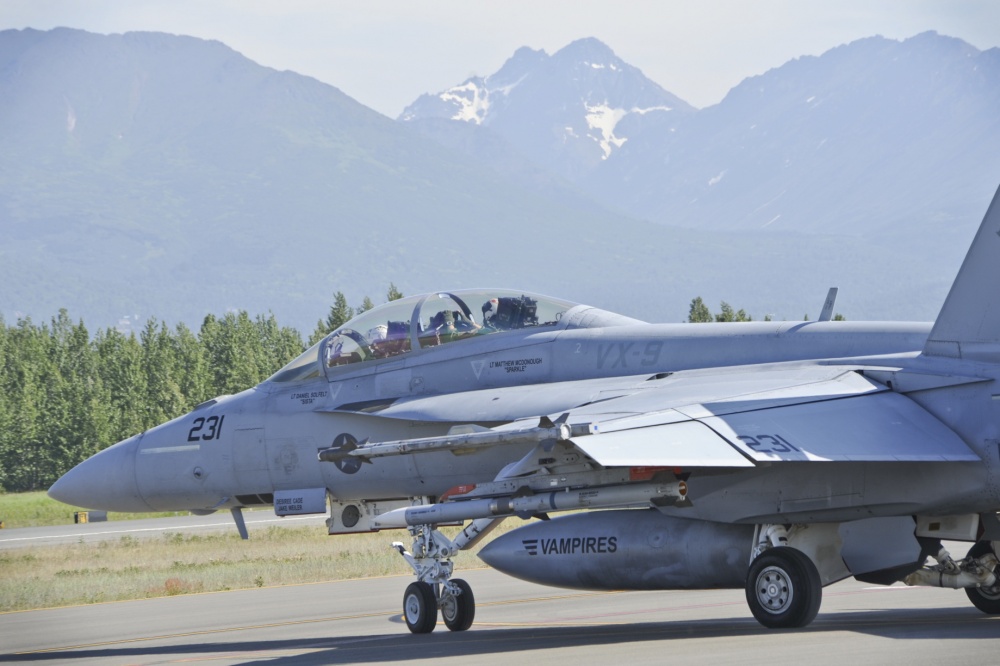
Approximately 6,000 U.S. military personnel will participate in exercise Northern Edge 2017 (NE17), a joint training exercise hosted by Alaskan Command scheduled for May 1-12, 2017, on and above central Alaska ranges and the Gulf of Alaska.
NE17 is one in a series of U.S. Pacific Command exercises in 2017 that prepares joint forces to respond to crises in the Indo-Asia-Pacific region. The exercise is designed to sharpen participants’ tactical combat skills, to improve command, control and communication relationships, and to develop interoperable plans and programs across the joint force.
Personnel from U.S. military units stationed in the continental United States and from U.S. installations in the Pacific will participate with approximately 200 aircraft from all the services. Participants will serve as part of a joint task force practicing tasks associated with joint operations.
Major participating units include U.S. Pacific Command, Alaskan Command, U.S. Pacific Fleet, Pacific Air Forces, Marine Corps Forces Pacific, U.S. Army Pacific, Air Combat Command, Air Mobility Command, Air Force Materiel Command, Air National Guard, Air Force Reserve and U.S. Naval Reserve.
NE17 is the largest military training exercise scheduled in Alaska this year with virtual and constructive participants from all over the U.S. exercising alongside live players.
Environmental protection is an integral part of the exercise. The military in Alaska has conducted thorough environmental analysis of the activities being conducted as part of NE17. Alaskan Command is proud of its environmental stewardship and goes to great lengths to minimize harm to the environment. Aerial and land-based military training activities in or near Alaska, including Northern Edge exercises, are analyzed in the Joint Pacific Alaska Range Complex Environmental Impact Statement, which was completed by the Air Force and Army in 2013. Maritime activities, including future Northern Edge exercises, were re-analyzed in the Navy’s 2016 Gulf of Alaska Final Supplemental Environmental Impact Statement. The at-sea portions of Northern Edge occur within the Temporary Maritime Activities Area, which begins more than 12 nautical miles from shore.
U.S. Navy training activities are conducted with an extensive set of mitigation measures designed to minimize the potential risk to marine life. The Navy has conducted Northern Edge in the Gulf of Alaska for many decades without major harm to the environment. Navy activities during Northern Edge are conducted with an extensive set of mitigation measures developed and authorized by permit from the National Marine Fisheries Service.