

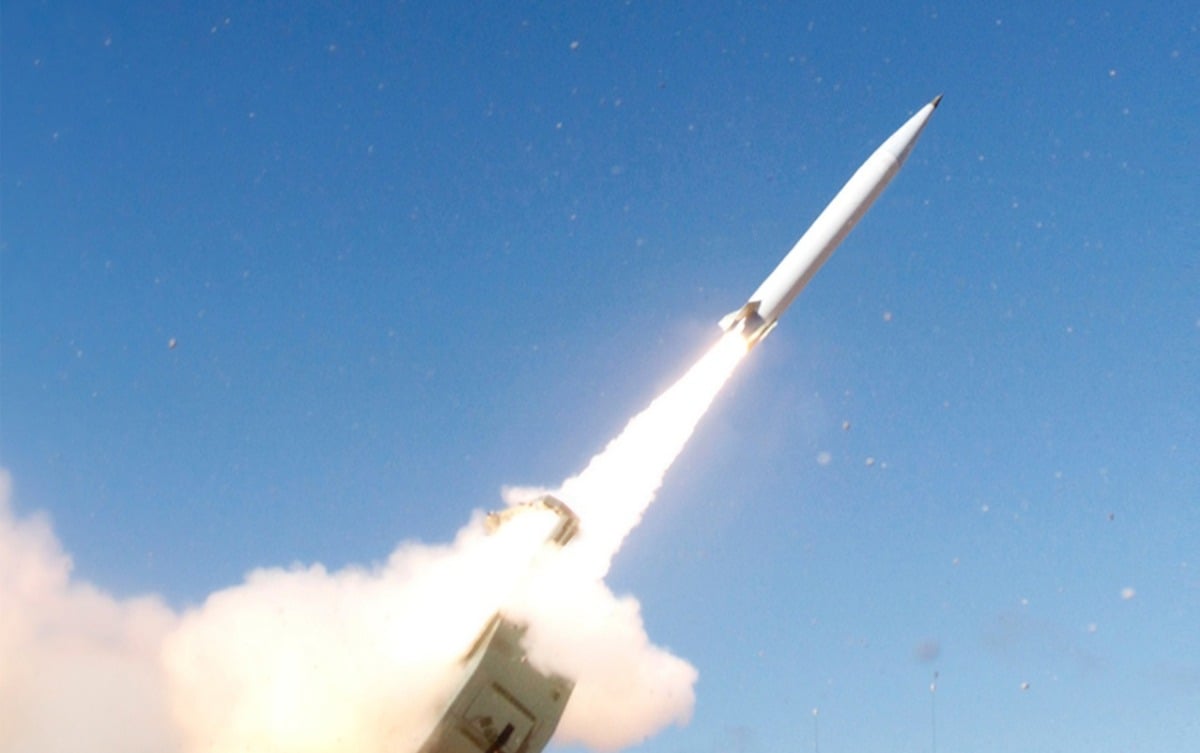
- The U.S. Army awarded Lockheed Martin an $8.4 billion contract modification on June 23, 2026, bringing the total PrSM contract value to $13.3 billion through September 2032.
- The contract covers increased Precision Strike Missile Increment One production, early operational capability assets, follow-on production, and obsolescence management at Lockheed's Grand Prairie, Texas facility.
The U.S. Army has committed $8.4 billion to expand production of its next-generation Precision Strike Missile, awarding Lockheed Martin one of the largest ground-launched missile contracts in years and locking in a manufacturing pipeline that runs through the end of fiscal year 2032.
The modification, signed June 23, 2026, expands an existing contract with Lockheed Martin’s facility in Grand Prairie, Texas, pushing the total cumulative value of the underlying agreement to $13.3 billion. Army Contracting Command at Redstone Arsenal, Alabama, administers the contract. The expanded scope covers increased production capacity for Precision Strike Missile Increment One, procurement of early operational capability assets that allow fielding to units ahead of full-rate production, follow-on production lots, continued development work, and obsolescence management to keep the system viable as components age and technology evolves over the coming decade.
The Precision Strike Missile, universally referred to as PrSM, is the weapon the Army developed to replace the MGM-140 ATACMS, the Army Tactical Missile System that has served as the service’s primary long-range ground-launched ballistic missile since the early 1990s and accumulated a substantial combat record stretching from the Gulf War through the war in Ukraine. The replacement program addresses two structural limitations that ATACMS could not overcome: magazine capacity and range.
Each HIMARS launcher, the wheeled M142 High Mobility Artillery Rocket System that became one of the most discussed weapons of the Ukraine conflict after Ukrainian forces used it to destroy Russian ammunition depots and command posts deep behind the front lines in 2022, carries a single ATACMS round per pod. PrSM fits two missiles into that same pod, doubling the number of precision strikes available from each vehicle without any modification to the launcher itself. On range, publicly available Army and Lockheed Martin information places PrSM Increment One at distances exceeding 499 km (310 miles), compared to the approximately 300 km (186 miles) achievable by the most capable ATACMS variants, with subsequent PrSM increments intended to extend that figure further through propulsion and seeker improvements.
The M270 Multiple Launch Rocket System, the tracked launcher that predates HIMARS and remains in service across the Army and with numerous allied militaries, can also fire PrSM, meaning the missile’s magazine advantage applies across the full family of existing American ground rocket artillery without requiring new vehicles or launch infrastructure. That backward compatibility with platforms already fielded in large numbers is a deliberate design requirement that significantly reduces the cost and timeline of getting PrSM into the hands of combat units.
Lockheed Martin’s Grand Prairie facility has served as a center of Army missile manufacturing for decades, producing ATACMS throughout its service life and now transitioning production lines toward PrSM as the older system phases out. The $8.4 billion modification gives the facility a defined production horizon through September 30, 2032, supporting the workforce planning, supply chain investment, and manufacturing rate increases that precision weapons production requires years to execute safely. Specific work locations and funding allocations will be determined order by order as the Army draws down the contract, a structure that preserves flexibility to adjust production rates as operational requirements evolve.
Russia’s full-scale invasion of Ukraine in 2022 and the subsequent consumption of ATACMS stocks supplied to Kyiv demonstrated how quickly precision munition inventories erode in high-intensity conventional conflict, and American defense planners have spent the years since racing to rebuild stockpiles and accelerate production of next-generation systems. The PrSM contract, running to 2032 and valued at $13.3 billion in total, is one of the clearest expressions of how seriously the Army now treats that production gap.
The contract signing follows an official confirmation from U.S. Central Command that PrSM was used in combat for the first time during Operation Epic Fury, the American strikes against Iranian targets conducted earlier this year. CENTCOM posted the confirmation on March 4, 2026, describing the missile as providing “an unrivaled deep strike capability.” Admiral Brad Cooper, the CENTCOM Commander, commented on the debut. “I just could not be prouder of our men and women in uniform leveraging innovation to create dilemmas for the enemy,” Cooper said.