

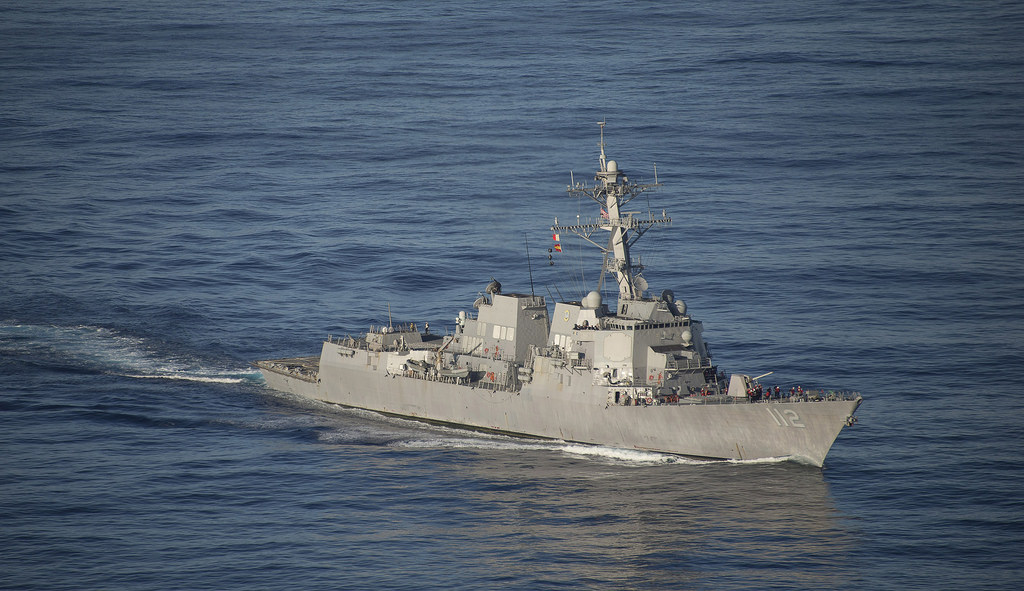
USS Michael Murphy (DDG 112) is scheduled to depart Pearl Harbor, Hawaii for a regularly-scheduled deployment with the Carl Vinson Carrier Strike Group to the Indo-Asia-Pacific Region on Friday, Jan. 13.
That was reported by press service of Department of Defense.
Michael Murphy will deploy with a crew of approximately 320 Sailors and a detachment of MH-60R helicopters from Helicopter Maritime Squadron (HSM) 37, the “Easy riders,” based out of Marine Corps Base Hawaii, Kaneohe Bay, who trained for months to earn deployment certification.
“The crew has worked tirelessly in preparation for this deployment, said Cmdr. Robert A. Heely, Jr., commanding officer, USS Michael Murphy. “Team Murphy will be challenged with diverse mission sets within the Indo-Asia-Pacific Region. Their resiliency will be tested, but they are up to the task and are ready to perform as part of Carrier Strike Group One.”
While deployed, the Carl Vinson CSG will remain under U.S. 3rd Fleet command and control, including beyond the international dateline which previously divided operational areas of responsibility for 3rd and 7th fleets. Third Fleet operating forward offers additional options to the Pacific Fleet commander by leveraging the capabilities of 3rd and 7th Fleets. This operational concept allows both numbered fleets to complement one another and provide the foundation of stability in the Indo-Asia-Pacific Region.
“Our forward presence contributes to freedom of navigation and lawful use of the sea, as well as furthers operational training and enabling the exchange of culture, skills and tactical knowledge,” said Rear Adm. James W. Kilby, commander, Carrier Strike Group (CSG) 1.
U.S. 3rd Fleet leads naval forces in the Pacific and provides the realistic, relevant training necessary for an effective global Navy. Third Fleet constantly coordinates with U.S. 7th Fleet to plan and execute missions based on their complementary strengths to promote ongoing peace, security and stability throughout the entire Pacific theater of operations.
The Nimitz-class aircraft carrier USS Carl Vinson (CVN 70), Carrier Air Wing (CVW) 2, and embarked Destroyer Squadron (CDS) 1 deployed from San Diego, January 5 with Ticonderoga class guided-missile cruiser USS Lake Champlain (CG 57) and Arleigh Burke-class guided-missile destroyer USS Wayne E. Meyer (DDG 108).
The Carl Vinson CSG deployed with approximately 7,500 Sailors and will focus on maritime security operations and theater security cooperation efforts. The strike group assets will conduct bilateral exercises in the Indo-Asia-Pacific region to include anti-submarine warfare, maneuvering drills, gunnery exercises and visit, board, search and seizure subject matter expert exchanges.